

Edrftgyihu jiuh
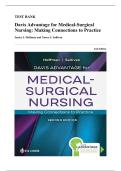
TEST BANK
Davis Advantage for Medical-Surgical
Nursing: Making Connections to Practice
ST
Janice J. Hoffman and Nancy J. Sullivan
UV
2nd Edition
IA
?_
AP
PR
OV
ED
? ?
, TABLE OF CONTENTS
Medical-Surgical Nursing: Making Connections to Practice (2nd Edition)
Authors: Janice Hoffman, Nancy Sullivan, and Leslie-Anne Bruce
ISBN: 9780803677074
ST
Chapter 1: Foundations for Medical-Surgical Nursing
Chapter 2: Interprofessional Collaboration and Care Coordination
Chapter 3: Cultural Considerations
Chapter 4: Ethical Concepts
UV
Chapter 5: Palliative Care and End-of-Life Issues
Chapter 6: Geriatric Implications for Medical-Surgical Nursing
Chapter 7: Oxygen Therapy Management
Chapter 8: Fluid and Electrolyte Management
Chapter 9: Acid-Base Balance
IA
Chapter 10: Overview of Infusion Therapies
Chapter 11: Pain Management
Chapter 12: Complementary and Alternative Care Initiatives
?_
Chapter 13: Overview of Cancer Care
Chapter 14: Overview of Shock and Sepsis
Chapter 15: Priorities for the Preoperative Patient
Chapter 16: Priorities for the Intraoperative Patient
AP
Chapter 17: Priorities for the Postoperative Patient
Chapter 18: Assessment of Immune Function
Chapter 19: Coordinating Care for Patients With Immune Disorders
Chapter 20: Coordinating Care for Patients With Connective Tissue Disorders
Chapter 21: Coordinating Care for Patients With Multidrug-Resistant Organism Infectious Disorders
PR
Chapter 22: Coordinating Care for Patients With HIV
Chapter 23: Assessment of Respiratory Function
Chapter 24: Coordinating Care for Patients With Infectious Respiratory Disorders
Chapter 25: Coordinating Care for Patients With Upper Airway Disorders
Chapter 26: Coordinating Care for Patients With Lower Airway Disorders
OV
Chapter 27: Coordinating Care for Critically Ill Patients With Respiratory Dysfunction
Chapter 28: Assessment of Cardiovascular Function
Chapter 29: Coordinating Care for Patients With Cardiac Dysrhythmia
Chapter 30: Coordinating Care for Patients With Cardiac Disorders
Chapter 31: Coordinating Care for Patients With Vascular Disorders
ED
Chapter 32: Coordinating Care for Critically Ill Patients With Cardiovascular Dysfunction
Chapter 33: Assessment of Hematological Function
Chapter 34: Coordinating Care for Patients With Hematological Disorders
Chapter 35: Assessment of Neurological Function
??
Chapter 36: Coordinating Care for Patients With Brain Disorders
Chapter 37: Coordinating Care for Patients With Spinal Cord Disorders
Chapter 38: Coordinating Care for Patients With Peripheral Nervous System Disorders
Chapter 39: Coordinating Care for Critically Ill Patients With Neurological Dysfunction
Chapter 40: Assessment of Endocrine Function
Chapter 41: Coordinating Care for Patients With Pituitary Disorders
, Chapter 42: Coordinating Care for Patients With Adrenal Disorders
Chapter 43: Coordinating Care for Patients With Thyroid and Parathyroid Disorders
Chapter 44: Coordinating Care for Patients With Diabetes Mellitus
Chapter 45: Assessment of Visual Function
Chapter 46: Coordinating Care for Patients With Visual Disorders
Chapter 47: Assessment of Auditory Function
ST
Chapter 48: Coordinating Care for Patients With Hearing Disorders
Chapter 49: Assessment of Integumentary Function
Chapter 50: Coordinating Care for Patients With Skin Disorders
Chapter 51: Coordinating Care for Patients With Burns
UV
Chapter 52: Assessment of Musculoskeletal Function
Chapter 53: Coordinating Care for Patients With Musculoskeletal Disorders
Chapter 54: Coordinating Care for Patients With Musculoskeletal Trauma
Chapter 55: Assessment of Gastrointestinal Function
Chapter 56: Coordinating Care for Patients With Oral and Esophageal Disorders
IA
Chapter 57: Coordinating Care for Patients With Stomach Disorders
Chapter 58: Coordinating Care for Patients With Intestinal Disorders
Chapter 59: Coordinating Care for Patients With Hepatic Disorders
?_
Chapter 60: Coordinating Care for Patients With Biliary and Pancreatic Disorders
Chapter 61: Assessment of Renal and Urinary Function
Chapter 62: Coordinating Care for Patients With Renal Disorders
Chapter 63: Coordinating Care for Patients With Urinary Disorders
AP
Chapter 64: Assessment of Reproductive Function
Chapter 65: Coordinating Care for Female Patients With Reproductive and Breast Disorders
Chapter 66: Coordinating Care for Male Patients With Reproductive and Breast Disorders
Chapter 67: Coordinating Care for Patients With Sexually Transmitted Infection
Chapter 68: Managing Care for the Adult Patient With Obesity
PR
Chapter 69: Substance Use Disorders in the Adult Population
Chapter 70: Emergency, Trauma, and Environmental Injuries
Chapter 71: Disasters, Mass Casualty Incidents, and Complex Emergencies
OV
ED
??
, TEST BANK FOR MEDICAL SURGICAL NURSING 2ND EDITION BY HOFFMAN
Davis Advantage for Medical-Surgical
Nursing: Making Connections to
Practice 2nd edition Hoffman Sullivan
ST
Test Bank
UV
Chapter 1: Foundations for Medical-Surgical Nursing
IA
Multiple Choice
Identify the choice that best completes the statement or answers the question.
____ 1. The medical-surgical nurse identifies a clinical practice issue and wants to determine if there is sufficient evidence
to support a change in practice. Which type of study provides the strongest evidence to support a practice
?_
change?
1) Randomized control study
2) Quasi-experimental study
3) Case-control study
AP
4) Cohort study
____ 2. The medical-surgical unit recently implemented a patient-centered care model. Which action implemented by
the nurse supports this model? 1) Evaluating care 3) Diagnosing problems 4) Providing compassion
2) Assessing needs N
PR
____ 3. Which action should the nurse implement when providing patient care in order to support The Joint
OV
Commission’s (TJC) National Patient Safety Goals (NPSG)?
1) Silencing a cardiorespiratory monitor
2) Identifying each patient using one source
3) Determining patient safety issues upon admission
4) Decreasing the amount of pain medication administered
ED
____ 4. Which interprofessional role does the nurse often assume when providing patient care in an acute care setting?
1) Social worker
2) Client advocate
3) Care coordinator
4) Massage therapist
??
____ 5. The medical-surgical nurse wants to determine if a policy change is needed for an identified clinical problem. Which is
the first action the nurse should implement?
1) Developing a question
2) Disseminating the findings
3) Conducting a review of the literature
4) Evaluating outcomes of practice change
TEST BANK
Davis Advantage for Medical-Surgical
Nursing: Making Connections to Practice
ST
Janice J. Hoffman and Nancy J. Sullivan
UV
2nd Edition
IA
?_
AP
PR
OV
ED
? ?
, TABLE OF CONTENTS
Medical-Surgical Nursing: Making Connections to Practice (2nd Edition)
Authors: Janice Hoffman, Nancy Sullivan, and Leslie-Anne Bruce
ISBN: 9780803677074
ST
Chapter 1: Foundations for Medical-Surgical Nursing
Chapter 2: Interprofessional Collaboration and Care Coordination
Chapter 3: Cultural Considerations
Chapter 4: Ethical Concepts
UV
Chapter 5: Palliative Care and End-of-Life Issues
Chapter 6: Geriatric Implications for Medical-Surgical Nursing
Chapter 7: Oxygen Therapy Management
Chapter 8: Fluid and Electrolyte Management
Chapter 9: Acid-Base Balance
IA
Chapter 10: Overview of Infusion Therapies
Chapter 11: Pain Management
Chapter 12: Complementary and Alternative Care Initiatives
?_
Chapter 13: Overview of Cancer Care
Chapter 14: Overview of Shock and Sepsis
Chapter 15: Priorities for the Preoperative Patient
Chapter 16: Priorities for the Intraoperative Patient
AP
Chapter 17: Priorities for the Postoperative Patient
Chapter 18: Assessment of Immune Function
Chapter 19: Coordinating Care for Patients With Immune Disorders
Chapter 20: Coordinating Care for Patients With Connective Tissue Disorders
Chapter 21: Coordinating Care for Patients With Multidrug-Resistant Organism Infectious Disorders
PR
Chapter 22: Coordinating Care for Patients With HIV
Chapter 23: Assessment of Respiratory Function
Chapter 24: Coordinating Care for Patients With Infectious Respiratory Disorders
Chapter 25: Coordinating Care for Patients With Upper Airway Disorders
Chapter 26: Coordinating Care for Patients With Lower Airway Disorders
OV
Chapter 27: Coordinating Care for Critically Ill Patients With Respiratory Dysfunction
Chapter 28: Assessment of Cardiovascular Function
Chapter 29: Coordinating Care for Patients With Cardiac Dysrhythmia
Chapter 30: Coordinating Care for Patients With Cardiac Disorders
Chapter 31: Coordinating Care for Patients With Vascular Disorders
ED
Chapter 32: Coordinating Care for Critically Ill Patients With Cardiovascular Dysfunction
Chapter 33: Assessment of Hematological Function
Chapter 34: Coordinating Care for Patients With Hematological Disorders
Chapter 35: Assessment of Neurological Function
??
Chapter 36: Coordinating Care for Patients With Brain Disorders
Chapter 37: Coordinating Care for Patients With Spinal Cord Disorders
Chapter 38: Coordinating Care for Patients With Peripheral Nervous System Disorders
Chapter 39: Coordinating Care for Critically Ill Patients With Neurological Dysfunction
Chapter 40: Assessment of Endocrine Function
Chapter 41: Coordinating Care for Patients With Pituitary Disorders
, Chapter 42: Coordinating Care for Patients With Adrenal Disorders
Chapter 43: Coordinating Care for Patients With Thyroid and Parathyroid Disorders
Chapter 44: Coordinating Care for Patients With Diabetes Mellitus
Chapter 45: Assessment of Visual Function
Chapter 46: Coordinating Care for Patients With Visual Disorders
Chapter 47: Assessment of Auditory Function
ST
Chapter 48: Coordinating Care for Patients With Hearing Disorders
Chapter 49: Assessment of Integumentary Function
Chapter 50: Coordinating Care for Patients With Skin Disorders
Chapter 51: Coordinating Care for Patients With Burns
UV
Chapter 52: Assessment of Musculoskeletal Function
Chapter 53: Coordinating Care for Patients With Musculoskeletal Disorders
Chapter 54: Coordinating Care for Patients With Musculoskeletal Trauma
Chapter 55: Assessment of Gastrointestinal Function
Chapter 56: Coordinating Care for Patients With Oral and Esophageal Disorders
IA
Chapter 57: Coordinating Care for Patients With Stomach Disorders
Chapter 58: Coordinating Care for Patients With Intestinal Disorders
Chapter 59: Coordinating Care for Patients With Hepatic Disorders
?_
Chapter 60: Coordinating Care for Patients With Biliary and Pancreatic Disorders
Chapter 61: Assessment of Renal and Urinary Function
Chapter 62: Coordinating Care for Patients With Renal Disorders
Chapter 63: Coordinating Care for Patients With Urinary Disorders
AP
Chapter 64: Assessment of Reproductive Function
Chapter 65: Coordinating Care for Female Patients With Reproductive and Breast Disorders
Chapter 66: Coordinating Care for Male Patients With Reproductive and Breast Disorders
Chapter 67: Coordinating Care for Patients With Sexually Transmitted Infection
Chapter 68: Managing Care for the Adult Patient With Obesity
PR
Chapter 69: Substance Use Disorders in the Adult Population
Chapter 70: Emergency, Trauma, and Environmental Injuries
Chapter 71: Disasters, Mass Casualty Incidents, and Complex Emergencies
OV
ED
??
, TEST BANK FOR MEDICAL SURGICAL NURSING 2ND EDITION BY HOFFMAN
Davis Advantage for Medical-Surgical
Nursing: Making Connections to
Practice 2nd edition Hoffman Sullivan
ST
Test Bank
UV
Chapter 1: Foundations for Medical-Surgical Nursing
IA
Multiple Choice
Identify the choice that best completes the statement or answers the question.
____ 1. The medical-surgical nurse identifies a clinical practice issue and wants to determine if there is sufficient evidence
to support a change in practice. Which type of study provides the strongest evidence to support a practice
?_
change?
1) Randomized control study
2) Quasi-experimental study
3) Case-control study
AP
4) Cohort study
____ 2. The medical-surgical unit recently implemented a patient-centered care model. Which action implemented by
the nurse supports this model? 1) Evaluating care 3) Diagnosing problems 4) Providing compassion
2) Assessing needs N
PR
____ 3. Which action should the nurse implement when providing patient care in order to support The Joint
OV
Commission’s (TJC) National Patient Safety Goals (NPSG)?
1) Silencing a cardiorespiratory monitor
2) Identifying each patient using one source
3) Determining patient safety issues upon admission
4) Decreasing the amount of pain medication administered
ED
____ 4. Which interprofessional role does the nurse often assume when providing patient care in an acute care setting?
1) Social worker
2) Client advocate
3) Care coordinator
4) Massage therapist
??
____ 5. The medical-surgical nurse wants to determine if a policy change is needed for an identified clinical problem. Which is
the first action the nurse should implement?
1) Developing a question
2) Disseminating the findings
3) Conducting a review of the literature
4) Evaluating outcomes of practice change


