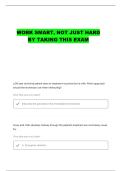
a 58 year old blind patient does to treatment escorted by his wife. Which approach
should the technician use when interacting?
Give this one a try later!
Describe the activities in the immediate environment
Fever and chills develop midway through the patients treatment are most likely cause
by:
Give this one a try later!
A. Pyrogenic reaction
,Gloves must be warn ...
Give this one a try later!
For patient or equipment contact
When troubleshooting the vascular access
Handeling blood / body fluids samples
answer is ....
All of the above
Dialysis patients are diagnosed with anemia. Epogen is given to the patients to:
Give this one a try later!
Increase red blood cell production
Pericarditis is a complication seen in renal failure patients. It may be related to...
Give this one a try later!
Inadequate dialysis prescription, missed dialysis treatment, fluid overload.
the answer is...
All of the above
,During a hemodialysis treatment a patient goes into cardiac arrest. What should the
PCT do first?
Give this one a try later!
Call for help
What are some of the foods that are high in phosphorus
Give this one a try later!
Milk and Cheese
When you observe a spot of blood on the patient chair, in order to observe proper
infection control guidelines you should
Give this one a try later!
Wipe the blood immediately with bleach solution
Victor's EDW is 72 kg. He arrives for the treatment today at of 72 kg. He is short of
breath and has signs of edema on his feet. The charge nurse is notified. What should
be the plan for Victor's treatment?
Give this one a try later!
, The nurse will notify MD to decrease EDW
A nephron is made up of:
Give this one a try later!
The glomerulus and the tubule system
When lifting a patient from the wheel chair to the chair you:
Give this one a try later!
Bend at the knees and use your leg muscles to lift
The venous needle
Give this one a try later!
Should point in the direction of the flow
The functional unit of a kidney is
Give this one a try later!
should the technician use when interacting?
Give this one a try later!
Describe the activities in the immediate environment
Fever and chills develop midway through the patients treatment are most likely cause
by:
Give this one a try later!
A. Pyrogenic reaction
,Gloves must be warn ...
Give this one a try later!
For patient or equipment contact
When troubleshooting the vascular access
Handeling blood / body fluids samples
answer is ....
All of the above
Dialysis patients are diagnosed with anemia. Epogen is given to the patients to:
Give this one a try later!
Increase red blood cell production
Pericarditis is a complication seen in renal failure patients. It may be related to...
Give this one a try later!
Inadequate dialysis prescription, missed dialysis treatment, fluid overload.
the answer is...
All of the above
,During a hemodialysis treatment a patient goes into cardiac arrest. What should the
PCT do first?
Give this one a try later!
Call for help
What are some of the foods that are high in phosphorus
Give this one a try later!
Milk and Cheese
When you observe a spot of blood on the patient chair, in order to observe proper
infection control guidelines you should
Give this one a try later!
Wipe the blood immediately with bleach solution
Victor's EDW is 72 kg. He arrives for the treatment today at of 72 kg. He is short of
breath and has signs of edema on his feet. The charge nurse is notified. What should
be the plan for Victor's treatment?
Give this one a try later!
, The nurse will notify MD to decrease EDW
A nephron is made up of:
Give this one a try later!
The glomerulus and the tubule system
When lifting a patient from the wheel chair to the chair you:
Give this one a try later!
Bend at the knees and use your leg muscles to lift
The venous needle
Give this one a try later!
Should point in the direction of the flow
The functional unit of a kidney is
Give this one a try later!