1|Page
NR 507 Advanced Pathophysiology Midterm Exam
2026/2027 | Complete Guide with Verified
Questions & Detailed Rationales | Chamberlain
Grade A
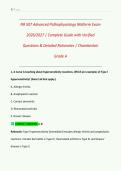
1. A nurse is teaching about hypersensitivity reactions. Which are examples of Type I
hypersensitivity? (Select all that apply.)
A. Allergic rhinitis
B. Anaphylactic reaction
C. Contact dermatitis
D. Rheumatoid arthritis
E. Graves' disease
CORRECT ANSWER: A, B
Rationale: Type I hypersensitivity (immediate) includes allergic rhinitis and anaphylactic
reactions. Contact dermatitis is Type IV, rheumatoid arthritis is Type III, and Graves'
disease is Type II.
,2|Page
2. A nurse is teaching about Type I hypersensitivity reactions. What immunoglobulin
mediates Type I hypersensitivity?
A. IgA
B. IgD
C. IgE
D. IgG
CORRECT ANSWER:C
Rationale: Type I hypersensitivity reactions are mediated by IgE antibodies, which bind
to mast cells and basophils, triggering release of histamine and other mediators.
3. A nurse is teaching about Type I hypersensitivity reactions. What cells are primarily
involved in Type I reactions?
A. T lymphocytes
B. B lymphocytes
C. Mast cells
D. Macrophages
CORRECT ANSWER:C
Rationale: Mast cells are the primary effector cells in Type I hypersensitivity, releasing
histamine and other inflammatory mediators upon cross-linking of surface IgE.
,3|Page
4. A nurse is assessing a patient with a Type I hypersensitivity reaction. What are
expected symptoms? (Select all that apply.)
A. Local: itching, immediate rash
B. Systemic: wheezing
C. Delayed rash at 24-72 hours
D. Tissue-specific destruction
E. Immune complex deposition
CORRECT ANSWER:A, B
Rationale: Type I reactions cause local symptoms (itching, rash, urticaria) and systemic
symptoms (wheezing, anaphylaxis). Delayed rash is Type IV, tissue-specific destruction is
Type II, and immune complex deposition is Type III.
5. A nurse is caring for a patient experiencing anaphylaxis. What is the main treatment
for anaphylaxis?
A. Antihistamines
B. Corticosteroids
C. Epinephrine
D. Bronchodilators
CORRECT ANSWER:C
, 4|Page
Rationale: Epinephrine is the first-line treatment for anaphylaxis. It reverses
bronchospasm, vasodilation, and increased capillary permeability.
6. A nurse is teaching about Type II hypersensitivity. What is another name for Type II
hypersensitivity?
A. Delayed hypersensitivity
B. Immune complex reaction
C. Cytotoxic reaction (tissue-specific)
D. Anaphylactic reaction
CORRECT ANSWER:C
Rationale: Type II hypersensitivity is also known as a cytotoxic or tissue-specific
reaction, where antibodies bind to antigens on cell surfaces, leading to cell destruction.
7. A nurse is teaching about Type II hypersensitivity. What cells are involved in Type II
reactions?
A. Mast cells
B. T lymphocytes
C. Macrophages
D. Basophils
CORRECT ANSWER:C
Rationale: Macrophages and other phagocytic cells are involved in Type II
NR 507 Advanced Pathophysiology Midterm Exam
2026/2027 | Complete Guide with Verified
Questions & Detailed Rationales | Chamberlain
Grade A
1. A nurse is teaching about hypersensitivity reactions. Which are examples of Type I
hypersensitivity? (Select all that apply.)
A. Allergic rhinitis
B. Anaphylactic reaction
C. Contact dermatitis
D. Rheumatoid arthritis
E. Graves' disease
CORRECT ANSWER: A, B
Rationale: Type I hypersensitivity (immediate) includes allergic rhinitis and anaphylactic
reactions. Contact dermatitis is Type IV, rheumatoid arthritis is Type III, and Graves'
disease is Type II.
,2|Page
2. A nurse is teaching about Type I hypersensitivity reactions. What immunoglobulin
mediates Type I hypersensitivity?
A. IgA
B. IgD
C. IgE
D. IgG
CORRECT ANSWER:C
Rationale: Type I hypersensitivity reactions are mediated by IgE antibodies, which bind
to mast cells and basophils, triggering release of histamine and other mediators.
3. A nurse is teaching about Type I hypersensitivity reactions. What cells are primarily
involved in Type I reactions?
A. T lymphocytes
B. B lymphocytes
C. Mast cells
D. Macrophages
CORRECT ANSWER:C
Rationale: Mast cells are the primary effector cells in Type I hypersensitivity, releasing
histamine and other inflammatory mediators upon cross-linking of surface IgE.
,3|Page
4. A nurse is assessing a patient with a Type I hypersensitivity reaction. What are
expected symptoms? (Select all that apply.)
A. Local: itching, immediate rash
B. Systemic: wheezing
C. Delayed rash at 24-72 hours
D. Tissue-specific destruction
E. Immune complex deposition
CORRECT ANSWER:A, B
Rationale: Type I reactions cause local symptoms (itching, rash, urticaria) and systemic
symptoms (wheezing, anaphylaxis). Delayed rash is Type IV, tissue-specific destruction is
Type II, and immune complex deposition is Type III.
5. A nurse is caring for a patient experiencing anaphylaxis. What is the main treatment
for anaphylaxis?
A. Antihistamines
B. Corticosteroids
C. Epinephrine
D. Bronchodilators
CORRECT ANSWER:C
, 4|Page
Rationale: Epinephrine is the first-line treatment for anaphylaxis. It reverses
bronchospasm, vasodilation, and increased capillary permeability.
6. A nurse is teaching about Type II hypersensitivity. What is another name for Type II
hypersensitivity?
A. Delayed hypersensitivity
B. Immune complex reaction
C. Cytotoxic reaction (tissue-specific)
D. Anaphylactic reaction
CORRECT ANSWER:C
Rationale: Type II hypersensitivity is also known as a cytotoxic or tissue-specific
reaction, where antibodies bind to antigens on cell surfaces, leading to cell destruction.
7. A nurse is teaching about Type II hypersensitivity. What cells are involved in Type II
reactions?
A. Mast cells
B. T lymphocytes
C. Macrophages
D. Basophils
CORRECT ANSWER:C
Rationale: Macrophages and other phagocytic cells are involved in Type II