Page 1 of 88
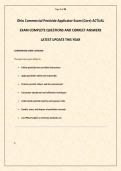
Ohio Commercial Pesticide Applicator Exam (Core) ACTUAL
EXAM COMPLETE QUESTIONS AND CORRECT ANSWERS
LATEST UPDATE THIS YEAR
SUMMARIZED EXAM COVERAGE
The exam tests your ability to:
• Follow pesticide laws and label instructions
• Apply pesticides safely and responsibly
• Protect yourself, others, and the environment
• Use proper equipment and calibration techniques
• Understand pesticide toxicity and exposure risks
• Handle, store, and dispose of pesticides correctly
• Use IPM principles to minimize pesticide use
1.
, Page 2 of 88
A pesticide applicator ignores label instructions and applies a higher rate than allowed. What law is
violated?
A. Clean Water Act
B. FIFRA
C. OSHA
D. Endangered Species Act
Answer: B
Rationale: FIFRA makes the label legally enforceable; misuse violates federal law.
2.
While mixing pesticides, an applicator inhales vapors due to lack of PPE. Which exposure route
occurred?
A. Dermal
B. Oral
C. Inhalation
D. Ocular
Answer: C
Rationale: Breathing pesticide vapors is inhalation exposure.
3.
, Page 3 of 88
A product labeled “Danger” indicates what level of toxicity?
A. Slightly toxic
B. Moderately toxic
C. Highly toxic
D. Non-toxic
Answer: C
Rationale: “Danger” signals highest acute toxicity.
4.
An applicator uses IPM and only sprays after pest thresholds are exceeded. What principle is this?
A. Prevention
B. Monitoring
C. Threshold-based action
D. Eradication
Answer: C
Rationale: IPM uses thresholds before applying pesticides.
5.
Which factor most influences pesticide drift during application?
A. Soil color
B. Wind speed
, Page 4 of 88
C. Humidity only
D. Applicator age
Answer: B
Rationale: Wind is the primary factor affecting drift.
6.
A granular pesticide is chosen instead of a spray to reduce drift. Why?
A. Lower toxicity
B. Larger particle size reduces movement
C. Faster action
D. Cheaper cost
Answer: B
Rationale: Granules are heavier and less prone to drift.
7.
An applicator spills pesticide concentrate on skin but delays washing. What risk increases?
A. Reduced toxicity
B. Increased dermal absorption
C. No effect
D. Only inhalation risk
Ohio Commercial Pesticide Applicator Exam (Core) ACTUAL
EXAM COMPLETE QUESTIONS AND CORRECT ANSWERS
LATEST UPDATE THIS YEAR
SUMMARIZED EXAM COVERAGE
The exam tests your ability to:
• Follow pesticide laws and label instructions
• Apply pesticides safely and responsibly
• Protect yourself, others, and the environment
• Use proper equipment and calibration techniques
• Understand pesticide toxicity and exposure risks
• Handle, store, and dispose of pesticides correctly
• Use IPM principles to minimize pesticide use
1.
, Page 2 of 88
A pesticide applicator ignores label instructions and applies a higher rate than allowed. What law is
violated?
A. Clean Water Act
B. FIFRA
C. OSHA
D. Endangered Species Act
Answer: B
Rationale: FIFRA makes the label legally enforceable; misuse violates federal law.
2.
While mixing pesticides, an applicator inhales vapors due to lack of PPE. Which exposure route
occurred?
A. Dermal
B. Oral
C. Inhalation
D. Ocular
Answer: C
Rationale: Breathing pesticide vapors is inhalation exposure.
3.
, Page 3 of 88
A product labeled “Danger” indicates what level of toxicity?
A. Slightly toxic
B. Moderately toxic
C. Highly toxic
D. Non-toxic
Answer: C
Rationale: “Danger” signals highest acute toxicity.
4.
An applicator uses IPM and only sprays after pest thresholds are exceeded. What principle is this?
A. Prevention
B. Monitoring
C. Threshold-based action
D. Eradication
Answer: C
Rationale: IPM uses thresholds before applying pesticides.
5.
Which factor most influences pesticide drift during application?
A. Soil color
B. Wind speed
, Page 4 of 88
C. Humidity only
D. Applicator age
Answer: B
Rationale: Wind is the primary factor affecting drift.
6.
A granular pesticide is chosen instead of a spray to reduce drift. Why?
A. Lower toxicity
B. Larger particle size reduces movement
C. Faster action
D. Cheaper cost
Answer: B
Rationale: Granules are heavier and less prone to drift.
7.
An applicator spills pesticide concentrate on skin but delays washing. What risk increases?
A. Reduced toxicity
B. Increased dermal absorption
C. No effect
D. Only inhalation risk