

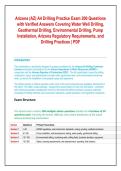
Arizona (AZ) A4 Drilling Practice Exam 200 Questions
with Verified Answers Covering Water Well Drilling,
Geothermal Drilling, Environmental Drilling, Pump
Installation, Arizona Regulatory Requirements, and
Drilling Practices | PDF
Introduction
This examination is specifically designed to prepare candidates for the Arizona A4 Drilling Contractor
License examination administered by the Arizona Department of Water Resources (ADWR) in
conjunction with the Arizona Registrar of Contractors (ROC) . The A4 classification covers the drilling,
construction, repair, and abandonment of water wells, geothermal wells, and environmental monitoring
wells, as well as the installation of associated pumps and equipment.
The drilling industry in Arizona operates under some of the most comprehensive regulatory frameworks in
the nation. The state's unique geology—ranging from alluvial basins to hard rock formations—combined
with critical groundwater management concerns, demands that drilling contractors possess extensive
knowledge of drilling methods, well construction standards, aquifer protection, and regulatory compliance.
Exam Structure
This Actual exam contains 200 multiple-choice questions divided into 4 Sections of 50
questions each, mirroring the format, difficulty, and content distribution of the actual
Arizona A4 licensing examination.
Section Questions Primary Focus Areas
Section 1 1-50 ADWR regulations, well construction standards, casing, grouting, wellhead protection
Section 2 51-100 Pump installation, well development, testing, water quality, geothermal drilling
Section 3 101-150 Environmental drilling, monitoring wells, drilling fluids, borehole deviation, equipment
Section 4 151-200 Safety, licensing requirements, well abandonment, reporting, final closeout
,Question 1
What is the primary regulatory authority governing water well drilling in Arizona?
(A) Arizona Department of Environmental Quality (ADEQ)
(B) Arizona Corporation Commission
(C) Arizona Department of Water Resources (ADWR)
(D) Arizona State Mine Inspector
Explanation: The Arizona Department of Water Resources (ADWR) is the primary
regulatory authority for water well drilling, licensing, and well construction standards in
Arizona.
Question 2
What is the minimum required distance between a water well and a septic tank in Arizona?
(A) 50 feet
(B) 75 feet
(C) 100 feet
(D) 150 feet
Explanation: Arizona administrative code requires a minimum separation of 100 feet
between a water well and a septic tank or septic system components.
Question 3
What is the minimum required distance between a water well and a livestock feedlot in
Arizona?
(A) 100 feet
(B) 200 feet
(C) 300 feet
(D) 500 feet
,Explanation: ADWR regulations require a minimum separation of 300 feet between
water wells and livestock feedlots or concentrated animal feeding operations.
Question 4
What is the primary purpose of well casing?
(A) To decorate the well
(B) to increase water flow
(C) To prevent borehole collapse and protect groundwater from contamination
(D) to reduce drilling costs
Explanation: Well casing provides structural support to prevent borehole collapse and
protects the groundwater from surface contamination by sealing off upper formations.
Question 5
What is the minimum required steel casing thickness for a domestic water well in Arizona?
(A) 1/8 inch (Schedule 10)
(B) 3/16 inch (Schedule 20)
(C) 1/4 inch (Schedule 40)
(D) 3/8 inch (Schedule 80)
Explanation: Arizona regulations require a minimum steel casing thickness of 1/4 inch
(Schedule 40) for domestic water wells.
Question 6
What is the purpose of well grouting?
(A) To lubricate the drill bit
(B) to increase water flow
(C) To seal the annular space between casing and borehole to prevent contamination
(D) to reduce drilling time
Explanation: Grouting fills the annular space between the casing and borehole, sealing
off surface water and preventing vertical migration of contaminants.
, Question 7
What is the minimum required grout depth for a water well in Arizona?
(A) 10 feet
(B) 20 feet
(C) 50 feet
(D) 100 feet
Explanation: ADWR requires a minimum grout depth of 50 feet for water wells to
protect groundwater from surface contamination.
Question 8
What type of grout is commonly used for water well sealing in Arizona?
(A) Bentonite clay
(B) Portland cement
(C) Bentonite-cement mixture
(D) Neat cement or bentonite-cement grout
Explanation: Neat cement or bentonite-cement grout (with 5-10% bentonite) are
commonly used for well sealing and meet Arizona requirements.
Question 9
What is the purpose of a well screen?
(A) To support the casing
(B) to seal the well
(C) To allow water to enter while filtering out sand and sediment
(D) to reduce drilling depth
Explanation: Well screens allow water to enter the well while filtering out sand, gravel,
and other formation materials.
Question 10
with Verified Answers Covering Water Well Drilling,
Geothermal Drilling, Environmental Drilling, Pump
Installation, Arizona Regulatory Requirements, and
Drilling Practices | PDF
Introduction
This examination is specifically designed to prepare candidates for the Arizona A4 Drilling Contractor
License examination administered by the Arizona Department of Water Resources (ADWR) in
conjunction with the Arizona Registrar of Contractors (ROC) . The A4 classification covers the drilling,
construction, repair, and abandonment of water wells, geothermal wells, and environmental monitoring
wells, as well as the installation of associated pumps and equipment.
The drilling industry in Arizona operates under some of the most comprehensive regulatory frameworks in
the nation. The state's unique geology—ranging from alluvial basins to hard rock formations—combined
with critical groundwater management concerns, demands that drilling contractors possess extensive
knowledge of drilling methods, well construction standards, aquifer protection, and regulatory compliance.
Exam Structure
This Actual exam contains 200 multiple-choice questions divided into 4 Sections of 50
questions each, mirroring the format, difficulty, and content distribution of the actual
Arizona A4 licensing examination.
Section Questions Primary Focus Areas
Section 1 1-50 ADWR regulations, well construction standards, casing, grouting, wellhead protection
Section 2 51-100 Pump installation, well development, testing, water quality, geothermal drilling
Section 3 101-150 Environmental drilling, monitoring wells, drilling fluids, borehole deviation, equipment
Section 4 151-200 Safety, licensing requirements, well abandonment, reporting, final closeout
,Question 1
What is the primary regulatory authority governing water well drilling in Arizona?
(A) Arizona Department of Environmental Quality (ADEQ)
(B) Arizona Corporation Commission
(C) Arizona Department of Water Resources (ADWR)
(D) Arizona State Mine Inspector
Explanation: The Arizona Department of Water Resources (ADWR) is the primary
regulatory authority for water well drilling, licensing, and well construction standards in
Arizona.
Question 2
What is the minimum required distance between a water well and a septic tank in Arizona?
(A) 50 feet
(B) 75 feet
(C) 100 feet
(D) 150 feet
Explanation: Arizona administrative code requires a minimum separation of 100 feet
between a water well and a septic tank or septic system components.
Question 3
What is the minimum required distance between a water well and a livestock feedlot in
Arizona?
(A) 100 feet
(B) 200 feet
(C) 300 feet
(D) 500 feet
,Explanation: ADWR regulations require a minimum separation of 300 feet between
water wells and livestock feedlots or concentrated animal feeding operations.
Question 4
What is the primary purpose of well casing?
(A) To decorate the well
(B) to increase water flow
(C) To prevent borehole collapse and protect groundwater from contamination
(D) to reduce drilling costs
Explanation: Well casing provides structural support to prevent borehole collapse and
protects the groundwater from surface contamination by sealing off upper formations.
Question 5
What is the minimum required steel casing thickness for a domestic water well in Arizona?
(A) 1/8 inch (Schedule 10)
(B) 3/16 inch (Schedule 20)
(C) 1/4 inch (Schedule 40)
(D) 3/8 inch (Schedule 80)
Explanation: Arizona regulations require a minimum steel casing thickness of 1/4 inch
(Schedule 40) for domestic water wells.
Question 6
What is the purpose of well grouting?
(A) To lubricate the drill bit
(B) to increase water flow
(C) To seal the annular space between casing and borehole to prevent contamination
(D) to reduce drilling time
Explanation: Grouting fills the annular space between the casing and borehole, sealing
off surface water and preventing vertical migration of contaminants.
, Question 7
What is the minimum required grout depth for a water well in Arizona?
(A) 10 feet
(B) 20 feet
(C) 50 feet
(D) 100 feet
Explanation: ADWR requires a minimum grout depth of 50 feet for water wells to
protect groundwater from surface contamination.
Question 8
What type of grout is commonly used for water well sealing in Arizona?
(A) Bentonite clay
(B) Portland cement
(C) Bentonite-cement mixture
(D) Neat cement or bentonite-cement grout
Explanation: Neat cement or bentonite-cement grout (with 5-10% bentonite) are
commonly used for well sealing and meet Arizona requirements.
Question 9
What is the purpose of a well screen?
(A) To support the casing
(B) to seal the well
(C) To allow water to enter while filtering out sand and sediment
(D) to reduce drilling depth
Explanation: Well screens allow water to enter the well while filtering out sand, gravel,
and other formation materials.
Question 10


