NRNP6635 STUDY 9 VERSION TWO 2026
COMPREHENSIVE STUDY GUIDE PAPER
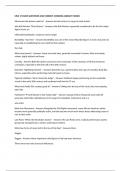
◉ Pathophysiology of schizophrenia part 2. Answer: Other theories:
Hypofunction of the N-methyl-D-aspartate (NMDA) glutamate
receptor. Dysfunctional gamma-amino-butyric acid (GABA)
interneurons.
Dysfunctional nicotinic acetylcholine receptors.
◉ Physical abnormalities of the brain in schizophrenia. Answer:
Patients with schizophrenia also have physical abnormalities of the
brain tissue, which can be seen in neuroimaging studies.
Loss of cortical tissue volume, including the limbic system,
prefrontal cortex, thalamus, hippocampus, and amygdala.
Ventricular enlargement (third and lateral).
Decreased symmetry.
Hypoactivity of the frontal lobes and hyperactivity of the basal
ganglia.
◉ Clinical Presentation of schizophrenia. Answer: Impairment of
thoughts and affect, characterized by a distorted perception of
reality.
, The impairments are severe enough to affect the patient's ability to
participate in social events or to form relationships.
Patients with schizophrenia often lack awareness about their illness
(insight).
Co-existing substance use disorder and dependence is common
("dual diagnosis").
Symptoms can be classified into premorbid, positive, negative, and
cognitive.
◉ Positive (psychotic phase). Answer: Easy to recognize.
Delusions:
1. False, fixed beliefs maintained by the patient despite being
contradicted by reality or logical arguments.
2. Can include grandiosity, ideas of reference, paranoia, persecutory,
erotomania, jealousy, and somatic delusions.
Hallucinations:
1. Perceptual abnormalities in which sensory experiences occur in
the absence of external stimuli.
2. Can be auditory (most common), visual, somatic, gustatory, and
olfactory.
Illusions:
1. distinguished from hallucinations by the presence of real external
stimuli that is simply misinterpreted by the patient.
COMPREHENSIVE STUDY GUIDE PAPER
◉ Pathophysiology of schizophrenia part 2. Answer: Other theories:
Hypofunction of the N-methyl-D-aspartate (NMDA) glutamate
receptor. Dysfunctional gamma-amino-butyric acid (GABA)
interneurons.
Dysfunctional nicotinic acetylcholine receptors.
◉ Physical abnormalities of the brain in schizophrenia. Answer:
Patients with schizophrenia also have physical abnormalities of the
brain tissue, which can be seen in neuroimaging studies.
Loss of cortical tissue volume, including the limbic system,
prefrontal cortex, thalamus, hippocampus, and amygdala.
Ventricular enlargement (third and lateral).
Decreased symmetry.
Hypoactivity of the frontal lobes and hyperactivity of the basal
ganglia.
◉ Clinical Presentation of schizophrenia. Answer: Impairment of
thoughts and affect, characterized by a distorted perception of
reality.
, The impairments are severe enough to affect the patient's ability to
participate in social events or to form relationships.
Patients with schizophrenia often lack awareness about their illness
(insight).
Co-existing substance use disorder and dependence is common
("dual diagnosis").
Symptoms can be classified into premorbid, positive, negative, and
cognitive.
◉ Positive (psychotic phase). Answer: Easy to recognize.
Delusions:
1. False, fixed beliefs maintained by the patient despite being
contradicted by reality or logical arguments.
2. Can include grandiosity, ideas of reference, paranoia, persecutory,
erotomania, jealousy, and somatic delusions.
Hallucinations:
1. Perceptual abnormalities in which sensory experiences occur in
the absence of external stimuli.
2. Can be auditory (most common), visual, somatic, gustatory, and
olfactory.
Illusions:
1. distinguished from hallucinations by the presence of real external
stimuli that is simply misinterpreted by the patient.