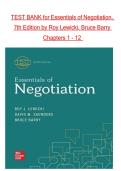
TEST BANK for Essentials of Negotiation,
7th Edition by Roy Lewicki, Bruce Barry
Chapters 1 - 12
,Table of Contents
1. The Nature of Negotiation
2. Strategy and Tactics of Distributive Bargaining
3. Strategy and Tactics of Integrative Negotiation
4. Negotiation: Strategy and Planning
5. Ethics in Negotiation
6. Perception, Cognition, and Emotion
7. Communication
8. Finding and Using Negotiation Power
9. Relationships in Negotiation
10. Multiple Parties, Groups, and Teams in Negotiation
11. International and Cross-Cultural Negotiation
12. Best Practices in Negotiations
, Chapter 1
Student:
1. People all the time.
2. The term is used to describe the competitive, win-
lose situations such as hagglingover price thatHhappens at yard sale, flea market, or used car lot.
3. Negotiating parties always negotiate by .
4. There are times when you should negotiate.
5. Successful negotiation involves the managementHof _
(e.g., the price or the terms ofagreement) and also the resolution of.
6. Independent parties are able to meet their own
withoutHthe help and assistance ofothers.
, 7. The /imix /iof /iconvergent /iand /iconflicting /igoals /icharacterizes /imany relationships.
8. The of /ipeople's /igoals, /i and /ithe
of /ithe /isituation /iin /iwhich /ithey /iaregoing /ito /inegotiate, /istrongly /ishapes /inegotiation /iprocesses
/i and /ioutcomes.
9. Whether /iyou /ishould /ior /ishould /inot /iagree /ion /isomething /iin /ia /inegotiation /idepends /ientirely /iupon
/i th /ieattractiveness /ito /iyou /iof /ithe /ibest /iavailable .
10. When /iparties /iare /iinterdependent, /ithey /ihave /ito / i find / i a /iway /ito their /idifferences.
11. Negotiation /iis /ia that /itransforms /iover /itime.
12. Negotiations /ioften /ibegin /iwith /istatements /iof /iopening .
13. When / ione /iparty /iaccepts / i a /ichange / i in /ihis /ior /iher /iposition, /i a has /ibeen / imade.
7th Edition by Roy Lewicki, Bruce Barry
Chapters 1 - 12
,Table of Contents
1. The Nature of Negotiation
2. Strategy and Tactics of Distributive Bargaining
3. Strategy and Tactics of Integrative Negotiation
4. Negotiation: Strategy and Planning
5. Ethics in Negotiation
6. Perception, Cognition, and Emotion
7. Communication
8. Finding and Using Negotiation Power
9. Relationships in Negotiation
10. Multiple Parties, Groups, and Teams in Negotiation
11. International and Cross-Cultural Negotiation
12. Best Practices in Negotiations
, Chapter 1
Student:
1. People all the time.
2. The term is used to describe the competitive, win-
lose situations such as hagglingover price thatHhappens at yard sale, flea market, or used car lot.
3. Negotiating parties always negotiate by .
4. There are times when you should negotiate.
5. Successful negotiation involves the managementHof _
(e.g., the price or the terms ofagreement) and also the resolution of.
6. Independent parties are able to meet their own
withoutHthe help and assistance ofothers.
, 7. The /imix /iof /iconvergent /iand /iconflicting /igoals /icharacterizes /imany relationships.
8. The of /ipeople's /igoals, /i and /ithe
of /ithe /isituation /iin /iwhich /ithey /iaregoing /ito /inegotiate, /istrongly /ishapes /inegotiation /iprocesses
/i and /ioutcomes.
9. Whether /iyou /ishould /ior /ishould /inot /iagree /ion /isomething /iin /ia /inegotiation /idepends /ientirely /iupon
/i th /ieattractiveness /ito /iyou /iof /ithe /ibest /iavailable .
10. When /iparties /iare /iinterdependent, /ithey /ihave /ito / i find / i a /iway /ito their /idifferences.
11. Negotiation /iis /ia that /itransforms /iover /itime.
12. Negotiations /ioften /ibegin /iwith /istatements /iof /iopening .
13. When / ione /iparty /iaccepts / i a /ichange / i in /ihis /ior /iher /iposition, /i a has /ibeen / imade.