

Written by students who passed Immediately available after payment Read online or as PDF Wrong document? Swap it for free 4.6 TrustPilot
logo-home
Document preview thumbnail
Preview 3 out of 17 pages
Exam (elaborations)

Nursing Care of Children (NUR 321): Final Exam | Complete Questions And Answers | Latest Spring 2026 - Coppin State University.

Document preview thumbnail
Preview 3 out of 17 pages

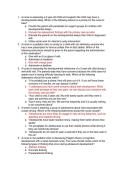
Nursing Care of Children (NUR 321): Final Exam | Complete Questions And Answers | Latest Spring 2026 - Coppin State University. 1. A nurse is assessing a 3-year-old child and suspects the child may have a developmental delay. Which of the following actions is a priority for the nurse to take? a. Provide the parent with pamphlets for support groups for children with developmental delays b. Discuss the assessment findings with the primary care provider c. Educate the parents on the developmental delays their child is diagnosed with d. Utilize social work for referral to early intervention 2. A nurse in a pediatric clinic is caring for a child with iron deficiency anemia who has a new prescription for ferrous sulfate (Fer-In-Sol) tablets. Which of the following instructions should be given to the parent regarding the administration of this medication? a. Give with an 8 oz glass of milk b. Administer at mealtime c. Give with orange juice d. Administer at bedtime 3. A nurse is assessing the developmental milestones of a 2-year-old child during a well-child visit. The parents state they have concerns because the child does not speak much is having difficulty learning to walk. Which of the following statements should the nurse make? a. “It is probably just a phase; they will grow out of it. If you still have these concerns in 6 months, we can assess it further” b. “I understand you have some concerns about their development. While each child develops at their own pace, we can discuss your concerns with the primary care provider” c. “Your child is only 2 years old. My child barely spoke until they were 3 years old and they are just fine now” d. “Don’t worry, they are fine. We see this frequently and it is usually nothing to be concerned about” 4. A school nurse is teaching a group of adolescents about risks associated with unsafe driving. Which of the following statements should the nurse include? a. “Adolescents are more likely to engage in risky driving behaviors, such as speeding and impaired driving” b. “Adolescents have faster reaction times, making them better drivers than adults” c. “It’s acceptable for adolescents to use their mobile phones while driving if they use hands-free devices” d. “Adolescents do not need to wear a seat belt if they are in the back seat of the car” 5. A nurse in the pediatric clinic is discussing Piaget’s theory of cognitive development with a newly licensed nurse. The nurse should review which of the following types of thinking that occur during adolescent development? a. Abstract thinking b. Concrete thinking c. Preoperational thinkingd. Egocentric thinking 6. A nurse is providing safety-related anticipatory guidance to parents of a toddler. Which of the following statements should the nurse use to educate the parents on safety during this stage? a. “Cleaning products and medications should be placed in a cabinet so children can’t get access to them” b. “Children break the most bones during their toddler years due to fails. Toddlers should wear a helmet to protect their head in case of a fall” c. “Stairs are a leading cause of injury related death in toddlers. Children should not be permitted on stairs until they are 4 years old.” d. “The leading cause of death related to injury during toddlerhood is drowning. Children can drown in small amounts of water such as bathtubs, toilets, and buckets” 7. A nurse is assessing a client who has an 8 score using the Glasgow Coma Scale to evaluate levels of consciousness. Which of the following nursing statements most accurately describes the score? a. Indicates the need for total nursing care b. Reflects an alert client c. Indicates a client in a deep coma d. Indicates stable neurological status 8. A nurse is assessing an intravenous site located in the left hand of an infant. Which of the following findings indicates an infiltration? a. Blood in the IV tubing b. Absence of blanching at the insertion site c. Edema in the palm of the hand d. Lighter-toned area around the insertion site 9. A nurse is admitting a client who is having an exacerbation of his asthma. When previewing the provider’s orders, the nurse recognizes that clarification is needed for which of the following prescribed medications? a. Propranolol (Inderal) b. Theophylline (Theo-Dur) c. Montelukast (Singulair) d. Prednisone (Deltasone) 10.A nurse is assessing a school-age child. Which of the following findings should the nurse identify as an indication that the child may have a bleeding disorder? a. Frequent falls b. Mood changes c. Swollen knees d. Dental caries 11. A nurse is reviewing the nutritional intake for a 2-year-old child who has been consistently losing weight. The parents report approximately 32 oz of whole milk with meals and at bedtime and 6 oz of water and 4 oz apple juice throughout the day. The child usually eats 1 egg and 2 strawberries for breakfast. ½ of a peanut butter and jelly sandwich with ½ of a banana for lunch, and 2 chicken nuggets, 1 cheese stick, and a handful of grapes for dinner. How should the nurse interpret this information?a. The toddler is consuming too much milk and is at risk for developing iron deficiency anemia b. The toddler is consuming too many calories and is at risk for overnutrition c. The toddler is consuming an adequate number of calories and there are no nutritional concerns d. The toddler is not consuming enough potassium and should eat a full banana daily 12.A nurse is caring for a 8-month-old infant who has beta thalassemia. Which of the following clinical manifestations are consistent with a diagnosis of beta thalassemia major rather than beta thalassemia intermedia? (Select all that apply) a. Fever b. Fatigue c. Poor weight gain d. Hepatosplenomegaly e. Jaundice f. Developmental delay 13.A nurse is caring for a child who has aplastic anemia and discusses the diagnosis with a newly licensed nurse. Which of the following statements by the newly licensed nurse indicates an understanding of the teaching? a. “The defining characteristic of aplastic anemia is loss of hematopoietic stem cells” b. “The defining characteristic of aplastic anemia is loss of white blood cells” c. “The defining characteristic of aplastic anemia is loss of red blood cells” d. “The defining characteristic of aplastic anemia is loss of platelets” 14.A nurse is assessing an infant who has possible cerebral palsy. Which of the following manifestations of cerebral palsy should the nurse expect to find? a. Tracks an object in surroundings with eyes b. Sits with pillow props at eight months c. Smiles when mother appears at three months d. Uses pincher grasp to pick up a toy 15.A nurse is caring for a child diagnosed with pertussis. The nurse should respond with which of the following when the parent asks what the common name for this disorder is? a. Mumps b. Chickenpox c. Whooping cough d. Fifth disease 16.A nurse is caring for a client and is maintain I&O. What is the client’s intake during an 8 hour period based on the following date? Breakfast- 4 oz juice and 6 oz hot tea. Voided 450 mL after breakfast IV bolus of 150 mL at 0900 100 mL of ice chips before lunch Lunch- 8 oz of clear broth Voided 120 mL and voided 600 mL after lunch Jackson Pratt drain emptied of 40 mL bloody drainage at 1330a. 740 mL 17.A nurse has collected 160 mL of urine output from a 3-year-old client during 8 hr. The client weighs 33 lb. What is the next nursing action? a. Notify the provider b. Provide oral rehydration fluids c. Perform a bladder scan at the bedside d. Continue to monitor the client 18.A nurse acknowledges a client’s valid concerns who has a family history of hemophilia A. Which of the following symptoms may the client experience? a. Frequent rapid bleeding b. Minimal tendency to bruise c. Immediate clotting from a minor cut d. Disabling joint pain 19.The nurse is caring for a 9-month-old who just returned from the PACU after a shunt placement for hydrocephalus. Which of the following physician’s orders would the nurse question? a. Elevate head of bed b. Daily head circumference c. Small, frequent formula feedings d. Vital signs and neuro checks hourly 20.The nurse is teaching an adolescent girl with scoliosis about a Boston brace which her healthcare provider has prescribed. Which instruction is accurate? a. Remove the brace one hour each day for bathing only b. Remove the brace twice daily for back range of motion exercises c. Remove brace for sleeping d. Wear the brace in order to curve the spinal curvature 21.The emergency department nurse is cleaning multiple facial abrasions on 9-yearold Mike. His mother is present. He is crying and screaming loudly. The nurse should: a. Ask him to be quieter b. Have his mother tell him to relax c. Tell him it is okay to cry and scream d. Suggest that he talk to his mother instead of crying 22.The nurse is evaluating the activity tolerance of a 9-month-old with iron deficiency anemia. The finding that indicates the child is tolerating activity s: a. HR of 150 with activity b. Decreased alertness c. Respiratory rate less than 40 with activity d. Frequently resting 23.6-month-old infant is admitted to the hospital with suspected bacterial meningitis. She is crying, irritable, and lying in the opisthotonic position. The priority nursing intervention would be: a. Educate the family on ways to prevent bacterial meningitis b. Initiate appropriate isolation precautions and begin intravenous antibiotics c. Assess the infant’s fontanels d. Encourage the mother to hold the infant and feed her24.A child is upset because when the cast is removed from her leg the skin surface is caked with desquamated skin and sebaceous secretions. What should the nurse suggest to remove this material? a. Soak in a bathtub b. Vigorously scrub the leg c. Apply powder to absorb moisture d. Carefully pick material off of the leg 25.A 4-year-old patient presents with fever of 102F, chapped lips, strawberry tongue, swelling of the hands and feet, periungual desquamation, and lymphadenopathy. The nurse anticipates which of the following orders? a. Administer aspirin b. Lumbar puncture c. Give prostaglandin d. Order for digoxin 26.A grandparent of a 3-month-old infant asks the nurse what kind of toys they should purchase to have in their home when the infant grandchild comes to visit. Which should the nurse not recommend for purchase at this time? a. A stuffed animal b. Unbreakable mirrors c. Brightly colored blocks d. A mobile for the crib 27.A 3 day old neonate is admitted to the pediatric intensive care unit following diagnoses of Patent Ductus Arteriosus (PDA). The goal of care for this neonate is nonsurgical closure of the PDA. Which of the following would be included in the management of this neonate’s cardiac condition? a. Phenobarbital and balloon dilation b. Administration of Prostaglandin c. Administration of a Prostaglandin inhibitor d. Antiemetics, antihypertensives digoxin and antiembolitics 28.The nurse is assessing an infant and notes brachial pulses of 2+ and femoral pulses of 1+. Which action will the nurse perform first? a. Contact the health care provider b. Apply appropriate oxygen device c. Prepare for balloon angioplasty d. Assess blood pressure in all extremities 29.Medication education on which drug should the nurse provide to the caregivers of a child diagnosed with rheumatic fever? a. Aspirin b. Antiviral c. Insulin d. Dilantin 30.A nurse is obtaining vital signs from 2-month-old infant. The infant’s heart rate is 190/min and his temperature is 40C (104F). The father asks the nurse why the infant’s heart is beating so fast. Which of the following responses by the nurse is appropriate? a. “This is within the expected range for your baby”b. “The fever is causing an increase in your baby’s heart rate” c. “As your baby begins to fall asleep his heart rate will decrease” d. “Your baby’s heart is beating fast in an attempt to cool down his body” 31.A 7-year-old with a head injury is hospitalized after losing consciousness when he was hit in the head with a bat at baseball practice. The child was not wearing a helmet. The last set of vital signs showed heart rate 48, BP is 148/74, respiratory rate 28 and irregular. What does the nurse suspect these findings indicate? a. Probably normal for this child b. A sign of increased intracranial pressure c. A sign that this child has a spinal cord injury d. Typical for a sleeping child at this age 32.A child with heart disease is receiving digoxin and a diuretic. Which laboratory test result would be most important for the nurse to monitor? a. Serum sodium level b. Erythrocyte sedimentation rate c. Serum potassium level d. Oxygen saturation level 33.A adolescent female client is angry due to separation from her infant at home with relatives and is leaving the hospital against medical advice (AMA). However, the client demands to take her chart with her and states the chart is “hers” and she doesn’t want any more contact with the hospital. How should the nurse respond? a. Because you are leaving against medical advice, you may not have your chart b. The chart is the priority of the hospital, but I will see that a copy is made for you c. This hospital does not need to keep it if you are leaving and not returning here d. The information in your chart is confidential and cannot leave this facility legally 34.A nursing supervisor assigns a float nurse in an adult medical/surgical unit to work in a pediatric unit. This is the nurses first time in a pediatric setting. Which of the following is an appropriate assignment for the nurse? a. Function as an assistive personnel b. Care for postoperative school age clients c. Shadow an experienced pediatric nurse d. As a unit clerk 35.Child’s weight: 87 lb Medication order: Glycopyrrolate 0.8 mg per gastrostomy tube three times a day Per the pediatric and neonatal dosage handbook, the recommended dose is 20 mcg/kg/dose three times daily and may titrate to a maximum dose of 100 mcg/kg/ dose three times daily (not to exceed 1,500-3,000 mcg/dose) Is this ordered dose safe? a. True b. Incorrect: False36.Which of the following immunizations should not be given to a child receiving chemotherapy for cancer? a. Tetanus vaccine b. Inactivated poliovirus vaccine c. Diphtheria, pertussis, tetanus (DPT) d. Measles, mumps, rubella (MMR) 37.An 8 year old with severe hemophilia cut their arm while preparing dinner. The patient had a significant amount of bleeding, appears pale, is tachycardic, a BP is 82/58, with delayed capillary refill greater than 5 seconds. Which order does the nurse anticipate? a. Blood products b. DDAVP (Vasopressin) c. Clopidogrel (Plavix) d. Von Willebrand Factor 38.A 4-year-old recently diagnosed with a severe allergy to tree nuts. The nurse instructs the family to not only avoid nuts to explains the need for: a. An Epi Pen b. A medical alert identifier c. An Epi Pen and a Medical Alert Identifier d. The telephone number to the nearest allergist 39.The nurse is caring for a 6-year-old with juvenile idiopathic arthritis. The mother states that she has trouble getting her daughter out of bed in the morning and believes the girl’s behavior is due to a desire to avoid going to school. What is the best advice by the nurse? a. Refer the girl to a psychologist for evaluation of school phobia related to chronic illness b. Administer a warm bath every morning before school c. Give the child her prescribed NSAIDs 30 minutes before getting out of bed d. Allow her to stay in bed some mornings if she wants 40.A nurse is teaching a caregiver of a preschool child about factors that affect the child’s perception of death. Which of the following factors should the nurse include in the teaching? a. Preschool children have no concept of death b. Preschool children perceive death as temporary and no concept of time c. Preschool children often regress to an earlier stage of behavior d. Preschool children experience fear related to the disease process 41.A parent asks the nurse why self-monitoring of blood glucose is being recommended for her child with diabetes. The nurse should base the explanation on knowing that: a. It is a less expensive method of testing b. It is not as accurate as laboratory testing c. Children are better able to manage their diabetes with the use of a selfmonitoring device d. The parents are better able to manage the disease 42.A child with nephrotic syndrome has been placed on prednisone for several weeks. As important point of teaching with the parents should include:a. Never stop the medication suddenly b. This drug is taken once a week on Sunday c. The child should always take the medication at night before bed d. This drug should be taken with meals 43.The nurse performs a neurological assessment on a 12-year-old child. Which of the following findings are early signs of increased intracranial pressure (ICP)? Select all that apply. a. Nausea and vomiting b. Significant decrease in level of consciousness c. Dizziness or vertigo d. Pupils not as reactive or equal 44.A 2-month-old infant is admitted to the pediatric unit presents with projectile vomiting, non-bilious vomitus, appears hungry especially after emesis, is irritable, fails to gain weight, and has fewer and smaller stools. The nurse recognizes these signs and symptoms are common in children with: a. Gastroesophageal Reflux b. Hirschsprung’s Disease c. Pyloric Stenosis d. Intussusception 45.A child has been diagnosed with epilepsy and is on daily phenytoin (Dilantin). The family should be instructed to prioritize which of the following? a. Practicing good dental hygiene b. Reducing vitamin D intake c. Taking all the medication with milk d. Doubling the daily fluid intake 46.The nurse is caring for a child who is in status epilepticus. The child weighs 14.97 kg (33 lb). The medication order reads: Diazepam 3 mg IV push now. Per the Pediatric Dosage Handbook, the recommended dose is 0.1 to 0.3 mg/kg/ dose. Diazepam is supplied as 5 mg/mL/ How many milliliters will the nurse administer? Round to the nearest tenth a. 0.6mL 47.The child with asthma reports to the school nurse, who checks the child’s peak expiratory flow rate and finds that it reads 84% of personal best. Which interpretation by the nurse would be best: a. The child’s asthma is under reasonably good control, and the routine treatment plan can be followed b. The child’s asthma is not well controlled; the child should receive an aerosol treatment, and the test should be repeated c. The child’s asthma is not well controlled, and the physician should be notified d. The reading represents a medical emergency, as severe narrowing of the airway is most likely occurring 48.A new graduate nurse is explaining the purpose of a Patent Ductus Arteriosus (PDA) during fetal circulation the parents of an infant. Which of the following statements by the nurse indicates understanding of the PDA? a. “The PDA allows blood to shift from the left ventricle to the right ventricle”b. “The PDA causes an increase of blood flow to the lungs during fetal circulation” c. “The PDA is a tube between the aorta and the pulmonary artery” d. “The PDA connects from the uterus to the inferior Vena Cava to supply the fetus with oxygenated blood” 49.A 4-year-old admitted with pneumonia weighs 18 kg. The healthcare provided has prescribed Vancomycin 40 mg/kg/day IV. The order states to divide the dose and give it three times daily. How many ____ mg/dose of Vancomycin should the child receive in each dose? (Round the final answer to the nearest whole number, enter numeric value only) a. 240 50.The nurse works in an oncology clinic. A preschool-age child is being seen in the clinic, and the nurse anticipates a diagnosis of cancer. The nurse prepares for which of the common reactions preschool-age children have following illnesses and hospitalizations? a. Acceptance, especially if able to discuss the disease with children their own age b. Thoughts that they caused their illness and are being punished c. Understanding of what cancer is and how it is treated d. Unawareness of the illness and its severity 51.The nurse is assessing a newborn and hears a cardiac murmur. The infant is alert, breastfeeding well with normal behavior, color and vital signs. The nurse’s best action is to? a. Call for a pediatric cardiologist to see the infant immediately b. Document the finding, monitor infant and notify physician during their rounds c. Have the parents sign a consent for and immediate cardiac catheterization procedure d. Place the infant in knee chest position and keep NPO 52.A previously “potty-trained” 30-month-old child has reverted to wearing diapers while hospitalized. The nurse should reassure the parents that this is normal because: a. Regression is seen during hospitalization b. Developmental delays occur because of the hospitalization c. The child is experiencing urinary urgency because of hospitalization d. The child was too young to be “potty-trained” 53.A newborn is capable of holding a rattle using the palmar grasp. The infant later demonstrates picking up small objects using the pincer grasps. This pattern of development is termed: a. Maturation b. Cephalocaudal c. Proximodistal d. Unilateral 54.The parents of infant with developmental dysplasia of the hip tell the nurse “I know that the Pavlik harness is unbearable for our baby”. The nurse should reply:a. “It’s going to be worth it in the end when your baby doesn’t have to have surgery” b. “There is no other choice for treating your baby” c. “Perhaps we can convince the pediatrician to release the baby from the harness for a few hours” d. “It must be upsetting you but babies adjust readily to the harness” 55.Parents of a child with a CHD who will begin enteral feedings ask the nurse what advantage this type of feeding has over other methods. The nurse bases the response on what facts about enteral feedings? (Select all that apply) a. Enteral feeding will provide adequate nutrition and the calories your baby needs to grow b. The child must be able to sit upright in order to get enteral feedings c. Enteral feeding requires a central venous catheter d. Enteral feeding has a high success rate but does not have to be the only route your child can obtain adequate nutrition 56.A nurse in the newborn nursery has noticed that an infant is frothing and appears to have excessive drooling. Further assessment reveals that the baby has episodes of respiratory distress with choking and cyanosis. What disorder should the nurse suspect based on these findings? a. Cleft palate b. Esophageal atresia c. Coarctation of the aorta d. Cleft lip 57.A nurse is caring for a child in a hip spica cast that is in Buck extension traction. Which of the following is an appropriate action for the nurse to take? a. Reposition the child every 2 hr b. Remove traction boot during bath c. Apply antibiotic ointment to pin sites daily d. Reduce fluid intake 58.Child’s weight: 30 lb Medication order: Somatropin 0.5 mg subcutaneously once a day Per the Pediatric and Neonatal Dosage Handbook, the recommended dose is 0.18 to 0.3 mg/kg weekly, divided into 6 to 7 doses. Is the ordered dose safe? a. True b. Incorrect: false 59.Child’s weight: 9.98 kg (22 lb) Medication order: Phenobarbital 50 mg PO twice a day As per the Pediatric and Neonatal Dosage Handbook, the recommended dose is 6-8 mg/kg/day in one to two dived doses. Is the ordered dose safe? a. True b. Incorrect: false 60.The nurse is caring for a child who is in status epilepticus. The child weighs 14.97 kg (33 lb). The medication order reads: Diazepam 3 mg IV push now. Per the Pediatric Dosage Handbook, the recommended dose is 0.1 to 0.3 mg/kg/ dose. Diazepam is supplied as 5 mg/mL. How many milliliters will the nurse administer? Round to the nearest tenth.a. 0.6 61.The nurse is planning to administer one dose of PO digoxin to a patient with heart failure who weighs 33 lbs. The order is 6 mcg/kg/day in 2 divided doses. The medication comes as 0.05mg/mL solution. How many mLs should the nurse administer? Round the final answer to the nearest tenth. a. 0.9 62.The nurse instructs parents on prevention of dehydration in children. The nurse instructs the parents to seek medical care when: (Select all that apply) a. Urine output decreases b. Diarrhea worsens c. Child’s mental alertness changes d. Vomiting persists 63.The nurse is discussing long-term care with the parents of a child who has a ventriculoperitoneal shunt. Which of the following issues should be addressed? a. Most childhood activities must be restricted b. Cognitive impairment is to be expected with hydrocephalus c. Wearing head protection is essential until child reaches adulthood d. Shunt malfunction or infection requires immediate treatment 64.Several children arrived at the emergency room accompanied only by their fathers. The nurse knows the father who may legally sign emergency medical consent for treatment is: a. The stepfather from the blended or reconstituted family b. The divorced one when the single-parent mother has custody c. The divorced one from the binuclear family d. The nonbiologic parent from the heterosexual cohabitating family 65.The nurse is caring for a child who has received all possible medical care for cancer yet continues to experience relapse and metastasis. It is time to make the transition from curative care attempts to palliative care. What is the most important nursing consideration at this time? a. The health care professionals should make the decision about the child’s care b. The family may lose a sense of hope, so cancer treatments should continue c. Involve the family in the decision-making process about the shift to palliative care d. Palliative care can take place only at home, so the child should be discharged 66.A doctor has ordered a 1.5L NS bolus to infuse over 2 hours. What ml/hr will the nurse set the pump to infuse this fluid? The nurse will set the pump to infuse ____ ml/hr a. 750 67.A parent whose two school-age children have asthma asks the nurse in what sports, if any, they can participate. The nurse should recommend: a. Soccer b. Running c. Swimmingd. Basketball 68.Which item should the nurse remove from the bedside table of a 4-year-olf who has just been placed in bilateral long leg casts? a. Legos b. Handheld electronic book c. Fireman’s hat d. Coloring book 69.A 10-year-old child requires daily medication for a chronic illness. Her mother tells the nurse that the child continually forgets to take the medication unless reminded. Which of the following is the most appropriate nursing action to promote adherence to the medication regimen? a. Establish a contract with her, including rewards b. Suggest time-outs when she forgets her medicine c. Discuss with her mother the damaging effects of her rescuing the child d. Ask the child to bring her medicine containers to each appointment so they can be counted 70.A nurse often cares for children who are dying. Which of the following are actions for the nurse to take to maintain professional effectiveness? (Select all that apply) a. Remain in contact with the family after their loss b. Develop a professional support system c. Take time off from work d. Suggest that a hospital representative attend the funeral e. Demonstrate feelings of sympathy toward the family 71.The nurse is providing care for a 6-year-old boy who has a broken arm and multiple bruises. The boy tells the nurse that his father was mad and broke his arm, so the boy remembers to be good. What is the best nursing action? a. Chart that the child is a victim of child abuse b. Do nothing because abuse cannot be proven c. Report the situation to appropriate authorities d. Ignore him because little boys 72.A nurse is assessing a newborn who has congenital hypothyroidism. Which of the following findings should the nurse expect? (Select all that apply) a. Hypertonicity b. Cool extremities c. Short neck d. Tachycardia e. Hyperreflexia 73.The nurse is caring for a child who has a rash and is complaining of feeling itchy and is continually scratching. The child weighs 32 lb. The medication order reads: Diphenhydramine 6.25 mg PO every 4 to 6 hours as needed for itching. Diphenhydramine is supplies as 12.5 mg/5mL. How many milliliters will the nurse administer? Round to the nearest tenth a. 2.574.A female teen volunteer is assigned to the pediatric unit for the day and reports to the charge nurse for an assignment. Which of the following assignments is unsafe for the volunteer? a. Helping a 7-year-old client who has celiac disease make out the next day’s menu b. Playing a computer video game with a 15-year-old male client in skeletal traction c. Reading a book to a 4-year-old client who has AIDS d. Refilling the ice pitchers for clients on the unit for the charge nurse 75.The nurse should be aware postural drainage is useful for three of the following respiratory conditions. Which condition is not usually treated with postural drainage? a. Pneumonia b. Epiglottis c. Asthma d. Cystic fibrosis 76.Which of the following initial signs and symptoms are associated with a ventricular septal defect? a. Peripheral edema b. Heart murmur and crackles in the lungs c. Hypercyanotic episodes d. Unequal blood pressures in the upper and lower extremities 77.While being comforted in the emergency room, the 7-year-old sibling of a pediatric trauma victim blurts out to the nurse, “It’s all my fault! When we were fighting yesterday, I told him I wished he was dead!” The nurse, realizing that the child is experiencing “magical thinking” should respond by: a. Asking the child if she would like to sit down and drink some water b. Sitting the child down in an empty room with markers and paper so that she can draw a picture c. Reassuring the child that it is normal to get angry and say things that we do not mean but that we have no control over whether or not an accident happens d. Calmly discussing the catheters, tubes, and equipment that the patient requires and explaining to the sibling why the patient needs them 78.The nurse is reviewing the care of a 8 year old boy with Duchenne Muscular dystrophy with his parents. The mother demonstrates a need for further teaching when she makes the following statements: (Select all that apply) a. “I am so glad that his condition will not become worse” b. “I will adjust his diet so that it is high calorie, high protein” c. “I am happy that he has large calf muscles to help him move” d. “I will plan activities that makes him move” e. “I will make sure that his fluid intake is high” 79.Decreasing the demands on the heart is priority in care for the infant with congestive heart failure (CHF). In evaluating the infant’s status, which of the following is indicative of achieving this goal? a. Irritability when awakeb. Capillary refill of more than 5 seconds c. Appropriate weight gain for age d. Positioned in high Fowler’s position to maintain oxygen saturation at 90% 80.When caring for a. 17-year-old athlete who is scheduled for a leg amputation for treatment of osteosarcoma, what should the nurse’s approach include: a. Avoid discussing the amputation b. Answer questions honestly and fully c. Tell the client that the nurse knows how difficult this must be, but at least the cancer will be cured d. Tell him you are not sure why this even happen to him at such a young age 81.Future surgery is planned for a child with a congenital heart defect. You are teaching the parent how to reduce cardiac demand. The parent needs more teaching when they say which of the following? a. “I will count the number of wet diapers to be sure my child is not getting to much or too little fluid” b. “I should protect my child from people who have respiratory infections” c. “I will wake my child for feeding every 1 hour so he can get enough calories to gain weight” d. “When I give the digoxin, I will listen to the pulse for 1 full minute” 82.A nurse is assessing a child after an open reduction of a fractured femur. Signs that compartment syndrome could be occurring would be: (Select all that apply) a. Pink, warm extremity b. Prolonged capillary refill time with paresthesia c. Dorsalis pedis pulse present d. Pain not relieved by pain medication 83.Two 4-year-olds are playing in the waiting room in a clinic. One child cuts out colored paper while the other glues it on a paper in a design. This type of play is termed: a. Associate play b. Cooperative play c. Parallel play d. Solitary play 84.The nurse is taking a health history of a 6-week-old boy with suspected cardiovascular disorder. Which response by the mother would lead the nurse to suspect that the child is experiencing heart failure? a. “He gets sweaty when he eats” b. “He does not seem short of breath” c. “He does not seem sick” d. “He seems to have a normal appetite” 85.A 2-year-old starts to have a tonic-clonic seizure while in a crib in the hospital. The child’s jaws are clamped. The most appropriate nursing action at this time is to: a. Place a padded tongue blade between the child’s jaws b. Stay with the child and observe the respiratory status c. Prepare the suction equipmentd. Restrain the child to prevent injury 86.A child with suspected leukemia is scheduled for a bone marrow aspiration. The nurse should teach three of the following points about this procedure. Which should the nurse not teach the child? a. The procedure will be done on the hip b. The child can go to the bathroom following the procedure c. A small pressure bandage will be applied to the site d. The child will receive enough medication so that the procedure will not hurt at all 87.Which behaviors by the nurse indicate a therapeutic relationship with children and families? (Select all that apply) a. Spending off-duty time with children and families b. Asking questions if families are not participating in the care c. Clarifying information for families d. Buying toys for a hospitalized child e. Learning about the family’s religious preferences 88.A child with sickle cell anemia (SCA) develops severe chest and back pain, fever, a cough, and dyspnea. The first action by the nurse is to: a. Notify the provider since chest syndrome is suspected b. Administer 100% oxygen to relieve hypoxia c. Infuse intravenous antibiotics as soon as cultures are obtained d. Give ordered pain medication to relieve symptoms of pain episode 89.The nurse is caring for an infant with supraventricular tachycardia who is symptomatic and has an IV line in place. The infant weighs 16 ½ lb. The medication order reads: adenosine 0.01 mg/kg IV STAT followed by rapid flush. Adenosine is supplied as 6 mg/2mL. How many milliliters will the nurse administer? (Enter numeric value only. Round the final answer to the nearest hundredth) a. 0.03 90.A nurse is caring for a 2-year-old child who has a heart defect and is scheduled for cardiac catheterization. Which of the following actions should the nurse take? 91. Which child experiencing regression should be of most concern? A. 1-year-old asking frequently in the night crying after moving to a new house one week ago. B. 2-year-old been hospitalized for cellulitis and is having incontinence resulting in distress. C. 2-year-old experiencing regression for 2 weeks beginning to attend daycare.D. 3-year-old child who had experienced gross motor regression for six months. 92.What is a benefit of attentive care? A. Reduce client and caregiver stress and anxiety B. Reduce anxiety while enabling faster healing C. Minimize the time nurses spend with the client and caregiver D. Control the client and caregiver thereby reducing stress E. Minimize need for caregiver assistance 93.Which statement demonstrates a need for further teaching about Duchenne muscular dystrophy? Select all that apply A. I will make sure fluid intake is high B. I will plan activities that make him move C. I am happy that he has large calf muscles to help him move D. I am so glad his condition will not become worse E. I will adjust his diet so that it is high calorie, high protein 94.Parents understand the term egocentrism when they indicate it means: A. Unable to put self in another’s place B. Self-centeredness C. Selfishness D. Referring to play alone 96.How should levothyroxine be administered to an infant with congenital hypothyroidism? A. Tell the mother med will not be needed until age 7 B. Use oral dispenser, syringe, or nipple to give crushed med mixed with a small amount of formulaC. Administer med every other day D. Crush med and place in full bottle of formula to disguise taste

Content preview

1. A nurse is assessing a 3-year-old child and suspects the child may have a
developmental delay. Which of the following actions is a priority for the nurse to
take?
a. Provide the parent with pamphlets for support groups for children with
developmental delays
b. Discuss the assessment ndings with the primary care provider
c. Educate the parents on the developmental delays their child is diagnosed
with
d. Utilize social work for referral to early intervention
2. A nurse in a pediatric clinic is caring for a child with iron de ciency anemia who
has a new prescription for ferrous sulfate (Fer-In-Sol) tablets. Which of the
following instructions should be given to the parent regarding the administration
of this medication?
a. Give with an 8 oz glass of milk
b. Administer at mealtime
c. Give with orange juice
d. Administer at bedtime
3. A nurse is assessing the developmental milestones of a 2-year-old child during a
well-child visit. The parents state they have concerns because the child does not
speak much is having dif culty learning to walk. Which of the following
statements should the nurse make?
a. “It is probably just a phase; they will grow out of it. If you still have these
concerns in 6 months, we can assess it further”
b. “I understand you have some concerns about their development. While
each child develops at their own pace, we can discuss your concerns with
the primary care provider”
c. “Your child is only 2 years old. My child barely spoke until they were 3
years old and they are just ne now”
d. “Don’t worry, they are ne. We see this frequently and it is usually nothing
to be concerned about”
4. A school nurse is teaching a group of adolescents about risks associated with
unsafe driving. Which of the following statements should the nurse include?
a. “Adolescents are more likely to engage in risky driving behaviors, such as
speeding and impaired driving”
b. “Adolescents have faster reaction times, making them better drivers than
adults”
c. “It’s acceptable for adolescents to use their mobile phones while driving if
they use hands-free devices”
d. “Adolescents do not need to wear a seat belt if they are in the back seat of
the car”
5. A nurse in the pediatric clinic is discussing Piaget’s theory of cognitive
development with a newly licensed nurse. The nurse should review which of the
following types of thinking that occur during adolescent development?
a. Abstract thinking
b. Concrete thinking
c. Preoperational thinking


fi fifi fi fi

, d. Egocentric thinking
6. A nurse is providing safety-related anticipatory guidance to parents of a toddler.
Which of the following statements should the nurse use to educate the parents
on safety during this stage?
a. “Cleaning products and medications should be placed in a cabinet so
children can’t get access to them”
b. “Children break the most bones during their toddler years due to fails.
Toddlers should wear a helmet to protect their head in case of a fall”
c. “Stairs are a leading cause of injury related death in toddlers. Children
should not be permitted on stairs until they are 4 years old.”
d. “The leading cause of death related to injury during toddlerhood is
drowning. Children can drown in small amounts of water such as bathtubs,
toilets, and buckets”
7. A nurse is assessing a client who has an 8 score using the Glasgow Coma Scale
to evaluate levels of consciousness. Which of the following nursing statements
most accurately describes the score?
a. Indicates the need for total nursing care
b. Re ects an alert client
c. Indicates a client in a deep coma
d. Indicates stable neurological status
8. A nurse is assessing an intravenous site located in the left hand of an infant.
Which of the following ndings indicates an in ltration?
a. Blood in the IV tubing
b. Absence of blanching at the insertion site
c. Edema in the palm of the hand
d. Lighter-toned area around the insertion site
9. A nurse is admitting a client who is having an exacerbation of his asthma. When
previewing the provider’s orders, the nurse recognizes that clari cation is needed
for which of the following prescribed medications?
a. Propranolol (Inderal)
b. Theophylline (Theo-Dur)
c. Montelukast (Singulair)
d. Prednisone (Deltasone)
10. A nurse is assessing a school-age child. Which of the following ndings should
the nurse identify as an indication that the child may have a bleeding disorder?
a. Frequent falls
b. Mood changes
c. Swollen knees
d. Dental caries
11. A nurse is reviewing the nutritional intake for a 2-year-old child who has been
consistently losing weight. The parents report approximately 32 oz of whole milk
with meals and at bedtime and 6 oz of water and 4 oz apple juice throughout the
day. The child usually eats 1 egg and 2 strawberries for breakfast. ½ of a peanut
butter and jelly sandwich with ½ of a banana for lunch, and 2 chicken nuggets, 1
cheese stick, and a handful of grapes for dinner. How should the nurse interpret
this information?


fl fi fi fi

, a. The toddler is consuming too much milk and is at risk for developing iron
de ciency anemia
b. The toddler is consuming too many calories and is at risk for overnutrition
c. The toddler is consuming an adequate number of calories and there are
no nutritional concerns
d. The toddler is not consuming enough potassium and should eat a full
banana daily
12. A nurse is caring for a 8-month-old infant who has beta thalassemia. Which of the
following clinical manifestations are consistent with a diagnosis of beta
thalassemia major rather than beta thalassemia intermedia? (Select all that
apply)
a. Fever
b. Fatigue
c. Poor weight gain
d. Hepatosplenomegaly
e. Jaundice
f. Developmental delay
13. A nurse is caring for a child who has aplastic anemia and discusses the
diagnosis with a newly licensed nurse. Which of the following statements by the
newly licensed nurse indicates an understanding of the teaching?
a. “The de ning characteristic of aplastic anemia is loss of hematopoietic
stem cells”
b. “The de ning characteristic of aplastic anemia is loss of white blood cells”
c. “The de ning characteristic of aplastic anemia is loss of red blood cells”
d. “The de ning characteristic of aplastic anemia is loss of platelets”
14. A nurse is assessing an infant who has possible cerebral palsy. Which of the
following manifestations of cerebral palsy should the nurse expect to nd?
a. Tracks an object in surroundings with eyes
b. Sits with pillow props at eight months
c. Smiles when mother appears at three months
d. Uses pincher grasp to pick up a toy
15. A nurse is caring for a child diagnosed with pertussis. The nurse should respond
with which of the following when the parent asks what the common name for this
disorder is?
a. Mumps
b. Chickenpox
c. Whooping cough
d. Fifth disease
16. A nurse is caring for a client and is maintain I&O. What is the client’s intake
during an 8 hour period based on the following date?
Breakfast- 4 oz juice and 6 oz hot tea. Voided 450 mL after breakfast
IV bolus of 150 mL at 0900
100 mL of ice chips before lunch
Lunch- 8 oz of clear broth
Voided 120 mL and voided 600 mL after lunch
Jackson Pratt drain emptied of 40 mL bloody drainage at 1330


fi

fi fi

Document information

Uploaded on
March 6, 2026
Number of pages
17
Written in
2025/2026
Type
Exam (elaborations)
Contains
Questions & answers
$17.14

Wrong document? Swap it for free Within 14 days of purchase and before downloading, you can choose a different document. You can simply spend the amount again.
Written by students who passed
Immediately available after payment
Read online or as PDF

Seller avatar
Reputation scores are based on the amount of documents a seller has sold for a fee and the reviews they have received for those documents. There are three levels: Bronze, Silver and Gold. The better the reputation, the more your can rely on the quality of the sellers work.
MindCraft
3.8
(48)
Sold
375
Followers
7
Items
2804
Last sold
1 day ago


Why students choose Stuvia

Created by fellow students, verified by reviews

Quality you can trust: written by students who passed their tests and reviewed by others who've used these notes.

Didn't get what you expected? Choose another document

No worries! You can instantly pick a different document that better fits what you're looking for.

Pay as you like, start learning right away

No subscription, no commitments. Pay the way you're used to via credit card and download your PDF document instantly.

Student with book image

“Bought, downloaded, and aced it. It really can be that simple.”

Alisha Student

Working on your references?

Create accurate citations in APA, MLA and Harvard with our free citation generator.

Working on your references?

Frequently asked questions

