

Chapter 29_ Management of Patients with Nonmalignant Hematologic
Chapter 29_
Disorders
Management
- ML3of Patients with Nonmalignant Hematologic Disorders - ML3 2026-03-04
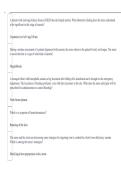
A patient with end-stage kidney disease (ESKD) has developed anemia. What laboratory finding does the nurse understand
to be significant in this stage of anemia?
Creatinine level of 6 mg/100 mL
During a routine assessment of a patient diagnosed with anemia, the nurse observes the patient's beefy red tongue. The nurse
is aware that this is a sign of what kind of anemia?
Megaloblastic
A teenaged client with hemophilia sustains a leg laceration after falling off a skateboard and is brought to the emergency
department. The laceration is bleeding profusely even with direct pressure to the site. What does the nurse anticipate will be
prescribed for administration to control bleeding?
Fresh frozen plasma
Which is a symptom of hemochromatosis?
Bronzing of the skin
The nurse and the client are discussing some strategies for ingesting iron to combat the client's iron-deficiency anemia.
Which is among the nurse's strategies?
Drink liquid iron preparations with a straw.
Page 1 Chapter 29_ Management of Patients with Nonmalignant Hematologic Disorders - ML3.pdf
, Chapter 29_ Management of Patients with Nonmalignant Hematologic
Chapter 29_
Disorders
Management
- ML3of Patients with Nonmalignant Hematologic Disorders - ML3 2026-03-04
A client admitted to the hospital with abdominal pain, anemia, and bloody stools reports feeling weak and dizzy. The client
has rectal pressure and needs to urinate and move their bowels. The nurse should help them:
onto the bedpan.
Which nursing intervention should be incorporated into the plan of care to manage the delayed clotting process in a client
with leukemia?
Apply prolonged pressure to needle sites or other sources of external bleeding
The nurse is educating a patient with iron deficiency anemia about food sources high in iron and how to enhance the
absorption of iron when eating these foods. What can the nurse inform the client would enhance the absorption?
Eating calf's liver with a glass of orange juice
A client with sickle cell crisis is admitted to the hospital in severe pain. While caring for the client during the crisis, which is
the priority nursing intervention?
Administering and evaluating the effectiveness of opioid analgesics
A nurse cares for clients with hematological disorders and notes that women are diagnosed with hemochromatosis at a much
lower rate than men. What is the primary reason for this?
Women lose iron through menstrual cycles
Page 2 Chapter 29_ Management of Patients with Nonmalignant Hematologic Disorders - ML3.pdf
Chapter 29_
Disorders
Management
- ML3of Patients with Nonmalignant Hematologic Disorders - ML3 2026-03-04
A patient with end-stage kidney disease (ESKD) has developed anemia. What laboratory finding does the nurse understand
to be significant in this stage of anemia?
Creatinine level of 6 mg/100 mL
During a routine assessment of a patient diagnosed with anemia, the nurse observes the patient's beefy red tongue. The nurse
is aware that this is a sign of what kind of anemia?
Megaloblastic
A teenaged client with hemophilia sustains a leg laceration after falling off a skateboard and is brought to the emergency
department. The laceration is bleeding profusely even with direct pressure to the site. What does the nurse anticipate will be
prescribed for administration to control bleeding?
Fresh frozen plasma
Which is a symptom of hemochromatosis?
Bronzing of the skin
The nurse and the client are discussing some strategies for ingesting iron to combat the client's iron-deficiency anemia.
Which is among the nurse's strategies?
Drink liquid iron preparations with a straw.
Page 1 Chapter 29_ Management of Patients with Nonmalignant Hematologic Disorders - ML3.pdf
, Chapter 29_ Management of Patients with Nonmalignant Hematologic
Chapter 29_
Disorders
Management
- ML3of Patients with Nonmalignant Hematologic Disorders - ML3 2026-03-04
A client admitted to the hospital with abdominal pain, anemia, and bloody stools reports feeling weak and dizzy. The client
has rectal pressure and needs to urinate and move their bowels. The nurse should help them:
onto the bedpan.
Which nursing intervention should be incorporated into the plan of care to manage the delayed clotting process in a client
with leukemia?
Apply prolonged pressure to needle sites or other sources of external bleeding
The nurse is educating a patient with iron deficiency anemia about food sources high in iron and how to enhance the
absorption of iron when eating these foods. What can the nurse inform the client would enhance the absorption?
Eating calf's liver with a glass of orange juice
A client with sickle cell crisis is admitted to the hospital in severe pain. While caring for the client during the crisis, which is
the priority nursing intervention?
Administering and evaluating the effectiveness of opioid analgesics
A nurse cares for clients with hematological disorders and notes that women are diagnosed with hemochromatosis at a much
lower rate than men. What is the primary reason for this?
Women lose iron through menstrual cycles
Page 2 Chapter 29_ Management of Patients with Nonmalignant Hematologic Disorders - ML3.pdf


