

,lkjhgfdsa
TEST BANK
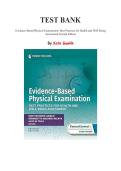
Evidence-Based Physical Examination: Best Practices for Health and Well-Being
Assessment Second Edition
By Kate Gawlik
SC
O
R
EG
U
ID
ES
HGFDSA
, ,lkjhgfdsa
Table of Content
Part I: Foundations of Clinical Practice
1. Approach to Evidence-Based Assessment of Health and Well-Being
2. Evidence-Based Assessment of Clinician Well-Being
3. Evidence-Based History Taking, Approach to Patient Visits, and Documentation
4. Evidence-Based, Culturally Sensitive, Therapeutic Communication
5. Evidence-Based Assessment of Children and Adolescents
6. Evidence-Based Assessment of the Older Adult
SC
Part II: Evidence-Based Physical Examination and Assessment of Body Systems
7. Evidence-Based General Survey Including Assessment of Vital Signs
8. Evidence-Based Assessment of Body Habitus, Body Mass Index, and Nutrition
9. Evidence-Based Assessment of the Cardiovascular System
10. Evidence-Based Assessment of the Vascular System
11. Evidence-Based Assessment of the Lungs and Respiratory System
O
12. Evidence-Based Assessment of the Skin, Hair, and Nails
13. Evidence-Based Assessment of the Lymphatic System
14. Evidence-Based Assessment of the Head and Neck
R
15. Evidence-Based Assessment of the Eyes
16. Evidence-Based Assessment of the Ears, Nose, and Throat
17. Evidence-Based Assessment of the Nervous System
EG
18. Evidence-Based Assessment of the Musculoskeletal System
19. Evidence-Based Assessment of the Abdominal, Gastrointestinal, and Urological Systems
Part III: Evidence-Based Physical Examination and Assessment of Sexual and Reproductive Health
20. Evidence-Based Assessment of Sexual Orientation and Gender Identity
21. Evidence-Based Assessment of the Breasts and Axillae
U
22. Evidence-Based Assessment of The Male Genitalia, Prostate, Rectum, and Anus
23. Evidence-Based Assessment of the Female Genitourinary System
24. Evidence-Based Obstetric Assessment
ID
Part IV: Evidence-Based Physical Examination and Assessment of Mental Health
25. Evidence-Based Assessment of Mental Health
26. Evidence-Based Assessment of Substance Use Disorder
27. Evidence-Based Assessment and Screening for Traumatic Experiences: Abuse, Neglect, and Intimate
ES
Partner Violence
Part V: Special Topics in Evidence-Based Assessment
28. Evidence-Based Assessment for Medical Clearance
29. Evidence-Based Assessment Using Telehealth Technologies
30. Evidence-Based Health and Well-Being Assessment: Putting It All Together
HGFDSA
, ,lkjhgfdsa
Evidence-Based Physical Examination Best Practices for Health & Well-Being
Assessment 2nd Edition Test Bank
Chapter 1. APPROACH TO EVIDENCE-BASED ASSESSMENT OF HEALTH AND WELL-
BEING
MULTIPLE CHOICE
1. After completing an initial assessment of a patient, the nurse has charted that his respirations
are eupneic and his pulse is 58 beats per minute. These types of data would be:
SC
a Objective.
.
b Reflective.
.
O
c Subjective.
.
d Introspective.
R
.
EG
ANS: A
Objective data are what the health professional observes by inspecting, percussing, palpating,
and auscultating during the physical examination. Subjective data is what the person says about
him or herself during history taking. The terms reflective and introspective are not used to
describe data.
DIF: Cognitive Level: Understanding (Comprehension) REF: z. 2
U
MSC: Client Needs: Safe and Effective Care Environment: Management of Care
2. A patient tells the nurse that he is very nervous, is nauseated, and feels hot. These types of
data would be:
ID
a Objective.
.
ES
b Reflective.
.
c Subjective.
.
d Introspective.
.
ANS: C
Subjective data are what the person says about him or herself during history taking. Objective
HGFDSA
, ,lkjhgfdsa
data are what the health professional observes by inspecting, percussing, palpating, and
auscultating during the physical examination. The terms reflective and introspective are not used
to describe data.
DIF: Cognitive Level: Understanding (Comprehension) REF: z. 2
MSC: Client Needs: Safe and Effective Care Environment: Management of Care
3. The patients record, laboratory studies, objective data, and subjective data combine to form
the:
SC
a Data base.
.
b Admitting data.
.
c Financial statement.
O
.
d Discharge summary.
R
.
ANS: A
EG
Together with the patients record and laboratory studies, the objective and subjective data form
the data base. The other items are not part of the patients record, laboratory studies, or data.
DIF: Cognitive Level: Remembering (Knowledge) REF: z. 2
MSC: Client Needs: Safe and Effective Care Environment: Management of Care
4. When listening to a patients breath sounds, the nurse is unsure of a sound that is heard. The
nurses next action should be to:
U
a Immediately notify the patients physician.
ID
.
b Document the sound exactly as it was heard.
.
c Validate the data by asking a coworker to listen to the breath sounds.
ES
.
d Assess again in 20 minutes to note whether the sound is still present.
.
ANS: C
When unsure of a sound heard while listening to a patients breath sounds, the nurse validates the
data to ensure accuracy. If the nurse has less experience in an area, then he or she asks an expert
to listen.
HGFDSA
TEST BANK
Evidence-Based Physical Examination: Best Practices for Health and Well-Being
Assessment Second Edition
By Kate Gawlik
SC
O
R
EG
U
ID
ES
HGFDSA
, ,lkjhgfdsa
Table of Content
Part I: Foundations of Clinical Practice
1. Approach to Evidence-Based Assessment of Health and Well-Being
2. Evidence-Based Assessment of Clinician Well-Being
3. Evidence-Based History Taking, Approach to Patient Visits, and Documentation
4. Evidence-Based, Culturally Sensitive, Therapeutic Communication
5. Evidence-Based Assessment of Children and Adolescents
6. Evidence-Based Assessment of the Older Adult
SC
Part II: Evidence-Based Physical Examination and Assessment of Body Systems
7. Evidence-Based General Survey Including Assessment of Vital Signs
8. Evidence-Based Assessment of Body Habitus, Body Mass Index, and Nutrition
9. Evidence-Based Assessment of the Cardiovascular System
10. Evidence-Based Assessment of the Vascular System
11. Evidence-Based Assessment of the Lungs and Respiratory System
O
12. Evidence-Based Assessment of the Skin, Hair, and Nails
13. Evidence-Based Assessment of the Lymphatic System
14. Evidence-Based Assessment of the Head and Neck
R
15. Evidence-Based Assessment of the Eyes
16. Evidence-Based Assessment of the Ears, Nose, and Throat
17. Evidence-Based Assessment of the Nervous System
EG
18. Evidence-Based Assessment of the Musculoskeletal System
19. Evidence-Based Assessment of the Abdominal, Gastrointestinal, and Urological Systems
Part III: Evidence-Based Physical Examination and Assessment of Sexual and Reproductive Health
20. Evidence-Based Assessment of Sexual Orientation and Gender Identity
21. Evidence-Based Assessment of the Breasts and Axillae
U
22. Evidence-Based Assessment of The Male Genitalia, Prostate, Rectum, and Anus
23. Evidence-Based Assessment of the Female Genitourinary System
24. Evidence-Based Obstetric Assessment
ID
Part IV: Evidence-Based Physical Examination and Assessment of Mental Health
25. Evidence-Based Assessment of Mental Health
26. Evidence-Based Assessment of Substance Use Disorder
27. Evidence-Based Assessment and Screening for Traumatic Experiences: Abuse, Neglect, and Intimate
ES
Partner Violence
Part V: Special Topics in Evidence-Based Assessment
28. Evidence-Based Assessment for Medical Clearance
29. Evidence-Based Assessment Using Telehealth Technologies
30. Evidence-Based Health and Well-Being Assessment: Putting It All Together
HGFDSA
, ,lkjhgfdsa
Evidence-Based Physical Examination Best Practices for Health & Well-Being
Assessment 2nd Edition Test Bank
Chapter 1. APPROACH TO EVIDENCE-BASED ASSESSMENT OF HEALTH AND WELL-
BEING
MULTIPLE CHOICE
1. After completing an initial assessment of a patient, the nurse has charted that his respirations
are eupneic and his pulse is 58 beats per minute. These types of data would be:
SC
a Objective.
.
b Reflective.
.
O
c Subjective.
.
d Introspective.
R
.
EG
ANS: A
Objective data are what the health professional observes by inspecting, percussing, palpating,
and auscultating during the physical examination. Subjective data is what the person says about
him or herself during history taking. The terms reflective and introspective are not used to
describe data.
DIF: Cognitive Level: Understanding (Comprehension) REF: z. 2
U
MSC: Client Needs: Safe and Effective Care Environment: Management of Care
2. A patient tells the nurse that he is very nervous, is nauseated, and feels hot. These types of
data would be:
ID
a Objective.
.
ES
b Reflective.
.
c Subjective.
.
d Introspective.
.
ANS: C
Subjective data are what the person says about him or herself during history taking. Objective
HGFDSA
, ,lkjhgfdsa
data are what the health professional observes by inspecting, percussing, palpating, and
auscultating during the physical examination. The terms reflective and introspective are not used
to describe data.
DIF: Cognitive Level: Understanding (Comprehension) REF: z. 2
MSC: Client Needs: Safe and Effective Care Environment: Management of Care
3. The patients record, laboratory studies, objective data, and subjective data combine to form
the:
SC
a Data base.
.
b Admitting data.
.
c Financial statement.
O
.
d Discharge summary.
R
.
ANS: A
EG
Together with the patients record and laboratory studies, the objective and subjective data form
the data base. The other items are not part of the patients record, laboratory studies, or data.
DIF: Cognitive Level: Remembering (Knowledge) REF: z. 2
MSC: Client Needs: Safe and Effective Care Environment: Management of Care
4. When listening to a patients breath sounds, the nurse is unsure of a sound that is heard. The
nurses next action should be to:
U
a Immediately notify the patients physician.
ID
.
b Document the sound exactly as it was heard.
.
c Validate the data by asking a coworker to listen to the breath sounds.
ES
.
d Assess again in 20 minutes to note whether the sound is still present.
.
ANS: C
When unsure of a sound heard while listening to a patients breath sounds, the nurse validates the
data to ensure accuracy. If the nurse has less experience in an area, then he or she asks an expert
to listen.
HGFDSA


