Elite Test Bank:
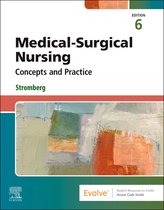
Medical-Surgical Nursing
Concepts and Practice
(3rd Edition & 2026
Standards)
PART I: THE PRIMER
Mastering medical-surgical nursing transcends academic memorization; it demands the
algorithmic execution of clinical intuition to avert physiological collapse. This document forges
that professional mastery, embedding 2026 regulatory and pathophysiological standards directly
into your clinical reflexes.
The "Panic Button" Cheat Sheet:
● Sepsis 100-100-100 Rule: Temperature >100°F, HR >100 bpm, or SBP <100 mmHg
demands immediate 30 mL/kg IV crystalloid resuscitation.
● AHA 2026 Hypertension: Stage 1 (130-139/80-89 mmHg) combined with a PREVENT
score \ge 7.5% mandates instant pharmacotherapy.
● Joint Commission NPG 12 (2026): Staffing adequacy is strictly governed by
competency-based acuity mapping overseen by a nurse executive, completely prohibiting
static headcount ratios.
● NCLEX 2026 Scope: Unbiased care and the mitigation of social determinants of health
(SDOH) are mandatory, scorable clinical actions.
PART II: THE ELITE TEST BANK
Q1: A patient receives a rapid infusion of a highly hypertonic 3% sodium chloride
intravenous solution. What is the immediate physiological response of the erythrocytes?
A) Erythrocytes will swell and undergo hemolysis due to rapid fluid influx. B) Erythrocytes will
undergo crenation due to intracellular water efflux. C) Erythrocytes will increase active transport
mechanisms to equalize hydrostatic pressure. D) Erythrocytes will remain stable due to the
innate buffering capacity of the plasma membrane.
● The Answer: B (Erythrocytes will undergo crenation due to intracellular water efflux)
● Distractor Analysis: Option A incorrectly describes the cellular reaction to a hypotonic
solution. Options C and D falsely assume that active cellular mechanisms can instantly
override fundamental osmotic pressure gradients, a lethal amateur assumption.
● The Mentor's Analysis: The Rule of Osmolarity states that fluid shifts strictly follow the
concentration gradient. Exposing cells to a hypertonic environment strips them of
intracellular water, leading to rapid crenation (shrinking). In 2026 critical care,
, miscalculating IV tonicity during fluid resuscitation leads directly to iatrogenic cellular
dehydration and microvascular sludging.
Q2: A patient presents with a pH of 7.28, PaCO2 of 68 mmHg, and HCO3 of 25 mEq/L.
Which physiological compensatory mechanism will the body initiate first, and what is its
operational timeline? A) Respiratory compensation via hyperventilation, occurring within
minutes. B) Renal compensation via bicarbonate retention, demanding hours to days. C)
Hepatic compensation via lactate conversion, occurring within minutes. D) Cellular buffer
compensation via potassium exchange, demanding hours to days.
● The Answer: B (Renal compensation via bicarbonate retention, demanding hours to
days)
● Distractor Analysis: Option A is impossible; the primary disorder is respiratory acidosis
(elevated PaCO2), so the failing lungs cannot compensate for their own deficit. Options C
and D misrepresent the primary acid-base buffering hierarchy.
● The Mentor's Analysis: The Acid-Base Imperative dictates that while respiratory
compensation for metabolic derangements is immediate, metabolic (renal) compensation
for respiratory failure takes 48 to 72 hours.
Acid-Base Primary Failing System Compensatory System Time to Maximum
Derangement Efficacy
Respiratory Acidosis Lungs (Retaining CO2) Kidneys (Retain HCO3) 48 - 72 Hours
Metabolic Acidosis Kidneys/Metabolism Lungs (Exhale CO2) Minutes to Hours
Q3: A progressive care patient exhibits peaked T waves and a widened QRS complex.
The laboratory reports a serum potassium of 6.8 mEq/L. What is the precise
neuro-electrochemical rationale for this dysrhythmia? A) Hyperkalemia increases the
resting membrane potential, placing the myocardium dangerously close to the depolarization
threshold. B) Hyperkalemia decreases the resting membrane potential, completely preventing
repolarization of the ventricles. C) Hyperkalemia blocks sodium channels, preventing the
initiation of the cardiac action potential. D) Hyperkalemia triggers a massive influx of calcium,
causing tetanic myocardial contractions.
● The Answer: A (Hyperkalemia increases the resting membrane potential, placing the
myocardium dangerously close to the depolarization threshold)
● Distractor Analysis: Option B describes the pathophysiology of hypokalemia, not
hyperkalemia. Options C and D fundamentally misunderstand the role of potassium in
phase 3 repolarization and resting membrane potential maintenance.
● The Mentor's Analysis: The Neuro-Electrochemical Law states that action potentials are
all-or-nothing. Extracellular hyperkalemia raises the resting membrane potential closer to
the threshold. This initial hyperexcitability accelerates repolarization (peaked T waves) but
progressively depresses conduction velocity (widened QRS), ultimately risking lethal
ventricular fibrillation or asystole.
Q4: A 2026 Joint Commission surveyor evaluates your unit's compliance with National
Performance Goal 12 (NPG 12). Which operational metric must the nurse executive
provide to demonstrate compliance? A) A historic ledger showing a rigid 1:5 nurse-to-patient
ratio over the last fiscal year. B) Data demonstrating that staffing plans are grounded in
validated competencies aligned with current patient acuity. C) Proof that unlicensed assistive
personnel (UAP) are utilized to offset nursing overtime. D) A roster showing that all shifts are
equally staffed regardless of the specific patient census.
● The Answer: B (Data demonstrating that staffing plans are grounded in validated
competencies aligned with current patient acuity)
, ● Distractor Analysis: Options A and D represent obsolete, static headcount models that
explicitly violate NPG 12. Option C is a dangerous financial workaround that jeopardizes
patient safety and invites immediate accreditation failure.
● The Mentor's Analysis: NPG 12 shifts staffing from a numerical headcount to a dynamic
measure of clinical quality and patient safety. Hospitals must verify each nurse's
competency to deliver safe care within their specific role based on the real-time acuity,
complexity, and specialized needs of the patient population.
Q5: A patient is admitted with a severe exacerbation of chronic obstructive pulmonary
disease (COPD). According to the GOLD 2026 standards, if the patient is classified in
Group E, what is the mandatory pharmacological escalation? A) Initiate a short-acting
beta-agonist (SABA) as daily monotherapy. B) Escalate immediately to systemic oral
corticosteroids for lifelong maintenance. C) Utilize a combination of a LABA and LAMA; add an
ICS only if blood eosinophils are \ge 300 cells/\muL. D) Initiate continuous positive airway
pressure (CPAP) and withhold all bronchodilators.
● The Answer: C (Utilize a combination of a LABA and LAMA; add an ICS only if blood
eosinophils are \ge 300 cells/\muL)
● Distractor Analysis: Option A is appropriate only for Group A (mild). Option B is a
rescue therapy for acute flares, not long-term Group E management. Option D is an
inappropriate intervention that ignores pathophysiological bronchoconstriction.
● The Mentor's Analysis: COPD is an active, smoldering fire. The 2026 GOLD guidelines
require aggressive dual bronchodilation (Long-Acting Beta-Agonist + Long-Acting
Muscarinic Antagonist) for frequent exacerbators (Group E). Inhaled corticosteroids (ICS)
are reserved specifically for patients demonstrating a concurrent eosinophilic phenotype.
Q6: You are treating a patient with Stage 1 Hypertension (135/86 mmHg). According to the
AHA 2025/2026 guidelines, under what exact condition must you immediately initiate
pharmacological blood pressure-lowering medication? A) Only if the patient has a
documented history of a previous myocardial infarction. B) If the patient's PREVENT score is
\ge 7.5%. C) If the patient's blood pressure remains elevated after 6 months of strict lifestyle
modification. D) If the patient develops concurrent, refractory hyponatremia.
● The Answer: B (If the patient's PREVENT score is \ge 7.5%)
● Distractor Analysis: Options A and C represent outdated, passive management
protocols from pre-2017 thresholds. Option D introduces an unrelated electrolyte
imbalance that does not dictate the initiation of antihypertensives.
● The Mentor's Analysis: The AHA mandates that patients with Stage 1 Hypertension
(130-139/80-89) and a calculated PREVENT risk score \ge 7.5% require immediate
pharmacological intervention rather than watchful waiting. Delaying therapy invites silent,
cumulative microvascular destruction.
Q7: A patient with chronic kidney disease (CKD) presents with profound fatigue.
Laboratory results show a Hemoglobin of 10.2 g/dL. According to KDIGO 2026 standards,
how do you diagnose "iron-restricted erythropoiesis" before initiating
erythropoiesis-stimulating agents (ESAs)? A) Transferrin saturation (TSAT) < 30% and
Ferritin is normal or high. B) TSAT > 50% and Ferritin is critically low. C) Hemoglobin drops
below 9.0 g/dL regardless of iron indices. D) Mean corpuscular volume (MCV) is elevated above
100 fL.
● The Answer: A (Transferrin saturation (TSAT) < 30% and Ferritin is normal or high)
● Distractor Analysis: Option B describes iron overload. Option C ignores the core
diagnostic metric for functional iron deficiency. Option D describes macrocytic anemia
(B12/Folate deficiency), not iron-restricted erythropoiesis.
Medical-Surgical Nursing
Concepts and Practice
(3rd Edition & 2026
Standards)
PART I: THE PRIMER
Mastering medical-surgical nursing transcends academic memorization; it demands the
algorithmic execution of clinical intuition to avert physiological collapse. This document forges
that professional mastery, embedding 2026 regulatory and pathophysiological standards directly
into your clinical reflexes.
The "Panic Button" Cheat Sheet:
● Sepsis 100-100-100 Rule: Temperature >100°F, HR >100 bpm, or SBP <100 mmHg
demands immediate 30 mL/kg IV crystalloid resuscitation.
● AHA 2026 Hypertension: Stage 1 (130-139/80-89 mmHg) combined with a PREVENT
score \ge 7.5% mandates instant pharmacotherapy.
● Joint Commission NPG 12 (2026): Staffing adequacy is strictly governed by
competency-based acuity mapping overseen by a nurse executive, completely prohibiting
static headcount ratios.
● NCLEX 2026 Scope: Unbiased care and the mitigation of social determinants of health
(SDOH) are mandatory, scorable clinical actions.
PART II: THE ELITE TEST BANK
Q1: A patient receives a rapid infusion of a highly hypertonic 3% sodium chloride
intravenous solution. What is the immediate physiological response of the erythrocytes?
A) Erythrocytes will swell and undergo hemolysis due to rapid fluid influx. B) Erythrocytes will
undergo crenation due to intracellular water efflux. C) Erythrocytes will increase active transport
mechanisms to equalize hydrostatic pressure. D) Erythrocytes will remain stable due to the
innate buffering capacity of the plasma membrane.
● The Answer: B (Erythrocytes will undergo crenation due to intracellular water efflux)
● Distractor Analysis: Option A incorrectly describes the cellular reaction to a hypotonic
solution. Options C and D falsely assume that active cellular mechanisms can instantly
override fundamental osmotic pressure gradients, a lethal amateur assumption.
● The Mentor's Analysis: The Rule of Osmolarity states that fluid shifts strictly follow the
concentration gradient. Exposing cells to a hypertonic environment strips them of
intracellular water, leading to rapid crenation (shrinking). In 2026 critical care,
, miscalculating IV tonicity during fluid resuscitation leads directly to iatrogenic cellular
dehydration and microvascular sludging.
Q2: A patient presents with a pH of 7.28, PaCO2 of 68 mmHg, and HCO3 of 25 mEq/L.
Which physiological compensatory mechanism will the body initiate first, and what is its
operational timeline? A) Respiratory compensation via hyperventilation, occurring within
minutes. B) Renal compensation via bicarbonate retention, demanding hours to days. C)
Hepatic compensation via lactate conversion, occurring within minutes. D) Cellular buffer
compensation via potassium exchange, demanding hours to days.
● The Answer: B (Renal compensation via bicarbonate retention, demanding hours to
days)
● Distractor Analysis: Option A is impossible; the primary disorder is respiratory acidosis
(elevated PaCO2), so the failing lungs cannot compensate for their own deficit. Options C
and D misrepresent the primary acid-base buffering hierarchy.
● The Mentor's Analysis: The Acid-Base Imperative dictates that while respiratory
compensation for metabolic derangements is immediate, metabolic (renal) compensation
for respiratory failure takes 48 to 72 hours.
Acid-Base Primary Failing System Compensatory System Time to Maximum
Derangement Efficacy
Respiratory Acidosis Lungs (Retaining CO2) Kidneys (Retain HCO3) 48 - 72 Hours
Metabolic Acidosis Kidneys/Metabolism Lungs (Exhale CO2) Minutes to Hours
Q3: A progressive care patient exhibits peaked T waves and a widened QRS complex.
The laboratory reports a serum potassium of 6.8 mEq/L. What is the precise
neuro-electrochemical rationale for this dysrhythmia? A) Hyperkalemia increases the
resting membrane potential, placing the myocardium dangerously close to the depolarization
threshold. B) Hyperkalemia decreases the resting membrane potential, completely preventing
repolarization of the ventricles. C) Hyperkalemia blocks sodium channels, preventing the
initiation of the cardiac action potential. D) Hyperkalemia triggers a massive influx of calcium,
causing tetanic myocardial contractions.
● The Answer: A (Hyperkalemia increases the resting membrane potential, placing the
myocardium dangerously close to the depolarization threshold)
● Distractor Analysis: Option B describes the pathophysiology of hypokalemia, not
hyperkalemia. Options C and D fundamentally misunderstand the role of potassium in
phase 3 repolarization and resting membrane potential maintenance.
● The Mentor's Analysis: The Neuro-Electrochemical Law states that action potentials are
all-or-nothing. Extracellular hyperkalemia raises the resting membrane potential closer to
the threshold. This initial hyperexcitability accelerates repolarization (peaked T waves) but
progressively depresses conduction velocity (widened QRS), ultimately risking lethal
ventricular fibrillation or asystole.
Q4: A 2026 Joint Commission surveyor evaluates your unit's compliance with National
Performance Goal 12 (NPG 12). Which operational metric must the nurse executive
provide to demonstrate compliance? A) A historic ledger showing a rigid 1:5 nurse-to-patient
ratio over the last fiscal year. B) Data demonstrating that staffing plans are grounded in
validated competencies aligned with current patient acuity. C) Proof that unlicensed assistive
personnel (UAP) are utilized to offset nursing overtime. D) A roster showing that all shifts are
equally staffed regardless of the specific patient census.
● The Answer: B (Data demonstrating that staffing plans are grounded in validated
competencies aligned with current patient acuity)
, ● Distractor Analysis: Options A and D represent obsolete, static headcount models that
explicitly violate NPG 12. Option C is a dangerous financial workaround that jeopardizes
patient safety and invites immediate accreditation failure.
● The Mentor's Analysis: NPG 12 shifts staffing from a numerical headcount to a dynamic
measure of clinical quality and patient safety. Hospitals must verify each nurse's
competency to deliver safe care within their specific role based on the real-time acuity,
complexity, and specialized needs of the patient population.
Q5: A patient is admitted with a severe exacerbation of chronic obstructive pulmonary
disease (COPD). According to the GOLD 2026 standards, if the patient is classified in
Group E, what is the mandatory pharmacological escalation? A) Initiate a short-acting
beta-agonist (SABA) as daily monotherapy. B) Escalate immediately to systemic oral
corticosteroids for lifelong maintenance. C) Utilize a combination of a LABA and LAMA; add an
ICS only if blood eosinophils are \ge 300 cells/\muL. D) Initiate continuous positive airway
pressure (CPAP) and withhold all bronchodilators.
● The Answer: C (Utilize a combination of a LABA and LAMA; add an ICS only if blood
eosinophils are \ge 300 cells/\muL)
● Distractor Analysis: Option A is appropriate only for Group A (mild). Option B is a
rescue therapy for acute flares, not long-term Group E management. Option D is an
inappropriate intervention that ignores pathophysiological bronchoconstriction.
● The Mentor's Analysis: COPD is an active, smoldering fire. The 2026 GOLD guidelines
require aggressive dual bronchodilation (Long-Acting Beta-Agonist + Long-Acting
Muscarinic Antagonist) for frequent exacerbators (Group E). Inhaled corticosteroids (ICS)
are reserved specifically for patients demonstrating a concurrent eosinophilic phenotype.
Q6: You are treating a patient with Stage 1 Hypertension (135/86 mmHg). According to the
AHA 2025/2026 guidelines, under what exact condition must you immediately initiate
pharmacological blood pressure-lowering medication? A) Only if the patient has a
documented history of a previous myocardial infarction. B) If the patient's PREVENT score is
\ge 7.5%. C) If the patient's blood pressure remains elevated after 6 months of strict lifestyle
modification. D) If the patient develops concurrent, refractory hyponatremia.
● The Answer: B (If the patient's PREVENT score is \ge 7.5%)
● Distractor Analysis: Options A and C represent outdated, passive management
protocols from pre-2017 thresholds. Option D introduces an unrelated electrolyte
imbalance that does not dictate the initiation of antihypertensives.
● The Mentor's Analysis: The AHA mandates that patients with Stage 1 Hypertension
(130-139/80-89) and a calculated PREVENT risk score \ge 7.5% require immediate
pharmacological intervention rather than watchful waiting. Delaying therapy invites silent,
cumulative microvascular destruction.
Q7: A patient with chronic kidney disease (CKD) presents with profound fatigue.
Laboratory results show a Hemoglobin of 10.2 g/dL. According to KDIGO 2026 standards,
how do you diagnose "iron-restricted erythropoiesis" before initiating
erythropoiesis-stimulating agents (ESAs)? A) Transferrin saturation (TSAT) < 30% and
Ferritin is normal or high. B) TSAT > 50% and Ferritin is critically low. C) Hemoglobin drops
below 9.0 g/dL regardless of iron indices. D) Mean corpuscular volume (MCV) is elevated above
100 fL.
● The Answer: A (Transferrin saturation (TSAT) < 30% and Ferritin is normal or high)
● Distractor Analysis: Option B describes iron overload. Option C ignores the core
diagnostic metric for functional iron deficiency. Option D describes macrocytic anemia
(B12/Folate deficiency), not iron-restricted erythropoiesis.