

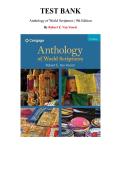
TEST BANK
Anthology of World Scriptures | 9th Edition
By Robert E. Van Voorst
SC
O
R
EG
U
ID
ES
,Table of Content
Chapter 1. Scripture Among the World’s Religions
Chapter 2. Hinduism
Chapter 3. Buddhism
Chapter 4. Jainism
Chapter 5. Sikhism
SC
Chapter 6. Confucianism
Chapter 7. Daoism
Chapter 8. Shinto
Chapter 9. Zoroastrianism
O
Chapter 10. Judaism
R
Chapter 11. Christianity
Chapter 12. Islam
EG
Chapter 13. New Religious Movements
U
ID
ES
,Chapter 1
TRUE/FALSE
1. Scriptures all have the same function.
ANS: F PTS: 1 REF: p. 6 / sec.1-2
2. Most scriptures originated in oral tradition.
ANS: T PTS: 1 REF: p. 7 / sec. 1-2
3. For moderns, the written word predominates.
SC
ANS: T PTS: 1 REF: p. 7 / sec. 1-2
4. Scriptures, by definition, are especially sacred.
ANS: T PTS: 1 REF: p. 7 / sec. 1-2
5. One mark of scriptures’ holiness is their use in ritual.
O
ANS: T PTS: 1 REF: p. 8 / sec. 1-2
6. The Musgrave Ritual is a scriptural rite.
ANS: F PTS: 1 REF: p. 10 / sec. 1-3
R
7. Scriptures lack the authority of some other religious writings.
ANS: F PTS: 1 REF: p. 8 / sec. 1-2
EG
8. In the Western “religions of the book,” scriptures regulate much of life.
ANS: T PTS: 1 REF: p. 8 / sec. 1-2
9. The Talmud is the Hebrew Bible.
ANS: F PTS: 1 REF: p. 8 / sec. 1-2
10. World religions typically venerate their scriptures.
U
ANS: T PTS: 1 REF: p. 8 / sec. 1-2
11. Scripture is barred from public worship.
ANS: F PTS: 1 REF: p. 10 / sec. 1-3
ID
12. Scriptures can be used doctrinally.
ANS: T PTS: 1 REF: p. 9 / sec.1-3
13. The newest type of cognitive use of scripture is in interfaith dialogue.
ES
ANS: T PTS: 1 REF: p. 10 / sec. 1-3
14. Scripture can only be used cognitively.
ANS: F PTS: 1 REF: p. 11 / sec. 1-3
15. Informative uses of scripture impart knowledge to believers.
ANS: T PTS: 1 REF: p. 11 / sec. 1-3
MULTIPLE CHOICE
1. The first anthology of world scriptures for popular use was edited by
a. Ballou c. Van der Leeuw
, b. Conway d. Vogt
ANS: B PTS: 1 REF: p. 3 / sec. 1-1
2. How many times has Ballou’s book been revised?
a. Never c. Three Times
b. Once d. Six Times
ANS: A PTS: 1 REF: p. 3 / sec. 1-1
3. How many stages has the study of scripture passed through in the last 150 years?
a. Two c. Four
b. Three d. Six
ANS: B PTS: 1 REF: p. 3 / sec. 1-1
SC
4. How many chapters in Religion in Essence and Manifestation deal with scripture?
a. One c. Four
b. Two d. Six
ANS: A PTS: 1 REF: p. 3 / sec. 1-1
5. Whose book was first published under the title From Primitives to Zen?
O
a. Van der Leeuw’s c. Lessa’s
b. Vogt’s d. Eliade’s
R
ANS: D PTS: 1 REF: p. 3 / sec. 1-1
6. Which book has remained in print continually since 1939?
EG
a. The Bible of the World c. Religions in Essence and Manifestation
b. A World Religions Bible d. Reader in Comparative Religions
ANS: A PTS: 1 REF: p. 3 / sec. 1-1
7. The present work (Anthology of World Scriptures) is representative of which stage of scripture
study?
a. First
U
c. Fifth
b. Third d. Sixth
ANS: B PTS: 1 REF: p. 5 / sec. 1-1
ID
8. The Upanishads include philosophy about
a. The nature of reality c. the reality of nature
b. The nature of plants d. God’s foreknowledge
ANS: A PTS: 1 REF: p. 5 / sec. 1-2
ES
9. Genres are also known as
a. Devotionals c. Scriptures
b. Literary Forms d. Djinns
ANS: B PTS: 1 REF: p. 5 / sec. 1-2
10. What term do Coburn and Folkert reject?
a. Canon c. Word
b. Gospel d. Scripture
ANS: D PTS: 1 REF: p. 7 / sec. 1-2
Anthology of World Scriptures | 9th Edition
By Robert E. Van Voorst
SC
O
R
EG
U
ID
ES
,Table of Content
Chapter 1. Scripture Among the World’s Religions
Chapter 2. Hinduism
Chapter 3. Buddhism
Chapter 4. Jainism
Chapter 5. Sikhism
SC
Chapter 6. Confucianism
Chapter 7. Daoism
Chapter 8. Shinto
Chapter 9. Zoroastrianism
O
Chapter 10. Judaism
R
Chapter 11. Christianity
Chapter 12. Islam
EG
Chapter 13. New Religious Movements
U
ID
ES
,Chapter 1
TRUE/FALSE
1. Scriptures all have the same function.
ANS: F PTS: 1 REF: p. 6 / sec.1-2
2. Most scriptures originated in oral tradition.
ANS: T PTS: 1 REF: p. 7 / sec. 1-2
3. For moderns, the written word predominates.
SC
ANS: T PTS: 1 REF: p. 7 / sec. 1-2
4. Scriptures, by definition, are especially sacred.
ANS: T PTS: 1 REF: p. 7 / sec. 1-2
5. One mark of scriptures’ holiness is their use in ritual.
O
ANS: T PTS: 1 REF: p. 8 / sec. 1-2
6. The Musgrave Ritual is a scriptural rite.
ANS: F PTS: 1 REF: p. 10 / sec. 1-3
R
7. Scriptures lack the authority of some other religious writings.
ANS: F PTS: 1 REF: p. 8 / sec. 1-2
EG
8. In the Western “religions of the book,” scriptures regulate much of life.
ANS: T PTS: 1 REF: p. 8 / sec. 1-2
9. The Talmud is the Hebrew Bible.
ANS: F PTS: 1 REF: p. 8 / sec. 1-2
10. World religions typically venerate their scriptures.
U
ANS: T PTS: 1 REF: p. 8 / sec. 1-2
11. Scripture is barred from public worship.
ANS: F PTS: 1 REF: p. 10 / sec. 1-3
ID
12. Scriptures can be used doctrinally.
ANS: T PTS: 1 REF: p. 9 / sec.1-3
13. The newest type of cognitive use of scripture is in interfaith dialogue.
ES
ANS: T PTS: 1 REF: p. 10 / sec. 1-3
14. Scripture can only be used cognitively.
ANS: F PTS: 1 REF: p. 11 / sec. 1-3
15. Informative uses of scripture impart knowledge to believers.
ANS: T PTS: 1 REF: p. 11 / sec. 1-3
MULTIPLE CHOICE
1. The first anthology of world scriptures for popular use was edited by
a. Ballou c. Van der Leeuw
, b. Conway d. Vogt
ANS: B PTS: 1 REF: p. 3 / sec. 1-1
2. How many times has Ballou’s book been revised?
a. Never c. Three Times
b. Once d. Six Times
ANS: A PTS: 1 REF: p. 3 / sec. 1-1
3. How many stages has the study of scripture passed through in the last 150 years?
a. Two c. Four
b. Three d. Six
ANS: B PTS: 1 REF: p. 3 / sec. 1-1
SC
4. How many chapters in Religion in Essence and Manifestation deal with scripture?
a. One c. Four
b. Two d. Six
ANS: A PTS: 1 REF: p. 3 / sec. 1-1
5. Whose book was first published under the title From Primitives to Zen?
O
a. Van der Leeuw’s c. Lessa’s
b. Vogt’s d. Eliade’s
R
ANS: D PTS: 1 REF: p. 3 / sec. 1-1
6. Which book has remained in print continually since 1939?
EG
a. The Bible of the World c. Religions in Essence and Manifestation
b. A World Religions Bible d. Reader in Comparative Religions
ANS: A PTS: 1 REF: p. 3 / sec. 1-1
7. The present work (Anthology of World Scriptures) is representative of which stage of scripture
study?
a. First
U
c. Fifth
b. Third d. Sixth
ANS: B PTS: 1 REF: p. 5 / sec. 1-1
ID
8. The Upanishads include philosophy about
a. The nature of reality c. the reality of nature
b. The nature of plants d. God’s foreknowledge
ANS: A PTS: 1 REF: p. 5 / sec. 1-2
ES
9. Genres are also known as
a. Devotionals c. Scriptures
b. Literary Forms d. Djinns
ANS: B PTS: 1 REF: p. 5 / sec. 1-2
10. What term do Coburn and Folkert reject?
a. Canon c. Word
b. Gospel d. Scripture
ANS: D PTS: 1 REF: p. 7 / sec. 1-2


