

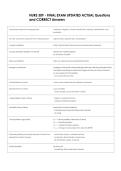
NURS 309 - FINAL EXAM UPDATED ACTUAL Questions
and CORRECT Answers
what are the steps of the nursing process? assessment, diagnosis, outcome identification, planning, implementation, and
evaluation.
what are components assessment (the nursing process)? objective data, subjective data, and database
complete database initial: long/full health history and physical examination/assessment
focused database (problem-centered) specific issue needed assessed
ex; shortness of breath
follow-up database follow up a previous issue ensuring improvement
emergency database emergency interventions being implicated while also collecting information about
the patient and doing an assessment to figure out the root cause of the issue
ex; pt is purple and not breathing
- what caused this and why?
4 characteristics of culture culture can be shared, learned, adapted, and dynamic.
biomedical theory of illness cause and effect
- viruses, bacteria, lack of movement, nutrition
magicoreligious theory of illness magical or supernatural forces
- voodoo or protection objects
naturalistic theory of illness keep forces of nature in balance
- hot illness (fever) should be treated with cold food
- yin-yang
1st level priorities: high priority A ---- > airway problems: obstruction of airway
B------ > breathing problems
C ----- > cardiac/circulation problems
V ----- > vital sign concerns (high fever, abnormal BP/HR)
2nd level priorities (can quickly become 1st level if not - mental status chance, untreated med issue
assessed in a timely manner) - acute pain, abnormal labs, urinary issues
- risk for infection, safety, or security
3rd level priorities all other stuff
- pt teaching, self concept issues, insomnia
, evidence-based practice a systematic approach to practice that emphasizes the use of best evidence in
combination with
- the clinician's experience
- patient preferences and values
best methods for evidence-based practice 1. randomized trials = best method
2. evidence 5 years or younger
3. use of up-to-date research
- consider the clinician's experience in order for these to be effective
what kind of data is collected during health history? only SUBJECTIVE information
components of a health hx include 1. biographical data
2. reason for seeking care (in pt own words)
3. hx of present illness; hx of present health
4. past health: meds, allergies, illnesses, immunizations, operations, medical hx, OB
hx, last exam dates
5. family hx
6. review of systems
7. functional assessment (including ADLs)
what is important about the review of systems? - evaluates the past and present health state of each body system
- to double check for significant data
- to evaluate health promotion practices (TSEs, sunscreen, mammograms)
mental status exam components A: appearance---> dressed appropriately, adequate hygiene, posture
B: behavior---- > eye contact, attention span
C: cognition ----- > orientation, LOC (A&Ox3), memory issues
T: though processes ---- > suicidal, depressed, paranoid (is pt making sense?)
how to assess the pts cognition level four unrelated words test
- tests the pts recent memory
delirium acute confusion caused from an issue that can be treated
- medication, infection, trauma can be a cause
dementia a progressive condition/impairment of intellectual function: cannot be cured
- loss of cognition/gradual loss of orientation
components of a general survey physical appearance: stated age, gender, overall skin color, LOC
body structure: tall/short, symmetrical body proportions
behavior: speech clear and appropriate, mood vs affect
mobility: steady/unsteady gait
skin self examination: ABCDEF A: asymmetry- cut in half would be irregular
B: border irregularities- jagged
C: color change- multiple colors or change of color
D: diameter >6mm (pencil eraser)
E: elevation or enlargement- raised and changing
F: funny looking- different from the rest/stands out
and CORRECT Answers
what are the steps of the nursing process? assessment, diagnosis, outcome identification, planning, implementation, and
evaluation.
what are components assessment (the nursing process)? objective data, subjective data, and database
complete database initial: long/full health history and physical examination/assessment
focused database (problem-centered) specific issue needed assessed
ex; shortness of breath
follow-up database follow up a previous issue ensuring improvement
emergency database emergency interventions being implicated while also collecting information about
the patient and doing an assessment to figure out the root cause of the issue
ex; pt is purple and not breathing
- what caused this and why?
4 characteristics of culture culture can be shared, learned, adapted, and dynamic.
biomedical theory of illness cause and effect
- viruses, bacteria, lack of movement, nutrition
magicoreligious theory of illness magical or supernatural forces
- voodoo or protection objects
naturalistic theory of illness keep forces of nature in balance
- hot illness (fever) should be treated with cold food
- yin-yang
1st level priorities: high priority A ---- > airway problems: obstruction of airway
B------ > breathing problems
C ----- > cardiac/circulation problems
V ----- > vital sign concerns (high fever, abnormal BP/HR)
2nd level priorities (can quickly become 1st level if not - mental status chance, untreated med issue
assessed in a timely manner) - acute pain, abnormal labs, urinary issues
- risk for infection, safety, or security
3rd level priorities all other stuff
- pt teaching, self concept issues, insomnia
, evidence-based practice a systematic approach to practice that emphasizes the use of best evidence in
combination with
- the clinician's experience
- patient preferences and values
best methods for evidence-based practice 1. randomized trials = best method
2. evidence 5 years or younger
3. use of up-to-date research
- consider the clinician's experience in order for these to be effective
what kind of data is collected during health history? only SUBJECTIVE information
components of a health hx include 1. biographical data
2. reason for seeking care (in pt own words)
3. hx of present illness; hx of present health
4. past health: meds, allergies, illnesses, immunizations, operations, medical hx, OB
hx, last exam dates
5. family hx
6. review of systems
7. functional assessment (including ADLs)
what is important about the review of systems? - evaluates the past and present health state of each body system
- to double check for significant data
- to evaluate health promotion practices (TSEs, sunscreen, mammograms)
mental status exam components A: appearance---> dressed appropriately, adequate hygiene, posture
B: behavior---- > eye contact, attention span
C: cognition ----- > orientation, LOC (A&Ox3), memory issues
T: though processes ---- > suicidal, depressed, paranoid (is pt making sense?)
how to assess the pts cognition level four unrelated words test
- tests the pts recent memory
delirium acute confusion caused from an issue that can be treated
- medication, infection, trauma can be a cause
dementia a progressive condition/impairment of intellectual function: cannot be cured
- loss of cognition/gradual loss of orientation
components of a general survey physical appearance: stated age, gender, overall skin color, LOC
body structure: tall/short, symmetrical body proportions
behavior: speech clear and appropriate, mood vs affect
mobility: steady/unsteady gait
skin self examination: ABCDEF A: asymmetry- cut in half would be irregular
B: border irregularities- jagged
C: color change- multiple colors or change of color
D: diameter >6mm (pencil eraser)
E: elevation or enlargement- raised and changing
F: funny looking- different from the rest/stands out


