

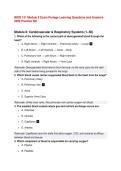
BIOD 151 Module 8 Exam Portage Learning Questions and Answers
2026 Practice Set
Module 8: Cardiovascular & Respiratory Systems (1–50)
1. Which of the following is the correct path of deoxygenated blood through the
heart?
• A. Right Atrium → Right Ventricle → Pulmonary Artery → Lungs ✅
• B. Left Atrium → Left Ventricle → Aorta → Body
• C. Pulmonary Vein → Left Atrium → Right Ventricle
• D. Right Ventricle → Right Atrium → Vena Cava
Rationale: Deoxygenated blood returns from the body via the vena cava into the right
side of the heart before being pumped to the lungs.
2. Which blood vessel carries oxygenated blood back to the heart from the lungs?
• A. Pulmonary Artery
• B. Pulmonary Vein ✅
• C. Aorta
• D. Superior Vena Cava
Rationale: Unlike most veins, the pulmonary vein carries oxygen-rich blood.
3. The smallest blood vessels where gas and nutrient exchange occurs are:
• A. Arterioles
• B. Venules
• C. Capillaries ✅
• D. Arteries
Rationale: Capillaries have thin walls that allow oxygen, CO2, and nutrients to diffuse
between blood and tissues.
4. Which component of blood is responsible for carrying oxygen?
• A. Plasma
• B. Platelets
, • C. White Blood Cells
• D. Red Blood Cells (Erythrocytes) ✅
Rationale: Red blood cells contain hemoglobin, which binds to oxygen for transport.
American Society of Hematology +1
5. The "Pacemaker" of the heart that initiates the electrical signal is the:
• A. AV Node
• B. Bundle of His
• C. SA Node ✅
• D. Purkinje Fibers
Rationale: The Sinoatrial (SA) node is located in the right atrium and sets the heart's
rhythm.
6. Which heart chamber has the thickest muscular wall?
• A. Right Atrium
• B. Right Ventricle
• C. Left Atrium
• D. Left Ventricle ✅
Rationale: The left ventricle must pump blood with enough force to reach the entire
systemic circulation.
7. "Systole" refers to the ____ phase of the cardiac cycle.
• A. Relaxation
• B. Contraction ✅
• C. Filling
• D. Resting
Rationale: During systole, the heart chambers contract to eject blood.
8. Which valve prevents backflow of blood from the right ventricle into the right
atrium?
• A. Bicuspid (Mitral) Valve
, • B. Tricuspid Valve ✅
• C. Aortic Semilunar Valve
• D. Pulmonary Semilunar Valve
Rationale: The tricuspid valve sits between the right atrium and right ventricle.
9. The double-layered sac that surrounds and protects the heart is the:
• A. Endocardium
• B. Myocardium
• C. Pericardium ✅
• D. Epicardium
Rationale: The pericardium provides lubrication and anchors the heart in the thorax.
10. What is the primary function of the Respiratory System?
• A. To transport hormones
• B. To provide gas exchange (O2 in, CO2 out) ✅
• C. To digest nutrients
• D. To filter blood
Rationale: The system ensures oxygen reaches tissues and metabolic waste (CO2) is
removed.
BC Open Textbooks +1
11. Air moves into the lungs when the thoracic diaphragm:
• A. Relaxes and moves up
• B. Contracts and flattens ✅
• C. Stays still
• D. Compresses the lungs
Rationale: Diaphragm contraction increases lung volume, creating a vacuum that pulls
air in.
12. The site of actual gas exchange in the lungs is the:
• A. Bronchi
2026 Practice Set
Module 8: Cardiovascular & Respiratory Systems (1–50)
1. Which of the following is the correct path of deoxygenated blood through the
heart?
• A. Right Atrium → Right Ventricle → Pulmonary Artery → Lungs ✅
• B. Left Atrium → Left Ventricle → Aorta → Body
• C. Pulmonary Vein → Left Atrium → Right Ventricle
• D. Right Ventricle → Right Atrium → Vena Cava
Rationale: Deoxygenated blood returns from the body via the vena cava into the right
side of the heart before being pumped to the lungs.
2. Which blood vessel carries oxygenated blood back to the heart from the lungs?
• A. Pulmonary Artery
• B. Pulmonary Vein ✅
• C. Aorta
• D. Superior Vena Cava
Rationale: Unlike most veins, the pulmonary vein carries oxygen-rich blood.
3. The smallest blood vessels where gas and nutrient exchange occurs are:
• A. Arterioles
• B. Venules
• C. Capillaries ✅
• D. Arteries
Rationale: Capillaries have thin walls that allow oxygen, CO2, and nutrients to diffuse
between blood and tissues.
4. Which component of blood is responsible for carrying oxygen?
• A. Plasma
• B. Platelets
, • C. White Blood Cells
• D. Red Blood Cells (Erythrocytes) ✅
Rationale: Red blood cells contain hemoglobin, which binds to oxygen for transport.
American Society of Hematology +1
5. The "Pacemaker" of the heart that initiates the electrical signal is the:
• A. AV Node
• B. Bundle of His
• C. SA Node ✅
• D. Purkinje Fibers
Rationale: The Sinoatrial (SA) node is located in the right atrium and sets the heart's
rhythm.
6. Which heart chamber has the thickest muscular wall?
• A. Right Atrium
• B. Right Ventricle
• C. Left Atrium
• D. Left Ventricle ✅
Rationale: The left ventricle must pump blood with enough force to reach the entire
systemic circulation.
7. "Systole" refers to the ____ phase of the cardiac cycle.
• A. Relaxation
• B. Contraction ✅
• C. Filling
• D. Resting
Rationale: During systole, the heart chambers contract to eject blood.
8. Which valve prevents backflow of blood from the right ventricle into the right
atrium?
• A. Bicuspid (Mitral) Valve
, • B. Tricuspid Valve ✅
• C. Aortic Semilunar Valve
• D. Pulmonary Semilunar Valve
Rationale: The tricuspid valve sits between the right atrium and right ventricle.
9. The double-layered sac that surrounds and protects the heart is the:
• A. Endocardium
• B. Myocardium
• C. Pericardium ✅
• D. Epicardium
Rationale: The pericardium provides lubrication and anchors the heart in the thorax.
10. What is the primary function of the Respiratory System?
• A. To transport hormones
• B. To provide gas exchange (O2 in, CO2 out) ✅
• C. To digest nutrients
• D. To filter blood
Rationale: The system ensures oxygen reaches tissues and metabolic waste (CO2) is
removed.
BC Open Textbooks +1
11. Air moves into the lungs when the thoracic diaphragm:
• A. Relaxes and moves up
• B. Contracts and flattens ✅
• C. Stays still
• D. Compresses the lungs
Rationale: Diaphragm contraction increases lung volume, creating a vacuum that pulls
air in.
12. The site of actual gas exchange in the lungs is the:
• A. Bronchi


