

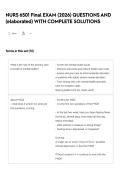
NURS 6501 Final EXAM (2026) QUESTIONS AND
(elaborated) WITH COMPLETE SOLUTIONS
Save
Terms in this set (72)
What is the role of the primary care - Screen for mental health issues
provider in mental health? - Improve outcomes and reduce health care costs
- Assess and give care to mild-moderate disorders
or patients with stable severe mental disorders
- From strong links with mental health specialty
care for complex cases
Sharing patient info (ex: meds used)
about PHQ2 - Screens for MDD
- what does it screen for, what are - It is the first two questions of the PHQ9
the questions, scoring
- In the last two week, have you been feeling these
(not at all, several days, more than half the day,
nearly everyday):
- Little interest or pleasure in doing things?
- Feeling down, depressed, or hopeless?
Scoring:
A single yes or score >3 (out of 0-6) = possible
clinical depression ⇒ due the PHQ9
If the pt screens (+) ⇒ continue to eval with the
PHQ9
,about PHQ9 Used for screening, diagnosing, and treating
- what its used for, questions, scoring - It asks about functioning impairments which is
needed for the DSM-based diagnosis
Includes asking about suicide or hurting self
Scoring:
0-27 available
0-4: Minimal/none
Monitor; may not require treatment
5-9: Mild
Use clinical judgment; follow-up in one month
10-14: Moderate
Use clinical judgment; may need meds if
functionally impaired
15-19: Moderately Severe
Warrants active treatment with psychotherapy,
meds, or combo
20-27: Severe
Warrants active treatment with psychotherapy,
meds, or combo
What is the appropriate initiation 20mg PO once daily in the AM
dose for fluoxetine for adults and - May ↑ daily dose after several weeks if
geriatric adults? inadequate response
- Full therapeutic effect may be delayed 4 weeks
or longer
- Max dose: 80mg/day
What labs would be appropriate to Sodium levels
draw if you initiate fluoxetine in a - Baseline screening & after 3-4 weeks in high-risk
geriatric patient? patients (> 65yrs, previous hx of antidepressant-
induced hyponatremia, low body weight,
concomitant use of thiazides or other
hyponatremia-inducing agents)
- monitor regularly in the elderly
, What are potential side effects of Common SSRIs:
SSRI medications? Lexapro, celexa, paxil, zoloft, prozac
- what are the common SSRIs, LEAP
of them, and zoloft AE L = decreased libido and sleep
E = Neutral effect on energy
A = neural effect on addiction
P = celexa may stop working after awhile (increase
or switch)
Zoloft AE:
Insomnia, somnolence, fatigue, abnormal
ejaculation, suicidal thoughts
What are characteristics of major Diagnostics need 5 or more of the following:
depressive disorder or MDD? 9 - SS occur more days than not in a 2 week period
- SS cause significant impairment in any realm of
functioning
- Depressed mood
- Loss of interest
- Significant unintended ▲ in weight or appetite
- Significant ▲ sleep
- ▲ psychomotor activity (restlessness)
- Fatigue, loss of energy
- Worthlessness, guilt
What is serotonin syndrome? - Increased serotonergic activity in the CNS
- Can be due to therapeutic med use, inadvertent
drug interactions, or self-OD
Serotonin in the Body:
CNS: Modulates attention, behavior, and
thermoregulation
PNS: Regulates GI motility, vasoconstriction,
uterine contraction, and bronchoconstriction,
promotes PLT aggregation
(elaborated) WITH COMPLETE SOLUTIONS
Save
Terms in this set (72)
What is the role of the primary care - Screen for mental health issues
provider in mental health? - Improve outcomes and reduce health care costs
- Assess and give care to mild-moderate disorders
or patients with stable severe mental disorders
- From strong links with mental health specialty
care for complex cases
Sharing patient info (ex: meds used)
about PHQ2 - Screens for MDD
- what does it screen for, what are - It is the first two questions of the PHQ9
the questions, scoring
- In the last two week, have you been feeling these
(not at all, several days, more than half the day,
nearly everyday):
- Little interest or pleasure in doing things?
- Feeling down, depressed, or hopeless?
Scoring:
A single yes or score >3 (out of 0-6) = possible
clinical depression ⇒ due the PHQ9
If the pt screens (+) ⇒ continue to eval with the
PHQ9
,about PHQ9 Used for screening, diagnosing, and treating
- what its used for, questions, scoring - It asks about functioning impairments which is
needed for the DSM-based diagnosis
Includes asking about suicide or hurting self
Scoring:
0-27 available
0-4: Minimal/none
Monitor; may not require treatment
5-9: Mild
Use clinical judgment; follow-up in one month
10-14: Moderate
Use clinical judgment; may need meds if
functionally impaired
15-19: Moderately Severe
Warrants active treatment with psychotherapy,
meds, or combo
20-27: Severe
Warrants active treatment with psychotherapy,
meds, or combo
What is the appropriate initiation 20mg PO once daily in the AM
dose for fluoxetine for adults and - May ↑ daily dose after several weeks if
geriatric adults? inadequate response
- Full therapeutic effect may be delayed 4 weeks
or longer
- Max dose: 80mg/day
What labs would be appropriate to Sodium levels
draw if you initiate fluoxetine in a - Baseline screening & after 3-4 weeks in high-risk
geriatric patient? patients (> 65yrs, previous hx of antidepressant-
induced hyponatremia, low body weight,
concomitant use of thiazides or other
hyponatremia-inducing agents)
- monitor regularly in the elderly
, What are potential side effects of Common SSRIs:
SSRI medications? Lexapro, celexa, paxil, zoloft, prozac
- what are the common SSRIs, LEAP
of them, and zoloft AE L = decreased libido and sleep
E = Neutral effect on energy
A = neural effect on addiction
P = celexa may stop working after awhile (increase
or switch)
Zoloft AE:
Insomnia, somnolence, fatigue, abnormal
ejaculation, suicidal thoughts
What are characteristics of major Diagnostics need 5 or more of the following:
depressive disorder or MDD? 9 - SS occur more days than not in a 2 week period
- SS cause significant impairment in any realm of
functioning
- Depressed mood
- Loss of interest
- Significant unintended ▲ in weight or appetite
- Significant ▲ sleep
- ▲ psychomotor activity (restlessness)
- Fatigue, loss of energy
- Worthlessness, guilt
What is serotonin syndrome? - Increased serotonergic activity in the CNS
- Can be due to therapeutic med use, inadvertent
drug interactions, or self-OD
Serotonin in the Body:
CNS: Modulates attention, behavior, and
thermoregulation
PNS: Regulates GI motility, vasoconstriction,
uterine contraction, and bronchoconstriction,
promotes PLT aggregation


