

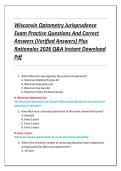
Wisconsin Optometry Jurisprudence
Exam Practice Questions And Correct
Answers (Verified Answers) Plus
Rationales 2026 Q&A Instant Download
Pdf
1. Which Wisconsin law regulates the practice of optometry?
A. Wisconsin Medical Practice Act
B. Wisconsin Optometry Act
C. Wisconsin Eye Care Act
D. Wisconsin Vision Professionals Act
B. Wisconsin Optometry Act
The Wisconsin Optometry Act (Chapter 449) specifically governs the practice of
optometry in Wisconsin.
2. How often must a licensed optometrist in Wisconsin renew their license?
A. Annually
B. Every 2 years
C. Every 3 years
D. Every 5 years
B. Every 2 years
Wisconsin requires optometrists to renew their license biennially.
3. What is the minimum number of continuing education hours required per
renewal period for Wisconsin optometrists?
A. 10 hours
, B. 20 hours
C. 30 hours
D. 40 hours
C. 30 hours
Wisconsin law requires 30 hours of continuing education every 2 years for
license renewal.
4. Which of the following can Wisconsin optometrists prescribe?
A. Oral antibiotics for systemic infections
B. Topical ophthalmic medications
C. Intravenous medications
D. Controlled narcotics
B. Topical ophthalmic medications
Wisconsin optometrists may prescribe topical ophthalmic medications and
certain oral medications within the scope defined by law.
5. What must an optometrist do if they suspect a patient has glaucoma?
A. Immediately refer to ophthalmology
B. Record findings and monitor without referral
C. Evaluate and manage according to standard of care
D. Prescribe any glaucoma medication
C. Evaluate and manage according to standard of care
Optometrists are trained to detect, evaluate, and manage glaucoma within their
scope, referring when necessary.
6. Who is responsible for maintaining patient records in Wisconsin?
A. Patient
B. Optometrist
C. Insurance company
D. State Board
B. Optometrist
Wisconsin law requires the optometrist to maintain accurate patient records.
7. How long must patient records be retained in Wisconsin?
A. 2 years
, B. 5 years
C. 7 years
D. 10 years
C. 7 years
Patient records must be maintained for a minimum of 7 years after the last date
of service.
8. Which agency licenses optometrists in Wisconsin?
A. Department of Health Services
B. Wisconsin Optometry Board
C. Wisconsin Medical Board
D. Department of Safety and Professional Services
D. Department of Safety and Professional Services
The Wisconsin Department of Safety and Professional Services (DSPS) oversees
licensing of optometrists.
9. What is required for an optometrist to supervise optometric interns in
Wisconsin?
A. Any licensed optometrist may supervise
B. Must be actively licensed and in good standing
C. Must have at least 5 years of experience
D. Supervision is not allowed
B. Must be actively licensed and in good standing
Only actively licensed optometrists in good standing may supervise interns.
10.Which of the following is considered unprofessional conduct for a
Wisconsin optometrist?
A. Billing for services not rendered
B. Maintaining proper patient records
C. Following informed consent procedures
D. Attending continuing education
A. Billing for services not rendered
Billing for services not provided is unprofessional conduct and subject to
disciplinary action.
Exam Practice Questions And Correct
Answers (Verified Answers) Plus
Rationales 2026 Q&A Instant Download
1. Which Wisconsin law regulates the practice of optometry?
A. Wisconsin Medical Practice Act
B. Wisconsin Optometry Act
C. Wisconsin Eye Care Act
D. Wisconsin Vision Professionals Act
B. Wisconsin Optometry Act
The Wisconsin Optometry Act (Chapter 449) specifically governs the practice of
optometry in Wisconsin.
2. How often must a licensed optometrist in Wisconsin renew their license?
A. Annually
B. Every 2 years
C. Every 3 years
D. Every 5 years
B. Every 2 years
Wisconsin requires optometrists to renew their license biennially.
3. What is the minimum number of continuing education hours required per
renewal period for Wisconsin optometrists?
A. 10 hours
, B. 20 hours
C. 30 hours
D. 40 hours
C. 30 hours
Wisconsin law requires 30 hours of continuing education every 2 years for
license renewal.
4. Which of the following can Wisconsin optometrists prescribe?
A. Oral antibiotics for systemic infections
B. Topical ophthalmic medications
C. Intravenous medications
D. Controlled narcotics
B. Topical ophthalmic medications
Wisconsin optometrists may prescribe topical ophthalmic medications and
certain oral medications within the scope defined by law.
5. What must an optometrist do if they suspect a patient has glaucoma?
A. Immediately refer to ophthalmology
B. Record findings and monitor without referral
C. Evaluate and manage according to standard of care
D. Prescribe any glaucoma medication
C. Evaluate and manage according to standard of care
Optometrists are trained to detect, evaluate, and manage glaucoma within their
scope, referring when necessary.
6. Who is responsible for maintaining patient records in Wisconsin?
A. Patient
B. Optometrist
C. Insurance company
D. State Board
B. Optometrist
Wisconsin law requires the optometrist to maintain accurate patient records.
7. How long must patient records be retained in Wisconsin?
A. 2 years
, B. 5 years
C. 7 years
D. 10 years
C. 7 years
Patient records must be maintained for a minimum of 7 years after the last date
of service.
8. Which agency licenses optometrists in Wisconsin?
A. Department of Health Services
B. Wisconsin Optometry Board
C. Wisconsin Medical Board
D. Department of Safety and Professional Services
D. Department of Safety and Professional Services
The Wisconsin Department of Safety and Professional Services (DSPS) oversees
licensing of optometrists.
9. What is required for an optometrist to supervise optometric interns in
Wisconsin?
A. Any licensed optometrist may supervise
B. Must be actively licensed and in good standing
C. Must have at least 5 years of experience
D. Supervision is not allowed
B. Must be actively licensed and in good standing
Only actively licensed optometrists in good standing may supervise interns.
10.Which of the following is considered unprofessional conduct for a
Wisconsin optometrist?
A. Billing for services not rendered
B. Maintaining proper patient records
C. Following informed consent procedures
D. Attending continuing education
A. Billing for services not rendered
Billing for services not provided is unprofessional conduct and subject to
disciplinary action.


