

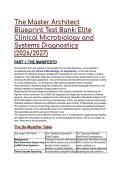
The Master Architect
Blueprint Test Bank: Elite
Clinical Microbiology and
Systems Diagnostics
(2026/2027)
PART I: THE MANIFESTO
The transition from the academic memorization of microbial taxonomy—as presented in
foundational texts like Tortora's Microbiology: An Introduction—to the elite clinical
application of infectious disease management represents the most severe crucible in modern
healthcare. The 2026/2027 diagnostic landscape has fundamentally abandoned the era of rote
learning and phenotypic guesswork. The contemporary standard demands the absolute mastery
of a living infrastructure—an unforgiving, high-stakes ecosystem where molecular
thermodynamics, advanced diagnostic proteomics, dynamic pharmacological frameworks, and
artificial intelligence integration dictate patient survival.
Mastering this intricate biological architecture is the singular mechanism for advancing into
high-tier clinical command. As of 2026, the regulatory and diagnostic environment is violently
dynamic, driven by real-time updates from the Clinical and Laboratory Standards Institute (CLSI
M100 36th Edition), the Food and Drug Administration (FDA), and global consensus task forces.
Standard academic textbooks are effectively obsolete upon printing. Professionals who possess
this synthesis of clinical microbiology, laboratory informatics, and advanced pathophysiological
application operate as the ultimate fail-safes in the healthcare system, catching the lethal errors
that automated algorithms and junior clinicians miss.
This document serves as the definitive calibration tool. It is engineered to aggressively transition
the reader from theoretical comprehension to elite professional intuition. We do not coddle; we
train. Welcome to the big leagues.
The De-Mystifier Table
The Jargon (The Term) The "Cafeteria Explanation" The "Expensive Mistake"
(Plain English) (Real-World Consequence)
Metagenomic Filtering out human white blood Skipping the filter allows human
Next-Generation Sequencing cells before sequencing a blood DNA to drown out the bacterial
(mNGS) Host Depletion sample to find a bacterial signal, resulting in a
needle in a genetic haystack. false-negative sepsis diagnosis.
Tiered Cascade Reporting The laboratory computer hiding Bypassing the tier system to
,The Jargon (The Term) The "Cafeteria Explanation" The "Expensive Mistake"
(Plain English) (Real-World Consequence)
broad-spectrum antibiotic prescribe a carbapenem for a
results unless the bacteria simple infection, irreversibly
proves resistant to accelerating institutional
narrow-spectrum drugs. antimicrobial resistance.
Phoenix Sepsis Score A strict four-category checklist Utilizing outdated adult SIRS
(lungs, heart, blood, brain) to criteria on a child, leading to the
prove a child's organs are delayed recognition of pediatric
failing from an infection, septic shock and rapid
replacing the outdated SIRS mortality.
criteria.
LptB2FGC Complex The bacterial elevator that Utilizing standard cell-wall
transports toxic armor inhibitors against Acinetobacter
(Lipopolysaccharide) from the instead of deploying
inside of the cell to the outer Zosurabalpin to jam the
wall. transport elevator.
Metallo-\beta-Lactamases Bacterial enzymes that destroy Prescribing standard
(MBLs) almost all penicillin-like drugs Ceftazidime-avibactam alone
and are immune to standard instead of
chemical inhibitors. Aztreonam-avibactam,
guaranteeing therapeutic failure
and patient death.
PART II: THE DEEP DIVE
Module 1: Cellular Architecture & Target Mechanics
1. The Professional Analogy: Gram-negative bacteria operate like a medieval fortress
surrounded by a highly toxic, hydrophobic moat. Antimicrobial agents act either as
battering rams attempting to fracture the stone wall or as saboteurs attempting to poison
the moat inside the fortress walls.
2. The "Hard Deck" (Technical Deep Work): Outer Membrane -> (The external lipid bilayer
of Gram-negative bacteria) -> (The primary barrier preventing large antibiotic penetration).
The Gram-negative outer membrane is heavily fortified with Lipopolysaccharide (LPS).
LPS is highly toxic to human hosts but essential for bacterial survival. It is synthesized in
the cytoplasm and actively transported to the outer membrane via the LptB2FGC
complex. Without this active transport, the bacterial membrane loses structural integrity.
Furthermore, organisms like Staphylococcus aureus in the presence of orthopedic
hardware predictably transition into a sessile state, constructing an exopolysaccharide
Biofilm that requires specific penetrative agents like rifampin to eradicate.
3. The 2027 Redline: The advancement of Zosurabalpin (RG6006) fundamentally alters
the treatment paradigm for Carbapenem-Resistant Acinetobacter baumannii (CRAB). This
tethered macrocyclic peptide directly binds to the LptB2FGC complex, jamming the
transport mechanism. Toxic LPS accumulates inside the bacterium, choking the organism
on its own structural components. Clinical trials in 2025/2026 confirmed its efficacy
against pan-drug-resistant isolates.
, 4. The "Trap" Alert: Amateurs assume that large antibiotics like Vancomycin fail against
Gram-negative bacteria due to enzymatic degradation. Professionals know Vancomycin
fails because its molecular mass physically cannot cross the hydrophobic moat of the
outer membrane porins.
Module 2: The Diagnostic Engine & Laboratory Informatics
1. The Professional Analogy: Modern clinical microbiology is akin to automated global
supply chain logistics. A mislabeled barcode at the origin point corrupts the entire
downstream distribution network, regardless of how advanced the final delivery
mechanisms are.
2. The "Hard Deck" (Technical Deep Work): MALDI-TOF -> (Matrix-Assisted Laser
Desorption/Ionization-Time of Flight) -> (An instrument identifying pathogens in minutes
by vaporizing proteins and measuring flight time to create a mass-spectral fingerprint).
However, the shift toward mNGS -> (Metagenomic Next-Generation Sequencing) ->
(Hypothesis-free sequencing of all nucleic acids in a sample) requires strict Host DNA
Depletion. Utilizing ZISC-based or Devin fractionation filters captures >99\% of human
white blood cells, ensuring the sequencer detects microbial DNA rather than being
overwhelmed by the patient's massive genomic background.
3. The 2027 Redline: The integration of Artificial Intelligence (AI) image analysis and
spectral classification for MALDI-TOF and mNGS data is now a regulatory standard.
Advanced deep learning models assist in pattern recognition, reducing scoring subjectivity
and accelerating turnaround times for critical blood cultures, projecting antimicrobial
resistance profiles directly from genomic data.
4. The "Trap" Alert: Amateurs believe AI solves laboratory staffing shortages by intelligently
correcting bad pre-analytical data. Professionals know that AI amplifies pre-analytical
errors; deploying advanced algorithms on a manual, error-prone front-end accessioning
system simply produces the wrong diagnosis at a much faster speed.
Module 3: Regulatory Volatility & Breakpoint
Mechanics
1. The Professional Analogy: Using an outdated antibiotic breakpoint table is equivalent to
navigating a modern airspace with a 1990s radar system. The blips on the screen do not
accurately reflect the lethal threats in the environment.
2. The "Hard Deck" (Technical Deep Work): CLSI M100 -> (The annual performance
standards for antimicrobial susceptibility testing) -> (The legal and clinical parameters
defining Susceptible, Intermediate, and Resistant). In the 2026/2027 framework,
Epidemiological Cutoff Values (ECVs) are prioritized when clinical breakpoints are
unreliable, defining the upper Minimum Inhibitory Concentration (MIC) limit of the
wild-type population.
3. The 2027 Redline: The 36th Edition (2026) of the CLSI M100 standard fundamentally
rewrites historical norms. Breakpoints for Doxycycline and Tetracycline against
Acinetobacter spp. have been deleted entirely due to a lack of contemporary
pharmacokinetic/pharmacodynamic (PK/PD) data. Furthermore, Amikacin breakpoints
for Pseudomonas aeruginosa are now strictly restricted to urinary isolates, recognizing
, that systemic clearance targets are mathematically unattainable in lung tissue.
4. The "Trap" Alert: Amateurs report "Susceptible" for Burkholderia cepacia based on
legacy disk diffusion tests. Professionals know the CLSI standard has eradicated these
breakpoints due to high error rates; reporting susceptibility without Reference Broth
Microdilution (BMD) is a malpractice trap.
Module 4: The Pathophysiological Sepsis Matrix
1. The Professional Analogy: Diagnosing pediatric sepsis using adult parameters is like
using a diesel engine manual to repair a modern electric vehicle. The components may
look superficially similar, but the internal failure cascades operate on entirely different
physiological physics.
2. The "Hard Deck" (Technical Deep Work): Phoenix Sepsis Score -> (A pediatric-specific
organ dysfunction matrix) -> (The definitive 2024/2026 standard for diagnosing pediatric
sepsis, requiring a score of $\ge$ 2). This system mandates the measurement of four
critical domains: Respiratory, Cardiovascular, Coagulation, and Neurological. It
explicitly discards the highly non-specific and dangerously broad Systemic Inflammatory
Response Syndrome (SIRS) criteria.
3. The 2027 Redline: The Phoenix score is statistically optimized for the Area Under the
Precision-Recall Curve (AUPRC) rather than the traditional AUROC. This mathematical
shift ensures superior identification of true-positive sepsis cases in pediatric populations,
where mortality is a rare, highly imbalanced event compared to adult ICUs.
4. The "Trap" Alert: Amateurs use pSOFA or SIRS to diagnose a child with a fever and
elevated heart rate as having "Severe Sepsis." Professionals deploy the Phoenix Sepsis
Score, understanding that only life-threatening organ dysfunction, proven by a score of
\ge 2, warrants the activation of aggressive septic shock protocols, and that the term
"Severe Sepsis" is officially obsolete.
Module 5: The Taxonomic Trap & Biohazard Cascades
1. The Professional Analogy: A bacterial name change in clinical microbiology is not a
bureaucratic typo; it is the equivalent of discovering that the domestic housecat in a
facility is actually a juvenile leopard. The containment protocols must instantly reflect the
lethality of the organism.
2. The "Hard Deck" (Technical Deep Work): Phylogenetic Realignment -> (The
reclassification of organisms based on whole-genome sequencing rather than phenotypic
behavior) -> (The trigger for escalating biosafety level requirements). The environmental
organism formerly known as Ochrobactrum has been phylogenetically mapped and
officially merged into the highly pathogenic genus Brucella.
3. The 2027 Redline: Isolates identified by automated systems (like VITEK 2 or MALDI-TOF
utilizing older legacy libraries) as Ochrobactrum anthropi or intermedium must now be
treated under the stringent biosafety constraints of Brucella species. Brucella is a highly
infectious, aerosolized Select Agent requiring Biosafety Level 3 (BSL-3) containment.
4. The "Trap" Alert: Amateurs see Ochrobactrum on a lab report, assume it is a
low-virulence environmental contaminant, and perform an open-bench catalase test.
Professionals recognize the Brucella genome, instantly locking down the bench, initiating
post-exposure prophylaxis for exposed laboratory personnel, and notifying federal select
, agent authorities.
PART III: THE 55-POINT GAUNTLET
Q1: A laboratory standard dictates the use of mNGS host depletion. What is the precise plain
English translation and professional application of this methodology?
The Answer: mNGS host depletion -> (Filtering out human cells from a sample before
sequencing) -> (Applying ZISC-based or Devin filters to physically remove human leukocytes so
the sequencer can detect low-abundance bacterial DNA without being overwhelmed by human
genetic noise).
The Mentor's Insight: Amateurs assume next-generation sequencing is universally sensitive
and magical. Professionals understand that the human genome is massive; without depleting
host DNA, a fatal bacteremia will appear as a negative result because the microbial reads are
buried under a mountain of human genetic background data.
Q2: A physician orders empiric therapy for a patient identified with Carbapenem-Resistant
Acinetobacter baumannii (CRAB). What specific cellular complex must be targeted by the 2026
pharmacological standard, and what drug achieves this?
The Answer: The LptB2FGC complex, targeted by Zosurabalpin (RG6006).
The Mentor's Insight: The LptB2FGC complex is the elevator that transports
Lipopolysaccharide (LPS) from the cytoplasm to the outer membrane. Utilizing Zosurabalpin to
jam this complex causes the bacteria to choke on its own toxic LPS buildup. Relying on legacy
cell-wall inhibitors (like penicillins or cephalosporins) is futile against CRAB due to extensive
porin mutations and efflux pumps.
Q3: The 2026 CLSI M100 standard strongly advises a "Tiered Cascade Reporting" protocol
for hospital laboratories. What is the plain translation and immediate application?
The Answer: Tiered Cascade Reporting -> (Hiding powerful, broad-spectrum antibiotic results
unless narrow-spectrum drugs fail) -> (Preventing clinicians from unnecessarily prescribing
restricted reserve agents, like carbapenems, for simple, highly susceptible infections).
The Mentor's Insight: Amateurs demand all susceptibility data instantly on the first page of the
chart. Professionals know that data transparency without tiered restrictions drives rapid,
catastrophic institutional antimicrobial resistance. If an intern sees "Meropenem - Susceptible,"
they will prescribe it, destroying your stewardship program.
Q4: A laboratory report lists Burkholderia cepacia as "Susceptible" to an antibiotic based on
an automated disk diffusion test. Why is this a critical regulatory failure under 2026 standards?
The Answer: CLSI M100 36th Edition (2026) explicitly deleted all disk diffusion and
, non-reference MIC clinical breakpoints for B. cepacia.
The Mentor's Insight: Amateurs blindly trust the automated printout from the machine.
Professionals know B. cepacia testing via disk diffusion yields incredibly high rates of false
susceptibilities and major errors. Frozen Reference Broth Microdilution (BMD) is the only
acceptable method, and even then, reporting "susceptible" is considered a clinical malpractice
trap due to poor in vivo correlation.
Q5: What is the specific plain translation and clinical application for the Phoenix Sepsis
Score?
The Answer: Phoenix Sepsis Score -> (A pediatric organ failure checklist) -> (Applying a
4-system point matrix to mathematically prove life-threatening dysfunction in children,
completely replacing the obsolete SIRS criteria).
The Mentor's Insight: Using adult SIRS criteria (fever, heart rate, respiratory rate, WBC count)
on children results in the massive over-diagnosis of benign viral fevers and the dangerous
under-recognition of true septic shock. The Phoenix score demands a threshold of \ge 2 points
to trigger aggressive fluid and vasoactive resuscitation.
Q6: A positive blood culture is loaded onto a MALDI-TOF MS system. What is the
fundamental physical mechanism of this diagnostic engine?
The Answer: It vaporizes bacterial proteins with a laser pulse, ionizes them, and measures their
time of flight through a vacuum tube to a detector, creating a unique mass-spectral fingerprint to
identify the exact species.
The Mentor's Insight: Time is the ultimate weapon in infectious disease. Amateurs wait 48
hours for phenotypic biochemical growth panels. Professionals use MALDI-TOF to identify the
pathogen in minutes directly from the positive broth, enabling the immediate de-escalation of
toxic empiric therapy.
Q7: Under the 2026 FDA and CLSI updates, how has the reporting for Amikacin against
Pseudomonas aeruginosa been severely restricted, and why?
The Answer: Amikacin susceptibility for P. aeruginosa is now strictly recognized only for urinary
isolates, not systemic infections.
The Mentor's Insight: Amateurs assume an IV aminoglycoside will clear a pseudomonal
pneumonia if the lab computer says "Susceptible." Professionals know that pharmacokinetic
systemic clearance targets are mathematically unattainable in lung tissue for this drug-bug
combination; the drug only concentrates effectively in the urine.
Q8: What is the mechanistic difference at the cellular level between a standard Antigen and a
Superantigen?
Blueprint Test Bank: Elite
Clinical Microbiology and
Systems Diagnostics
(2026/2027)
PART I: THE MANIFESTO
The transition from the academic memorization of microbial taxonomy—as presented in
foundational texts like Tortora's Microbiology: An Introduction—to the elite clinical
application of infectious disease management represents the most severe crucible in modern
healthcare. The 2026/2027 diagnostic landscape has fundamentally abandoned the era of rote
learning and phenotypic guesswork. The contemporary standard demands the absolute mastery
of a living infrastructure—an unforgiving, high-stakes ecosystem where molecular
thermodynamics, advanced diagnostic proteomics, dynamic pharmacological frameworks, and
artificial intelligence integration dictate patient survival.
Mastering this intricate biological architecture is the singular mechanism for advancing into
high-tier clinical command. As of 2026, the regulatory and diagnostic environment is violently
dynamic, driven by real-time updates from the Clinical and Laboratory Standards Institute (CLSI
M100 36th Edition), the Food and Drug Administration (FDA), and global consensus task forces.
Standard academic textbooks are effectively obsolete upon printing. Professionals who possess
this synthesis of clinical microbiology, laboratory informatics, and advanced pathophysiological
application operate as the ultimate fail-safes in the healthcare system, catching the lethal errors
that automated algorithms and junior clinicians miss.
This document serves as the definitive calibration tool. It is engineered to aggressively transition
the reader from theoretical comprehension to elite professional intuition. We do not coddle; we
train. Welcome to the big leagues.
The De-Mystifier Table
The Jargon (The Term) The "Cafeteria Explanation" The "Expensive Mistake"
(Plain English) (Real-World Consequence)
Metagenomic Filtering out human white blood Skipping the filter allows human
Next-Generation Sequencing cells before sequencing a blood DNA to drown out the bacterial
(mNGS) Host Depletion sample to find a bacterial signal, resulting in a
needle in a genetic haystack. false-negative sepsis diagnosis.
Tiered Cascade Reporting The laboratory computer hiding Bypassing the tier system to
,The Jargon (The Term) The "Cafeteria Explanation" The "Expensive Mistake"
(Plain English) (Real-World Consequence)
broad-spectrum antibiotic prescribe a carbapenem for a
results unless the bacteria simple infection, irreversibly
proves resistant to accelerating institutional
narrow-spectrum drugs. antimicrobial resistance.
Phoenix Sepsis Score A strict four-category checklist Utilizing outdated adult SIRS
(lungs, heart, blood, brain) to criteria on a child, leading to the
prove a child's organs are delayed recognition of pediatric
failing from an infection, septic shock and rapid
replacing the outdated SIRS mortality.
criteria.
LptB2FGC Complex The bacterial elevator that Utilizing standard cell-wall
transports toxic armor inhibitors against Acinetobacter
(Lipopolysaccharide) from the instead of deploying
inside of the cell to the outer Zosurabalpin to jam the
wall. transport elevator.
Metallo-\beta-Lactamases Bacterial enzymes that destroy Prescribing standard
(MBLs) almost all penicillin-like drugs Ceftazidime-avibactam alone
and are immune to standard instead of
chemical inhibitors. Aztreonam-avibactam,
guaranteeing therapeutic failure
and patient death.
PART II: THE DEEP DIVE
Module 1: Cellular Architecture & Target Mechanics
1. The Professional Analogy: Gram-negative bacteria operate like a medieval fortress
surrounded by a highly toxic, hydrophobic moat. Antimicrobial agents act either as
battering rams attempting to fracture the stone wall or as saboteurs attempting to poison
the moat inside the fortress walls.
2. The "Hard Deck" (Technical Deep Work): Outer Membrane -> (The external lipid bilayer
of Gram-negative bacteria) -> (The primary barrier preventing large antibiotic penetration).
The Gram-negative outer membrane is heavily fortified with Lipopolysaccharide (LPS).
LPS is highly toxic to human hosts but essential for bacterial survival. It is synthesized in
the cytoplasm and actively transported to the outer membrane via the LptB2FGC
complex. Without this active transport, the bacterial membrane loses structural integrity.
Furthermore, organisms like Staphylococcus aureus in the presence of orthopedic
hardware predictably transition into a sessile state, constructing an exopolysaccharide
Biofilm that requires specific penetrative agents like rifampin to eradicate.
3. The 2027 Redline: The advancement of Zosurabalpin (RG6006) fundamentally alters
the treatment paradigm for Carbapenem-Resistant Acinetobacter baumannii (CRAB). This
tethered macrocyclic peptide directly binds to the LptB2FGC complex, jamming the
transport mechanism. Toxic LPS accumulates inside the bacterium, choking the organism
on its own structural components. Clinical trials in 2025/2026 confirmed its efficacy
against pan-drug-resistant isolates.
, 4. The "Trap" Alert: Amateurs assume that large antibiotics like Vancomycin fail against
Gram-negative bacteria due to enzymatic degradation. Professionals know Vancomycin
fails because its molecular mass physically cannot cross the hydrophobic moat of the
outer membrane porins.
Module 2: The Diagnostic Engine & Laboratory Informatics
1. The Professional Analogy: Modern clinical microbiology is akin to automated global
supply chain logistics. A mislabeled barcode at the origin point corrupts the entire
downstream distribution network, regardless of how advanced the final delivery
mechanisms are.
2. The "Hard Deck" (Technical Deep Work): MALDI-TOF -> (Matrix-Assisted Laser
Desorption/Ionization-Time of Flight) -> (An instrument identifying pathogens in minutes
by vaporizing proteins and measuring flight time to create a mass-spectral fingerprint).
However, the shift toward mNGS -> (Metagenomic Next-Generation Sequencing) ->
(Hypothesis-free sequencing of all nucleic acids in a sample) requires strict Host DNA
Depletion. Utilizing ZISC-based or Devin fractionation filters captures >99\% of human
white blood cells, ensuring the sequencer detects microbial DNA rather than being
overwhelmed by the patient's massive genomic background.
3. The 2027 Redline: The integration of Artificial Intelligence (AI) image analysis and
spectral classification for MALDI-TOF and mNGS data is now a regulatory standard.
Advanced deep learning models assist in pattern recognition, reducing scoring subjectivity
and accelerating turnaround times for critical blood cultures, projecting antimicrobial
resistance profiles directly from genomic data.
4. The "Trap" Alert: Amateurs believe AI solves laboratory staffing shortages by intelligently
correcting bad pre-analytical data. Professionals know that AI amplifies pre-analytical
errors; deploying advanced algorithms on a manual, error-prone front-end accessioning
system simply produces the wrong diagnosis at a much faster speed.
Module 3: Regulatory Volatility & Breakpoint
Mechanics
1. The Professional Analogy: Using an outdated antibiotic breakpoint table is equivalent to
navigating a modern airspace with a 1990s radar system. The blips on the screen do not
accurately reflect the lethal threats in the environment.
2. The "Hard Deck" (Technical Deep Work): CLSI M100 -> (The annual performance
standards for antimicrobial susceptibility testing) -> (The legal and clinical parameters
defining Susceptible, Intermediate, and Resistant). In the 2026/2027 framework,
Epidemiological Cutoff Values (ECVs) are prioritized when clinical breakpoints are
unreliable, defining the upper Minimum Inhibitory Concentration (MIC) limit of the
wild-type population.
3. The 2027 Redline: The 36th Edition (2026) of the CLSI M100 standard fundamentally
rewrites historical norms. Breakpoints for Doxycycline and Tetracycline against
Acinetobacter spp. have been deleted entirely due to a lack of contemporary
pharmacokinetic/pharmacodynamic (PK/PD) data. Furthermore, Amikacin breakpoints
for Pseudomonas aeruginosa are now strictly restricted to urinary isolates, recognizing
, that systemic clearance targets are mathematically unattainable in lung tissue.
4. The "Trap" Alert: Amateurs report "Susceptible" for Burkholderia cepacia based on
legacy disk diffusion tests. Professionals know the CLSI standard has eradicated these
breakpoints due to high error rates; reporting susceptibility without Reference Broth
Microdilution (BMD) is a malpractice trap.
Module 4: The Pathophysiological Sepsis Matrix
1. The Professional Analogy: Diagnosing pediatric sepsis using adult parameters is like
using a diesel engine manual to repair a modern electric vehicle. The components may
look superficially similar, but the internal failure cascades operate on entirely different
physiological physics.
2. The "Hard Deck" (Technical Deep Work): Phoenix Sepsis Score -> (A pediatric-specific
organ dysfunction matrix) -> (The definitive 2024/2026 standard for diagnosing pediatric
sepsis, requiring a score of $\ge$ 2). This system mandates the measurement of four
critical domains: Respiratory, Cardiovascular, Coagulation, and Neurological. It
explicitly discards the highly non-specific and dangerously broad Systemic Inflammatory
Response Syndrome (SIRS) criteria.
3. The 2027 Redline: The Phoenix score is statistically optimized for the Area Under the
Precision-Recall Curve (AUPRC) rather than the traditional AUROC. This mathematical
shift ensures superior identification of true-positive sepsis cases in pediatric populations,
where mortality is a rare, highly imbalanced event compared to adult ICUs.
4. The "Trap" Alert: Amateurs use pSOFA or SIRS to diagnose a child with a fever and
elevated heart rate as having "Severe Sepsis." Professionals deploy the Phoenix Sepsis
Score, understanding that only life-threatening organ dysfunction, proven by a score of
\ge 2, warrants the activation of aggressive septic shock protocols, and that the term
"Severe Sepsis" is officially obsolete.
Module 5: The Taxonomic Trap & Biohazard Cascades
1. The Professional Analogy: A bacterial name change in clinical microbiology is not a
bureaucratic typo; it is the equivalent of discovering that the domestic housecat in a
facility is actually a juvenile leopard. The containment protocols must instantly reflect the
lethality of the organism.
2. The "Hard Deck" (Technical Deep Work): Phylogenetic Realignment -> (The
reclassification of organisms based on whole-genome sequencing rather than phenotypic
behavior) -> (The trigger for escalating biosafety level requirements). The environmental
organism formerly known as Ochrobactrum has been phylogenetically mapped and
officially merged into the highly pathogenic genus Brucella.
3. The 2027 Redline: Isolates identified by automated systems (like VITEK 2 or MALDI-TOF
utilizing older legacy libraries) as Ochrobactrum anthropi or intermedium must now be
treated under the stringent biosafety constraints of Brucella species. Brucella is a highly
infectious, aerosolized Select Agent requiring Biosafety Level 3 (BSL-3) containment.
4. The "Trap" Alert: Amateurs see Ochrobactrum on a lab report, assume it is a
low-virulence environmental contaminant, and perform an open-bench catalase test.
Professionals recognize the Brucella genome, instantly locking down the bench, initiating
post-exposure prophylaxis for exposed laboratory personnel, and notifying federal select
, agent authorities.
PART III: THE 55-POINT GAUNTLET
Q1: A laboratory standard dictates the use of mNGS host depletion. What is the precise plain
English translation and professional application of this methodology?
The Answer: mNGS host depletion -> (Filtering out human cells from a sample before
sequencing) -> (Applying ZISC-based or Devin filters to physically remove human leukocytes so
the sequencer can detect low-abundance bacterial DNA without being overwhelmed by human
genetic noise).
The Mentor's Insight: Amateurs assume next-generation sequencing is universally sensitive
and magical. Professionals understand that the human genome is massive; without depleting
host DNA, a fatal bacteremia will appear as a negative result because the microbial reads are
buried under a mountain of human genetic background data.
Q2: A physician orders empiric therapy for a patient identified with Carbapenem-Resistant
Acinetobacter baumannii (CRAB). What specific cellular complex must be targeted by the 2026
pharmacological standard, and what drug achieves this?
The Answer: The LptB2FGC complex, targeted by Zosurabalpin (RG6006).
The Mentor's Insight: The LptB2FGC complex is the elevator that transports
Lipopolysaccharide (LPS) from the cytoplasm to the outer membrane. Utilizing Zosurabalpin to
jam this complex causes the bacteria to choke on its own toxic LPS buildup. Relying on legacy
cell-wall inhibitors (like penicillins or cephalosporins) is futile against CRAB due to extensive
porin mutations and efflux pumps.
Q3: The 2026 CLSI M100 standard strongly advises a "Tiered Cascade Reporting" protocol
for hospital laboratories. What is the plain translation and immediate application?
The Answer: Tiered Cascade Reporting -> (Hiding powerful, broad-spectrum antibiotic results
unless narrow-spectrum drugs fail) -> (Preventing clinicians from unnecessarily prescribing
restricted reserve agents, like carbapenems, for simple, highly susceptible infections).
The Mentor's Insight: Amateurs demand all susceptibility data instantly on the first page of the
chart. Professionals know that data transparency without tiered restrictions drives rapid,
catastrophic institutional antimicrobial resistance. If an intern sees "Meropenem - Susceptible,"
they will prescribe it, destroying your stewardship program.
Q4: A laboratory report lists Burkholderia cepacia as "Susceptible" to an antibiotic based on
an automated disk diffusion test. Why is this a critical regulatory failure under 2026 standards?
The Answer: CLSI M100 36th Edition (2026) explicitly deleted all disk diffusion and
, non-reference MIC clinical breakpoints for B. cepacia.
The Mentor's Insight: Amateurs blindly trust the automated printout from the machine.
Professionals know B. cepacia testing via disk diffusion yields incredibly high rates of false
susceptibilities and major errors. Frozen Reference Broth Microdilution (BMD) is the only
acceptable method, and even then, reporting "susceptible" is considered a clinical malpractice
trap due to poor in vivo correlation.
Q5: What is the specific plain translation and clinical application for the Phoenix Sepsis
Score?
The Answer: Phoenix Sepsis Score -> (A pediatric organ failure checklist) -> (Applying a
4-system point matrix to mathematically prove life-threatening dysfunction in children,
completely replacing the obsolete SIRS criteria).
The Mentor's Insight: Using adult SIRS criteria (fever, heart rate, respiratory rate, WBC count)
on children results in the massive over-diagnosis of benign viral fevers and the dangerous
under-recognition of true septic shock. The Phoenix score demands a threshold of \ge 2 points
to trigger aggressive fluid and vasoactive resuscitation.
Q6: A positive blood culture is loaded onto a MALDI-TOF MS system. What is the
fundamental physical mechanism of this diagnostic engine?
The Answer: It vaporizes bacterial proteins with a laser pulse, ionizes them, and measures their
time of flight through a vacuum tube to a detector, creating a unique mass-spectral fingerprint to
identify the exact species.
The Mentor's Insight: Time is the ultimate weapon in infectious disease. Amateurs wait 48
hours for phenotypic biochemical growth panels. Professionals use MALDI-TOF to identify the
pathogen in minutes directly from the positive broth, enabling the immediate de-escalation of
toxic empiric therapy.
Q7: Under the 2026 FDA and CLSI updates, how has the reporting for Amikacin against
Pseudomonas aeruginosa been severely restricted, and why?
The Answer: Amikacin susceptibility for P. aeruginosa is now strictly recognized only for urinary
isolates, not systemic infections.
The Mentor's Insight: Amateurs assume an IV aminoglycoside will clear a pseudomonal
pneumonia if the lab computer says "Susceptible." Professionals know that pharmacokinetic
systemic clearance targets are mathematically unattainable in lung tissue for this drug-bug
combination; the drug only concentrates effectively in the urine.
Q8: What is the mechanistic difference at the cellular level between a standard Antigen and a
Superantigen?


