

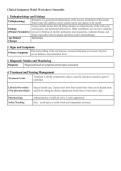
Clinical Judgment Model Worksheet: Stomatitis
1. Pathophysiology and Etiology
Stomatitis is a generalized inflammation of the mucous membranes of the mouth.
Pathophysiology
Small crater-like aphthous ulcers (canker sores) may appear in the mouth.
Causes include trauma from ill-fitting dentures or malocclusions of the teeth, poor
Etiology oral hygiene, and nutritional deficiencies. Other contributors are excessive smoking,
(Primary/Secondary) excessive drinking of alcohol, pathogenic microorganisms, radiation therapy, and
drugs (especially anticonvulsants and those used in chemotherapy)
Age-Related Xerostomia
Changes
2. Signs and Symptoms
Pain and swelling of the oral mucosa, increased salivation or excessive dryness,
Primary Symptoms
severe halitosis, and sometimes fever.
3. Diagnostic Studies and Monitoring
Diagnosis Diagnosed based on symptoms present upon assessment.
4. Treatment and Nursing Management
Treatment is chiefly symptomatic unless a specific infectious causative agent is
Treatment Goals
identified.
Lifestyle/Prevention Special mouth care. Canker sores from food sensitivities often can be healed more
(Non-pharmacologic) quickly by taking the dietary supplement lysine three or four times a day.
Pharmacology Administration of artificial saliva. Lysine supplement.
Safety/Teaching Diet – avoid spicy or acidic foods and temperature extremes.
,Clinical Judgment Model Worksheet: Hiatal Hernia
1. Pathophysiology and Etiology
A defect in the wall of the diaphragm where the esophagus passes through.
This defect creates a protrusion of part of the stomach or the lower part of the
Pathophysiology
esophagus up into the thoracic cavity. Most are Type I sliding hernias, where
the gastroesophageal junction is above the diaphragm.
Loss of muscle strength and tone. Factors causing increased intra-abdominal
Etiology
pressure (such as obesity, ascites, or multiple pregnancies). Congenital
(Primary/Secondary)
defects.
2. Signs and Symptoms
Often asymptomatic unless there is reflux. Symptoms include indigestion,
belching, and substernal or epigastric pain or feelings of pressure after eating.
Primary Symptoms
Regurgitation of a hot, sour liquid into the throat or mouth. Nighttime coughing.
Symptoms are more severe when the patient lies down.
Late Symptoms Extensive bleeding from reflux esophagitis
3. Diagnostic Studies and Monitoring
Diagnosis Diagnosis is by a UGI series.
4. Treatment and Nursing Management
Prevent pain and reflux; surgical correction if bleeding or discomfort cannot be
Treatment Goals
controlled.
Weight reduction. Avoid tight-fitting clothes around the abdomen. Elevate the
Lifestyle/Prevention
head of the bed 6 to 8 inches. Do not eat within 3 hours of going to bed. Limit
(Non-
intake of alcohol, chocolate, caffeine, and fatty food. Avoid smoking. Stay
pharmacologic)
upright for 2 hours after eating. Avoid lifting or moving heavy items.
Administration of antacids, histamine (H2)-receptor antagonists, or proton
Pharmacology pump inhibitors (PPIs). H2-receptor antagonists or PPIs should be taken at
bedtime.
Ingestion of fats relaxes the sphincter, allowing reflux. Surgical treatments
Safety/Teaching include Nissen fundoplication, Belsey fundoplication, or Hill repair. Avoid
foods that cause bloating (increases abdominal pressure).
, Clinical Judgment Model Worksheet: GERD (Gastroesophageal Reflux Disease)
1. Pathophysiology and Etiology
Caused by transient relaxation of the lower esophageal sphincter. This relaxation
allows fluids or food to reflux into the esophagus from the stomach. Delayed
Pathophysiology
stomach emptying is also a factor. GERD may contribute to bronchoconstriction
and asthma symptoms.
Transient relaxation of the lower esophageal sphincter. May accompany a hiatal
Etiology
hernia (90% of GERD patients have one). Certain foods and medications
(Primary/Secondary)
contribute. Being overweight.
2. Signs and Symptoms
Heartburn (dyspepsia) and reflux are the most common. Other symptoms include
Primary Symptoms chest pain, coughing, dysphagia, belching, flatulence, and bloating after eating.
Symptoms are aggravated by lying down.
Dysphagia, anorexia, or upper GI bleeding. Constant irritation is a risk factor for
Late Symptoms precancerous lesions in Barrett esophagus, aspiration of stomach contents and
pneumonitis, and dental caries.
3. Diagnostic Studies and Monitoring
Diagnosis based on common clinical symptoms. EGD is performed if alarming symptoms
Diagnosis (dysphagia, anorexia, bleeding) are present. (Remember to study your EGD patient
management concepts.)
4. Treatment and Nursing Management
Treatment Goals Diet therapy, lifestyle changes, drug therapy, and education.
Weight loss. Avoid high-fat oils and spicy foods. Eat four to six small meals a day.
Wait 2 to 3 hours after eating before lying down. Sleep with the head of the bed
Lifestyle/Prevention
elevated 6 to 8 inches. Avoid clothes that constrict the body. Stop smoking. Limit
(Non-
alcohol, caffeine, chocolate, citrus juice, tomato-based products, raw onions,
pharmacologic)
peppermint, and spearmint. Avoid peppermint oil if taking acid-reducing
medication.
Antacids, H2-receptor antagonists, PPIs, and prokinetic drugs. PPIs (Omeprazole,
Pharmacology
Lansoprazole, Esomeprazole) suppress gastric acid secretion.
Check for interactions with other drugs. Surgical fundoplication may be used
Safety/Teaching
(Nissen fundoplication).
1. Pathophysiology and Etiology
Stomatitis is a generalized inflammation of the mucous membranes of the mouth.
Pathophysiology
Small crater-like aphthous ulcers (canker sores) may appear in the mouth.
Causes include trauma from ill-fitting dentures or malocclusions of the teeth, poor
Etiology oral hygiene, and nutritional deficiencies. Other contributors are excessive smoking,
(Primary/Secondary) excessive drinking of alcohol, pathogenic microorganisms, radiation therapy, and
drugs (especially anticonvulsants and those used in chemotherapy)
Age-Related Xerostomia
Changes
2. Signs and Symptoms
Pain and swelling of the oral mucosa, increased salivation or excessive dryness,
Primary Symptoms
severe halitosis, and sometimes fever.
3. Diagnostic Studies and Monitoring
Diagnosis Diagnosed based on symptoms present upon assessment.
4. Treatment and Nursing Management
Treatment is chiefly symptomatic unless a specific infectious causative agent is
Treatment Goals
identified.
Lifestyle/Prevention Special mouth care. Canker sores from food sensitivities often can be healed more
(Non-pharmacologic) quickly by taking the dietary supplement lysine three or four times a day.
Pharmacology Administration of artificial saliva. Lysine supplement.
Safety/Teaching Diet – avoid spicy or acidic foods and temperature extremes.
,Clinical Judgment Model Worksheet: Hiatal Hernia
1. Pathophysiology and Etiology
A defect in the wall of the diaphragm where the esophagus passes through.
This defect creates a protrusion of part of the stomach or the lower part of the
Pathophysiology
esophagus up into the thoracic cavity. Most are Type I sliding hernias, where
the gastroesophageal junction is above the diaphragm.
Loss of muscle strength and tone. Factors causing increased intra-abdominal
Etiology
pressure (such as obesity, ascites, or multiple pregnancies). Congenital
(Primary/Secondary)
defects.
2. Signs and Symptoms
Often asymptomatic unless there is reflux. Symptoms include indigestion,
belching, and substernal or epigastric pain or feelings of pressure after eating.
Primary Symptoms
Regurgitation of a hot, sour liquid into the throat or mouth. Nighttime coughing.
Symptoms are more severe when the patient lies down.
Late Symptoms Extensive bleeding from reflux esophagitis
3. Diagnostic Studies and Monitoring
Diagnosis Diagnosis is by a UGI series.
4. Treatment and Nursing Management
Prevent pain and reflux; surgical correction if bleeding or discomfort cannot be
Treatment Goals
controlled.
Weight reduction. Avoid tight-fitting clothes around the abdomen. Elevate the
Lifestyle/Prevention
head of the bed 6 to 8 inches. Do not eat within 3 hours of going to bed. Limit
(Non-
intake of alcohol, chocolate, caffeine, and fatty food. Avoid smoking. Stay
pharmacologic)
upright for 2 hours after eating. Avoid lifting or moving heavy items.
Administration of antacids, histamine (H2)-receptor antagonists, or proton
Pharmacology pump inhibitors (PPIs). H2-receptor antagonists or PPIs should be taken at
bedtime.
Ingestion of fats relaxes the sphincter, allowing reflux. Surgical treatments
Safety/Teaching include Nissen fundoplication, Belsey fundoplication, or Hill repair. Avoid
foods that cause bloating (increases abdominal pressure).
, Clinical Judgment Model Worksheet: GERD (Gastroesophageal Reflux Disease)
1. Pathophysiology and Etiology
Caused by transient relaxation of the lower esophageal sphincter. This relaxation
allows fluids or food to reflux into the esophagus from the stomach. Delayed
Pathophysiology
stomach emptying is also a factor. GERD may contribute to bronchoconstriction
and asthma symptoms.
Transient relaxation of the lower esophageal sphincter. May accompany a hiatal
Etiology
hernia (90% of GERD patients have one). Certain foods and medications
(Primary/Secondary)
contribute. Being overweight.
2. Signs and Symptoms
Heartburn (dyspepsia) and reflux are the most common. Other symptoms include
Primary Symptoms chest pain, coughing, dysphagia, belching, flatulence, and bloating after eating.
Symptoms are aggravated by lying down.
Dysphagia, anorexia, or upper GI bleeding. Constant irritation is a risk factor for
Late Symptoms precancerous lesions in Barrett esophagus, aspiration of stomach contents and
pneumonitis, and dental caries.
3. Diagnostic Studies and Monitoring
Diagnosis based on common clinical symptoms. EGD is performed if alarming symptoms
Diagnosis (dysphagia, anorexia, bleeding) are present. (Remember to study your EGD patient
management concepts.)
4. Treatment and Nursing Management
Treatment Goals Diet therapy, lifestyle changes, drug therapy, and education.
Weight loss. Avoid high-fat oils and spicy foods. Eat four to six small meals a day.
Wait 2 to 3 hours after eating before lying down. Sleep with the head of the bed
Lifestyle/Prevention
elevated 6 to 8 inches. Avoid clothes that constrict the body. Stop smoking. Limit
(Non-
alcohol, caffeine, chocolate, citrus juice, tomato-based products, raw onions,
pharmacologic)
peppermint, and spearmint. Avoid peppermint oil if taking acid-reducing
medication.
Antacids, H2-receptor antagonists, PPIs, and prokinetic drugs. PPIs (Omeprazole,
Pharmacology
Lansoprazole, Esomeprazole) suppress gastric acid secretion.
Check for interactions with other drugs. Surgical fundoplication may be used
Safety/Teaching
(Nissen fundoplication).


