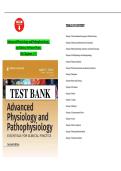
TABLE OF CONTENT
Chapter 1 The Foundational Concepts of Clinical Practice
Advanced Physiology and Pathophysiology, Chapter 2 Chemical and Biochemical Foundations
2nd Edition, By Nancy Tkacs, Chapter 3 Molecular Biology, Genetics, and Genetic Diseases
All Chapters 1-17 Chapter 4 Cell Physiology and Pathophysiology
Chapter 5 Infectious Disease
Chapter 6 The Immune System and Leukocyte Function
Chapter 7 Neoplasia
Chapter 8 Blood and Clotting
Chapter 9 Circulation
TEST BANK Chapter 10 Heart
Chapter 11 Lungs
Chapter 12 Kidneys
Chapter 13 Gastrointestinal Tract
Chapter 14 Liver
Chapter 15 Nervous System
Chapter 16 Musculoskeletal System
Chapter 17 Endocrine System
, 4. The phagocytosis process involves three distinct steps. What is
the initial step in the process?
Chapter 1. THE FOUNDATIONAL CONCEPTS OF
CLINICALPRACTICE A) Engulfment
B) Intracellular killing
C) Antigen margination
1. The characteristic, localized cardinal signs of acute inflammation
include: D) Recognition and adherence
A) fever.
B) fatigue. 5. Which of the following mediators of inflammation causes increased
C) redness. capillary permeability and pain?
A) Serotonin
D) granuloma.
B) Histamine
2. The vascular, hemodynamic stage of acute inflammation is C) Bradykinin
initiated by momentary vasoconstriction followed by vasodilation
D) Nitric oxide
that causes localized:
A) bleeding.
6. Inflammatory exudates are a combination of several types.
B) congestion. Which of the following exudates is composed of enmeshed
C) pale skin. necrotic cells?
A) Serous
D) coolness.
B) Fibrinous
3. The cellular stage of acute inflammation is marked by the C) Suppurative
movement of leukocytes into the area. Which of the following
D) Membranous
cells arrives early in great numbers?
A) Basophils
7. The acute-phase systemic response usually begins within hours of
B) Lymphocytes the onset of inflammation and includes:
C) Neutrophils A) fever and lethargy.
D) Platelets B) decreased C-reactive protein.
C) positive nitrogen balance.
D) low erythrocyte sedimentation rate.
8. In contrast to acute inflammation, chronic inflammation is
characterized by which of the following phenomena?
,A) Profuse fibrinous exudation B) 38.0C (100.4F)
B) A shift to the left of granulocytes C) 35.5C (95.9F)
C) Metabolic and respiratory alkalosis D) 37.3C (99.1F)
D) Lymphocytosis and activated macrophages
13 A postsurgical patient who is recovering in the postanesthetic
recovery unit
9. Exogenous pyrogens (interleukin-1) and the presence of bacteria . states that she is freezing cold. Which of the following measures is
in the blood lead to the release of endogenous pyrogens that: likely to be initiated in the patients hypothalamus in an effort to
A) stabilize thermal control in the brain. reduce heat loss?
A) Opening of arteriovenous (AV) shunts
B) produce leukocytosis and anorexia.
C) block viral replication in cells. B) Reduced exhalation of warmed air
D) inhibit prostaglandin release. C) Contraction of pilomotor muscles
D) Decreased urine production
10 An older adult patient has just sheared the skin on her elbow while
attempted 14 An elderly patient is dressed only in a hospital gown and complains of
. to boost herself up in bed, an event that has precipitated acute a
inflammation in the region surrounding the wound. Which of the . draft in her room. Consequently, she has requested a warm blanket
following events will occur during the vascular stage of the while she sits in her wheelchair. Which of the following
patients inflammation? mechanisms of heat loss is most likely the primary cause of her
A) Outpouring of exudate into interstitial spaces request?
B) Chemotaxis A) Evaporation and conduction
C) Accumulation of leukocytes along the epithelium B) Radiation and convection
D) Phagocytosis of cellular debris C) Conduction and convection
D) Convection and evaporation
11 Which of the following individuals most likely has the highest risk of
. experiencing chronic inflammation? 15 Which of the following pathophysiologic processes are capable of
inducing
A) A patient who has recently been diagnosed with type 2 diabetes
. the production of pyrogens? Select all that apply.
B) A patient who is a carrier of an antibiotic-resistant organism A) Acute inflammation
C) A patient who is taking oral antibiotics for an upper respiratory B) Obesity
infection
D) A patient who is morbidly obese and who has a sedentary lifestyle C) Myocardial infarction
D) Malignancy
12 Which of the following core body temperatures is within normal E) Renal failure
range?
.
A) 35.9C (96.6F) 16 Which of the following patients is most likely to be susceptible to
. developing a neurogenic fever?
, A) A patient who has stage II Alzheimer disease B) Infants are susceptible to serious infections because of their
decreased immune function.
B) A patient who has sustained a head injury in a bicycle crash
C) Commonly used antipyretics often have no effect on the core
C) A patient who has become delirious after the
temperature of infants.
administration of a benzodiazepine
D) Fever in neonates is often evidence of a congenital disorder
D) A patient who has begun taking a selective serotonin-reuptake
rather than an infection.
inhibitor (SSRI) for the treatment of depression
20 An 84-year-old patients blood cultures have come back positive,
17 Patients are commonly administered antipyretics when their oral
despite the
temperature
. fact that his oral temperature has remained within normal range.
. exceeds 37.5C (99.5F). Which of the following statements
Which of the following phenomena underlies the alterations in
related to the rationale for this action is most accurate?
fever response that occur in the elderly?
A) Temperatures in excess of 37.5C (99.5F) can result in seizure
A) Disturbance in the functioning of the thermoregulatory center
activity.
B) Lower temperatures inhibit the protein synthesis of bacteria. B) Increased heat loss by evaporation
C) There is little empirical evidence for this treatment modality. C) The presence of comorbidities that are associated with
lowered core temperature
D) Most common antipyretics have been shown to have little
effect on core temperature. D) Persistent closure of arteriovenous shunts
Answer Key
18 A patient has sought care because of recent malaise and high fever.
Upon
. assessment, the patient states that his current fever began two 1. C
days earlier, although he states that for the last 2 weeks he is in a 2. B
cycle of high fever for a couple of days followed by a day or two of
normal temperature. Which of the following fever patterns is this 3. C
patient experiencing?
4. D
A) Recurrent fever
5. C
B) Remittent fever
6. D
C) Sustained fever
7. A
D) Intermittent fever
8. D
9. B
19 A febrile, 3-week-old infant has been brought to the emergency
department 10 A
. by his parents and is currently undergoing a diagnostic workup to .
determine the cause of his fever. Which of the following statements
11 D
best conveys the rationale for this careful examination?
.
A) The immature hypothalamus is unable to perform
normal thermoregulation.
Chapter 1 The Foundational Concepts of Clinical Practice
Advanced Physiology and Pathophysiology, Chapter 2 Chemical and Biochemical Foundations
2nd Edition, By Nancy Tkacs, Chapter 3 Molecular Biology, Genetics, and Genetic Diseases
All Chapters 1-17 Chapter 4 Cell Physiology and Pathophysiology
Chapter 5 Infectious Disease
Chapter 6 The Immune System and Leukocyte Function
Chapter 7 Neoplasia
Chapter 8 Blood and Clotting
Chapter 9 Circulation
TEST BANK Chapter 10 Heart
Chapter 11 Lungs
Chapter 12 Kidneys
Chapter 13 Gastrointestinal Tract
Chapter 14 Liver
Chapter 15 Nervous System
Chapter 16 Musculoskeletal System
Chapter 17 Endocrine System
, 4. The phagocytosis process involves three distinct steps. What is
the initial step in the process?
Chapter 1. THE FOUNDATIONAL CONCEPTS OF
CLINICALPRACTICE A) Engulfment
B) Intracellular killing
C) Antigen margination
1. The characteristic, localized cardinal signs of acute inflammation
include: D) Recognition and adherence
A) fever.
B) fatigue. 5. Which of the following mediators of inflammation causes increased
C) redness. capillary permeability and pain?
A) Serotonin
D) granuloma.
B) Histamine
2. The vascular, hemodynamic stage of acute inflammation is C) Bradykinin
initiated by momentary vasoconstriction followed by vasodilation
D) Nitric oxide
that causes localized:
A) bleeding.
6. Inflammatory exudates are a combination of several types.
B) congestion. Which of the following exudates is composed of enmeshed
C) pale skin. necrotic cells?
A) Serous
D) coolness.
B) Fibrinous
3. The cellular stage of acute inflammation is marked by the C) Suppurative
movement of leukocytes into the area. Which of the following
D) Membranous
cells arrives early in great numbers?
A) Basophils
7. The acute-phase systemic response usually begins within hours of
B) Lymphocytes the onset of inflammation and includes:
C) Neutrophils A) fever and lethargy.
D) Platelets B) decreased C-reactive protein.
C) positive nitrogen balance.
D) low erythrocyte sedimentation rate.
8. In contrast to acute inflammation, chronic inflammation is
characterized by which of the following phenomena?
,A) Profuse fibrinous exudation B) 38.0C (100.4F)
B) A shift to the left of granulocytes C) 35.5C (95.9F)
C) Metabolic and respiratory alkalosis D) 37.3C (99.1F)
D) Lymphocytosis and activated macrophages
13 A postsurgical patient who is recovering in the postanesthetic
recovery unit
9. Exogenous pyrogens (interleukin-1) and the presence of bacteria . states that she is freezing cold. Which of the following measures is
in the blood lead to the release of endogenous pyrogens that: likely to be initiated in the patients hypothalamus in an effort to
A) stabilize thermal control in the brain. reduce heat loss?
A) Opening of arteriovenous (AV) shunts
B) produce leukocytosis and anorexia.
C) block viral replication in cells. B) Reduced exhalation of warmed air
D) inhibit prostaglandin release. C) Contraction of pilomotor muscles
D) Decreased urine production
10 An older adult patient has just sheared the skin on her elbow while
attempted 14 An elderly patient is dressed only in a hospital gown and complains of
. to boost herself up in bed, an event that has precipitated acute a
inflammation in the region surrounding the wound. Which of the . draft in her room. Consequently, she has requested a warm blanket
following events will occur during the vascular stage of the while she sits in her wheelchair. Which of the following
patients inflammation? mechanisms of heat loss is most likely the primary cause of her
A) Outpouring of exudate into interstitial spaces request?
B) Chemotaxis A) Evaporation and conduction
C) Accumulation of leukocytes along the epithelium B) Radiation and convection
D) Phagocytosis of cellular debris C) Conduction and convection
D) Convection and evaporation
11 Which of the following individuals most likely has the highest risk of
. experiencing chronic inflammation? 15 Which of the following pathophysiologic processes are capable of
inducing
A) A patient who has recently been diagnosed with type 2 diabetes
. the production of pyrogens? Select all that apply.
B) A patient who is a carrier of an antibiotic-resistant organism A) Acute inflammation
C) A patient who is taking oral antibiotics for an upper respiratory B) Obesity
infection
D) A patient who is morbidly obese and who has a sedentary lifestyle C) Myocardial infarction
D) Malignancy
12 Which of the following core body temperatures is within normal E) Renal failure
range?
.
A) 35.9C (96.6F) 16 Which of the following patients is most likely to be susceptible to
. developing a neurogenic fever?
, A) A patient who has stage II Alzheimer disease B) Infants are susceptible to serious infections because of their
decreased immune function.
B) A patient who has sustained a head injury in a bicycle crash
C) Commonly used antipyretics often have no effect on the core
C) A patient who has become delirious after the
temperature of infants.
administration of a benzodiazepine
D) Fever in neonates is often evidence of a congenital disorder
D) A patient who has begun taking a selective serotonin-reuptake
rather than an infection.
inhibitor (SSRI) for the treatment of depression
20 An 84-year-old patients blood cultures have come back positive,
17 Patients are commonly administered antipyretics when their oral
despite the
temperature
. fact that his oral temperature has remained within normal range.
. exceeds 37.5C (99.5F). Which of the following statements
Which of the following phenomena underlies the alterations in
related to the rationale for this action is most accurate?
fever response that occur in the elderly?
A) Temperatures in excess of 37.5C (99.5F) can result in seizure
A) Disturbance in the functioning of the thermoregulatory center
activity.
B) Lower temperatures inhibit the protein synthesis of bacteria. B) Increased heat loss by evaporation
C) There is little empirical evidence for this treatment modality. C) The presence of comorbidities that are associated with
lowered core temperature
D) Most common antipyretics have been shown to have little
effect on core temperature. D) Persistent closure of arteriovenous shunts
Answer Key
18 A patient has sought care because of recent malaise and high fever.
Upon
. assessment, the patient states that his current fever began two 1. C
days earlier, although he states that for the last 2 weeks he is in a 2. B
cycle of high fever for a couple of days followed by a day or two of
normal temperature. Which of the following fever patterns is this 3. C
patient experiencing?
4. D
A) Recurrent fever
5. C
B) Remittent fever
6. D
C) Sustained fever
7. A
D) Intermittent fever
8. D
9. B
19 A febrile, 3-week-old infant has been brought to the emergency
department 10 A
. by his parents and is currently undergoing a diagnostic workup to .
determine the cause of his fever. Which of the following statements
11 D
best conveys the rationale for this careful examination?
.
A) The immature hypothalamus is unable to perform
normal thermoregulation.