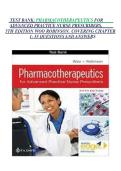
TEST BANK; PHARMACOTHERAPEUTICS FOR
ADVANCED PRACTICE NURSE PRESCRIBERS,
5TH EDITION WOO ROBINSON. COVERING CHAPTER
1- 55 QUESTIONS AND ANSWERS
,Geriatric Patients
Multiple Choice
Identify the choice that best completes the statement or answers the question.
1. Principles of prescribing for older adults include:
1. Avoiding prescribing any newer high-cost medications
2. Starting at a low dose and increasing the dose slowly
3. Keeping the total dose at a lower therapeutic range
4. All of the above
2. Sadie is a 90-year-old patient who requires a new prescription. What changes in drug distribution
with aging would influence prescribing for Sadie?
1. Increased volume of distribution
2. Decreased lipid solubility
3. Decreased plasma proteins
4. Increased muscle-to-fat ratio
3. Glen is an 82-year-old patient who needs to be prescribed a new drug. What changes in elimination
should be taken into consideration when prescribing for Glen?
1. Increased glomerular filtration rate (GFR) will require higher doses of some
renally excreted drugs.
2. Decreased tubular secretion of medication will require dosage adjustments.
3. Thin skin will cause increased elimination via sweat.
4. Decreased lung capacity will lead to measurable decreases in lung excretion of
drugs.
4. A medication review of an elderly person’s medications involves:
1. Asking the patient to bring a list of current prescription medications to the visit
2. Having the patient bring all of their prescription, over-the-counter, and herbal
medications to the visit
3. Asking what other providers are writing prescriptions for them
, 4. All of the above
5. Steps to avoid polypharmacy include:
1. Prescribing two or fewer drugs from each drug class
2. Reviewing a complete drug history every 12 to 18 months
3. Encouraging the elderly patient to coordinate their care with all of their providers
4. Evaluating for duplications in drug therapy and discontinuing any duplications
6. Robert is a 72-year-old patient who has hypertension and angina. He is at risk for common
medication practices seen in the elderly including:
1. Use of another person’s medications
2. Hoarding medications
3. Changing his medication regimen without telling his provider
4. All of the above
7. To improve positive outcomes when prescribing for the elderly the nurse practitioner should:
, 1. Assess cognitive functioning in the elder
2. Encourage the patient to take a weekly “drug holiday” to keep drug costs down
3. Encourage the patient to cut drugs in half with a knife to lower costs
4. All of the above
8. When an elderly diabetic patient is constipated the best treatment options include:
1. Mineral oil
2. Bulk-forming laxatives such as psyllium
3. Stimulant laxatives such as senna
4. Stool softeners such as docusate
9. Delta is an 88-year-old patient who has mild low-back pain. What guidelines should be followed
when prescribing pain management for Delta?
1. Keep the dose of oxycodone low to prevent development of tolerance.
2. Acetaminophen is the first-line drug of choice.
3. Avoid prescribing NSAIDs.
4. Add in a short-acting benzodiazepine for a synergistic effect on pain.
10. Robert is complaining of poor sleep. Medications that may contribute to sleep problems in the
elderly include:
1. Diuretics
2. Trazodone
3. Clonazepam
4. Levodopa
11. The GFRs for a 91-year-old woman who weighs 93 pounds and is 5'1" with a serum creatinine of
1.1, and for a 202-pound, 25-year-old male who is 5'9" with the same serum creatinine according to
the Cockcroft Gault formula are:
1. 25ml/ min and 133 mL/min respectively
2. 25 mL/min and 103 mL/min respectively
3. 22 ml/min and 133 mL/min respectively
4. 22 ml/min and 103 mL/min respectively
12. In geriatric patients, the percentage of body fat is increased. What are the pharmacologic
implications of this physiologic change?
1. A lipid-soluble medication will be eliminated more quickly and not work as well.
2. A lipid-soluble medication will accumulate in fat tissue and its duration of action
may be prolonged.
3. Absorption of lipid-soluble drugs is impaired in older adults.
4. The bioavailability of the lipid-soluble drug will be increased in older adults.
13. All of the following statements about the Beer’s List are true except:
1. It is a list of medications or medication classes that should generally be avoided in
persons 65 years or older because they are either ineffective or they pose
unnecessarily high risk for older persons and a safer alternative is available.
2. It is derived from the expert opinion of one geriatrician and is not evidence-based.
3. These criteria have been adopted by the Centers for Medicare and Medicaid
Services for regulation of long-term care facilities.
ADVANCED PRACTICE NURSE PRESCRIBERS,
5TH EDITION WOO ROBINSON. COVERING CHAPTER
1- 55 QUESTIONS AND ANSWERS
,Geriatric Patients
Multiple Choice
Identify the choice that best completes the statement or answers the question.
1. Principles of prescribing for older adults include:
1. Avoiding prescribing any newer high-cost medications
2. Starting at a low dose and increasing the dose slowly
3. Keeping the total dose at a lower therapeutic range
4. All of the above
2. Sadie is a 90-year-old patient who requires a new prescription. What changes in drug distribution
with aging would influence prescribing for Sadie?
1. Increased volume of distribution
2. Decreased lipid solubility
3. Decreased plasma proteins
4. Increased muscle-to-fat ratio
3. Glen is an 82-year-old patient who needs to be prescribed a new drug. What changes in elimination
should be taken into consideration when prescribing for Glen?
1. Increased glomerular filtration rate (GFR) will require higher doses of some
renally excreted drugs.
2. Decreased tubular secretion of medication will require dosage adjustments.
3. Thin skin will cause increased elimination via sweat.
4. Decreased lung capacity will lead to measurable decreases in lung excretion of
drugs.
4. A medication review of an elderly person’s medications involves:
1. Asking the patient to bring a list of current prescription medications to the visit
2. Having the patient bring all of their prescription, over-the-counter, and herbal
medications to the visit
3. Asking what other providers are writing prescriptions for them
, 4. All of the above
5. Steps to avoid polypharmacy include:
1. Prescribing two or fewer drugs from each drug class
2. Reviewing a complete drug history every 12 to 18 months
3. Encouraging the elderly patient to coordinate their care with all of their providers
4. Evaluating for duplications in drug therapy and discontinuing any duplications
6. Robert is a 72-year-old patient who has hypertension and angina. He is at risk for common
medication practices seen in the elderly including:
1. Use of another person’s medications
2. Hoarding medications
3. Changing his medication regimen without telling his provider
4. All of the above
7. To improve positive outcomes when prescribing for the elderly the nurse practitioner should:
, 1. Assess cognitive functioning in the elder
2. Encourage the patient to take a weekly “drug holiday” to keep drug costs down
3. Encourage the patient to cut drugs in half with a knife to lower costs
4. All of the above
8. When an elderly diabetic patient is constipated the best treatment options include:
1. Mineral oil
2. Bulk-forming laxatives such as psyllium
3. Stimulant laxatives such as senna
4. Stool softeners such as docusate
9. Delta is an 88-year-old patient who has mild low-back pain. What guidelines should be followed
when prescribing pain management for Delta?
1. Keep the dose of oxycodone low to prevent development of tolerance.
2. Acetaminophen is the first-line drug of choice.
3. Avoid prescribing NSAIDs.
4. Add in a short-acting benzodiazepine for a synergistic effect on pain.
10. Robert is complaining of poor sleep. Medications that may contribute to sleep problems in the
elderly include:
1. Diuretics
2. Trazodone
3. Clonazepam
4. Levodopa
11. The GFRs for a 91-year-old woman who weighs 93 pounds and is 5'1" with a serum creatinine of
1.1, and for a 202-pound, 25-year-old male who is 5'9" with the same serum creatinine according to
the Cockcroft Gault formula are:
1. 25ml/ min and 133 mL/min respectively
2. 25 mL/min and 103 mL/min respectively
3. 22 ml/min and 133 mL/min respectively
4. 22 ml/min and 103 mL/min respectively
12. In geriatric patients, the percentage of body fat is increased. What are the pharmacologic
implications of this physiologic change?
1. A lipid-soluble medication will be eliminated more quickly and not work as well.
2. A lipid-soluble medication will accumulate in fat tissue and its duration of action
may be prolonged.
3. Absorption of lipid-soluble drugs is impaired in older adults.
4. The bioavailability of the lipid-soluble drug will be increased in older adults.
13. All of the following statements about the Beer’s List are true except:
1. It is a list of medications or medication classes that should generally be avoided in
persons 65 years or older because they are either ineffective or they pose
unnecessarily high risk for older persons and a safer alternative is available.
2. It is derived from the expert opinion of one geriatrician and is not evidence-based.
3. These criteria have been adopted by the Centers for Medicare and Medicaid
Services for regulation of long-term care facilities.