Edrftgyihu jiuh
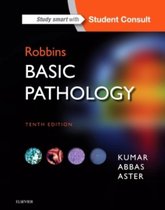
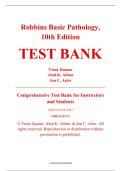
Robbins Basic Pathology,
10th Edition
ST
TEST BANK
UV
IA
Vinay Kumar
Abul K. Abbas
_A
Jon C. Aster
────────────────────────────────────────────────────
PP
Comprehensive Test Bank for Instructors
and Students
RO
||| ||| || ||| || | || ||| | || ||| |
9780323353175
VE
© Vinay Kumar, Abul K. Abbas, & Jon C. Aster. All
rights reserved. Reproduction or distribution without
D?
permission is prohibited.
© MEDCONNOISSEUR
, Edrftgyihu jiuh
Robbins Basic Pathology — Test Bank
Vinay Kumar, Abul K. Abbas and Jon C. Aster
ISBN: 9780323353175
ST
Chapter 1: The Cell as a Unit of Health and Disease
Chapter 2: Cell Injury, Cell Death, and Adaptations
Chapter 3: Inflammation and Repair
UV
Chapter 4: Hemodynamic Disorders, Thromboembolism, and Shock
Chapter 5: Diseases of the Immune System
Chapter 6: Neoplasia
Chapter 7: Genetic and Pediatric Diseases
Chapter 8: Environmental and Nutritional Diseases
IA
Chapter 9: General Pathology of Infectious Diseases
Chapter 10: Blood Vessels
Chapter 11: Heart
Chapter 12: Hematopoietic and Lymphoid Systems
_A
Chapter 13: Lung
Chapter 14: Kidney and Its Collecting System
Chapter 15: Oral Cavities and Gastrointestinal Tract
Chapter 16: Liver and Gallbladder
PP
Chapter 17: Pancreas
Chapter 18: Male Genital System and Lower Urinary Tract
Chapter 19: Female Genital System and Breast
Chapter 20: Endocrine System
RO
Chapter 21: Bones, Joints, and Soft Tissue Tumors
Chapter 22: Peripheral Nerves and Muscles
Chapter 23: Central Nervous System
Chapter 24: Skin
VE
D?
© MEDCONNOISSEUR
, Med C File:
Robbins Basic Pathology 10th Edition Kymar Abbas Test Bank
QUESTIONS & ANSWERS
Chapter 1. The Cell as a Unit of Health and Disease
SMT
1 The nucleus , which is essential for function and
survival of the cell.
A) is the site of protein synthesis
EUD
B) contains the genetic code
C) transforms cellular energy
V
D) initiates aerobic metabolism
CIA
2 Although energy is not made in mitochondria, they are known
as the power plants of the cell because they:
O_
A) contain RNA for protein synthesis.
B) utilize glycolysis for oxidative energy.
NA
C) extract energy from organic compounds.
NP
D) store calcium bonds for muscle contractions.
3 Although the basic structure of the cell plasma membrane is
OP
formed by a lipid bilayer, most of the specific membrane
functions are carried out by:
RISO
A) bound and transmembrane proteins.
B) complex, long carbohydrate chains.
SVE
C) surface antigens and hormone receptors.
D) a gating system of selective ion channels.
4 To effectively relay signals, cell-to-cell communication
EUD
utilizes chemical messenger systems that:
A) displace surface receptor proteins.
R?
B) accumulate within cell gap junctions.
C) bind to contractile microfilaments.
D) release secretions into extracellular fluid.
, Med C File:
5 Aerobic metabolism, also known as oxidative metabolism,
provides energy by:
A) removing the phosphate bonds from ATP.
SMT
B) combining hydrogen and oxygen to form
water.
C) activating pyruvate stored in the cytoplasm.
EUD
D) breaking down glucose to form lactic acid.
6 Exocytosis, the reverse of endocytosis, is important in
V
into the extracellular fluid.
CIA
A) Engulfing and ingesting fluid and proteins for
transport
O_
B) Killing, degrading, and dissolving harmful
microorganisms
NA
C) Removing cellular debris and releasing
synthesized substances
NP
D) Destruction of particles by lysosomal enzymes
for secretion
OP
7 The process responsible for generating and conducting
membrane potentials is:
RISO
A) diffusion of current-carrying ions.
B) millivoltage of electrical potential.
SVE
C) polarization of charged particles.
D) ion channel neurotransmission.
EUD
8 Epithelial tissues are classified according to the shape of the
cells and the number of layers. Which of the following is a
correctly matched description and type of epithelial tissue?
R?
A) Simple epithelium: cells in contact with
intercellular matrix; some do not extend to
surface
Robbins Basic Pathology,
10th Edition
ST
TEST BANK
UV
IA
Vinay Kumar
Abul K. Abbas
_A
Jon C. Aster
────────────────────────────────────────────────────
PP
Comprehensive Test Bank for Instructors
and Students
RO
||| ||| || ||| || | || ||| | || ||| |
9780323353175
VE
© Vinay Kumar, Abul K. Abbas, & Jon C. Aster. All
rights reserved. Reproduction or distribution without
D?
permission is prohibited.
© MEDCONNOISSEUR
, Edrftgyihu jiuh
Robbins Basic Pathology — Test Bank
Vinay Kumar, Abul K. Abbas and Jon C. Aster
ISBN: 9780323353175
ST
Chapter 1: The Cell as a Unit of Health and Disease
Chapter 2: Cell Injury, Cell Death, and Adaptations
Chapter 3: Inflammation and Repair
UV
Chapter 4: Hemodynamic Disorders, Thromboembolism, and Shock
Chapter 5: Diseases of the Immune System
Chapter 6: Neoplasia
Chapter 7: Genetic and Pediatric Diseases
Chapter 8: Environmental and Nutritional Diseases
IA
Chapter 9: General Pathology of Infectious Diseases
Chapter 10: Blood Vessels
Chapter 11: Heart
Chapter 12: Hematopoietic and Lymphoid Systems
_A
Chapter 13: Lung
Chapter 14: Kidney and Its Collecting System
Chapter 15: Oral Cavities and Gastrointestinal Tract
Chapter 16: Liver and Gallbladder
PP
Chapter 17: Pancreas
Chapter 18: Male Genital System and Lower Urinary Tract
Chapter 19: Female Genital System and Breast
Chapter 20: Endocrine System
RO
Chapter 21: Bones, Joints, and Soft Tissue Tumors
Chapter 22: Peripheral Nerves and Muscles
Chapter 23: Central Nervous System
Chapter 24: Skin
VE
D?
© MEDCONNOISSEUR
, Med C File:
Robbins Basic Pathology 10th Edition Kymar Abbas Test Bank
QUESTIONS & ANSWERS
Chapter 1. The Cell as a Unit of Health and Disease
SMT
1 The nucleus , which is essential for function and
survival of the cell.
A) is the site of protein synthesis
EUD
B) contains the genetic code
C) transforms cellular energy
V
D) initiates aerobic metabolism
CIA
2 Although energy is not made in mitochondria, they are known
as the power plants of the cell because they:
O_
A) contain RNA for protein synthesis.
B) utilize glycolysis for oxidative energy.
NA
C) extract energy from organic compounds.
NP
D) store calcium bonds for muscle contractions.
3 Although the basic structure of the cell plasma membrane is
OP
formed by a lipid bilayer, most of the specific membrane
functions are carried out by:
RISO
A) bound and transmembrane proteins.
B) complex, long carbohydrate chains.
SVE
C) surface antigens and hormone receptors.
D) a gating system of selective ion channels.
4 To effectively relay signals, cell-to-cell communication
EUD
utilizes chemical messenger systems that:
A) displace surface receptor proteins.
R?
B) accumulate within cell gap junctions.
C) bind to contractile microfilaments.
D) release secretions into extracellular fluid.
, Med C File:
5 Aerobic metabolism, also known as oxidative metabolism,
provides energy by:
A) removing the phosphate bonds from ATP.
SMT
B) combining hydrogen and oxygen to form
water.
C) activating pyruvate stored in the cytoplasm.
EUD
D) breaking down glucose to form lactic acid.
6 Exocytosis, the reverse of endocytosis, is important in
V
into the extracellular fluid.
CIA
A) Engulfing and ingesting fluid and proteins for
transport
O_
B) Killing, degrading, and dissolving harmful
microorganisms
NA
C) Removing cellular debris and releasing
synthesized substances
NP
D) Destruction of particles by lysosomal enzymes
for secretion
OP
7 The process responsible for generating and conducting
membrane potentials is:
RISO
A) diffusion of current-carrying ions.
B) millivoltage of electrical potential.
SVE
C) polarization of charged particles.
D) ion channel neurotransmission.
EUD
8 Epithelial tissues are classified according to the shape of the
cells and the number of layers. Which of the following is a
correctly matched description and type of epithelial tissue?
R?
A) Simple epithelium: cells in contact with
intercellular matrix; some do not extend to
surface