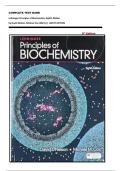
COMPLETE TEST BANK
Lehninger Principles of Biochemistry Eighth Edition
by David Nelson, Michael Cox (2021) || LATEST EDITION
8th Edition
,Table of Contents
Chapter 1: The Foundations of Biochemistry ............................................................................................3
UNIT I: STRUCTURE AND CATALYSIS ................................................................................................. 172
Chapter 2: Water, the Solvent of Life .....................................................................................................172
Chapter 3: Amino Acids, Peptides, and Proteins ...................................................................................185
Chapter 4: The Three-Dimensional Structure of Proteins .....................................................................191
Chapter 5: Protein Function ...................................................................................................................209
Chapter 6: Enzymes ...............................................................................................................................220
Chapter 7: Carbohydrates and Glycobiology .........................................................................................238
Chapter 8: Nucleotides and Nucleic Acids ............................................................................................254
Chapter 9: DNA-Based Information Technologies .................................................................................258
Chapter 10: Lipids ..................................................................................................................................271
Chapter 11: Biological Membranes and Transport ................................................................................282
Chapter 12: Biochemical Signaling.........................................................................................................296
UNIT II: BIOENERGETICS AND METABOLISM ................................................................................... 334
Chapter 13: Introduction to Metabolism ..............................................................................................334
Chapter 14: Glycolysis, Gluconeogenesis, and the Pentose Phosphate Pathway .................................363
Chapter 15: Principles of Metabolic Regulation: Glucose and Glycogen Metabolism ............................27
Chapter 16: The Citric Acid Cycle .............................................................................................................41
Chapter 17: Fatty Acid Catabolism ...........................................................................................................62
Chapter 18: Amino Acid Oxidation and the Production of Urea .............................................................99
Chapter 19: Oxidative Phosphorylation .................................................................................................111
Chapter 20: Photosynthesis and Carbohydrate Synthesis in Plants ......................................................140
Chapter 21: Lipid Biosynthesis ...............................................................................................................153
Chapter 22: Biosynthesis of Amino Acids, Nucleotides, and Related Molecules ..................................177
Chapter 23: Hormonal Regulation and Integration of Mammalian Metabolism ..................................192
III INFORMATION PATHWAYS........................................................................................................... 212
Chapter 24: Genes and Chromosomes ..................................................................................................212
Chapter 25: DNA Metabolism ................................................................................................................215
Chapter 26: RNA Metabolism ................................................................................................................240
Chapter 27: Protein Metabolism ...........................................................................................................249
Chapter 28: Regulation of Gene Expression ..........................................................................................260
,Chapter 1: The Foundations of Biochemistry
A dynamic steady state results when
A) a molecule stops being degraded
B) an organism is at equilibrium with its surroundings
C) there is no net energy transfer
D) the rate of intake or synthesis of a molecule equals the rate of its disappearance. –
ANSWER: C
If a chemical reaction starts with 1M concentrations each of reactants A and B and products C and D,
under what conditions of K′eq and ΔG′° will the reaction proceed in the forward direction (ΔG′° = RT ln
K′eq)?
A) If K′eq is greater than 1 and ΔG′° is negative
B) If K′eq is 0 and ΔG′° is negative
C) If K′eq is negative and ΔG′° is negative
D) If K′eq is less than 1 and ΔG′° is positive. –
ANSWER: A
Living cells and organisms
A) exchange energy but not matter with their surroundings.
B) exchange energy and material with their surroundings.
C) are closed systems
D) are at equilibrium with their surroundings. –
ANSWER: B
The standard free-energy changes of two sequential chemical reactions are additive only if
A) the reactions share a common intermediate.
B) each reaction has a negative ΔG′°
C) the overall (net) reaction has a postive ΔG′°.
D) the exergonic reaction occurs first. –
ANSWER: A
, Which of the following has a thioester bond?
A) PEP (phosphoenolpyruvate)
B) ATP
C) phosphocreatine
D) acetyl-CoA –
ANSWER: D
What provides the energy for the synthesis in an RNA polymer?
A) The transfer of an energy-rich ribonucleoside monophosphate to the polymer.
B) The hydrolysis of two anhydride bonds in ribonucleoside triphosphates.
C) The transfer of the γ phosphate of a ribonucleoside
triphosphate to the polymer.
D) The transfer of an energy-rich ribonucleoside triphosphate to the polymer. –
ANSWER: B
When a nucleophile attacks the α phosphorous atom of
ATP, what kind of transfer occurs?
A) pyrophosphoryl transfer
B) phosphoryl transfer
C) adenylyl transfer
D) adenosine transfer –
ANSWER: C
When dNTPs become depleted in the cell, which of the following enzymes will regenerate dNTPs from
dNDPs?
A) nucleoside diphosphate kinase
B) polyphosphate kinase
C) creatine kinase
D) adenylate kinase –
ANSWER: A
Lehninger Principles of Biochemistry Eighth Edition
by David Nelson, Michael Cox (2021) || LATEST EDITION
8th Edition
,Table of Contents
Chapter 1: The Foundations of Biochemistry ............................................................................................3
UNIT I: STRUCTURE AND CATALYSIS ................................................................................................. 172
Chapter 2: Water, the Solvent of Life .....................................................................................................172
Chapter 3: Amino Acids, Peptides, and Proteins ...................................................................................185
Chapter 4: The Three-Dimensional Structure of Proteins .....................................................................191
Chapter 5: Protein Function ...................................................................................................................209
Chapter 6: Enzymes ...............................................................................................................................220
Chapter 7: Carbohydrates and Glycobiology .........................................................................................238
Chapter 8: Nucleotides and Nucleic Acids ............................................................................................254
Chapter 9: DNA-Based Information Technologies .................................................................................258
Chapter 10: Lipids ..................................................................................................................................271
Chapter 11: Biological Membranes and Transport ................................................................................282
Chapter 12: Biochemical Signaling.........................................................................................................296
UNIT II: BIOENERGETICS AND METABOLISM ................................................................................... 334
Chapter 13: Introduction to Metabolism ..............................................................................................334
Chapter 14: Glycolysis, Gluconeogenesis, and the Pentose Phosphate Pathway .................................363
Chapter 15: Principles of Metabolic Regulation: Glucose and Glycogen Metabolism ............................27
Chapter 16: The Citric Acid Cycle .............................................................................................................41
Chapter 17: Fatty Acid Catabolism ...........................................................................................................62
Chapter 18: Amino Acid Oxidation and the Production of Urea .............................................................99
Chapter 19: Oxidative Phosphorylation .................................................................................................111
Chapter 20: Photosynthesis and Carbohydrate Synthesis in Plants ......................................................140
Chapter 21: Lipid Biosynthesis ...............................................................................................................153
Chapter 22: Biosynthesis of Amino Acids, Nucleotides, and Related Molecules ..................................177
Chapter 23: Hormonal Regulation and Integration of Mammalian Metabolism ..................................192
III INFORMATION PATHWAYS........................................................................................................... 212
Chapter 24: Genes and Chromosomes ..................................................................................................212
Chapter 25: DNA Metabolism ................................................................................................................215
Chapter 26: RNA Metabolism ................................................................................................................240
Chapter 27: Protein Metabolism ...........................................................................................................249
Chapter 28: Regulation of Gene Expression ..........................................................................................260
,Chapter 1: The Foundations of Biochemistry
A dynamic steady state results when
A) a molecule stops being degraded
B) an organism is at equilibrium with its surroundings
C) there is no net energy transfer
D) the rate of intake or synthesis of a molecule equals the rate of its disappearance. –
ANSWER: C
If a chemical reaction starts with 1M concentrations each of reactants A and B and products C and D,
under what conditions of K′eq and ΔG′° will the reaction proceed in the forward direction (ΔG′° = RT ln
K′eq)?
A) If K′eq is greater than 1 and ΔG′° is negative
B) If K′eq is 0 and ΔG′° is negative
C) If K′eq is negative and ΔG′° is negative
D) If K′eq is less than 1 and ΔG′° is positive. –
ANSWER: A
Living cells and organisms
A) exchange energy but not matter with their surroundings.
B) exchange energy and material with their surroundings.
C) are closed systems
D) are at equilibrium with their surroundings. –
ANSWER: B
The standard free-energy changes of two sequential chemical reactions are additive only if
A) the reactions share a common intermediate.
B) each reaction has a negative ΔG′°
C) the overall (net) reaction has a postive ΔG′°.
D) the exergonic reaction occurs first. –
ANSWER: A
, Which of the following has a thioester bond?
A) PEP (phosphoenolpyruvate)
B) ATP
C) phosphocreatine
D) acetyl-CoA –
ANSWER: D
What provides the energy for the synthesis in an RNA polymer?
A) The transfer of an energy-rich ribonucleoside monophosphate to the polymer.
B) The hydrolysis of two anhydride bonds in ribonucleoside triphosphates.
C) The transfer of the γ phosphate of a ribonucleoside
triphosphate to the polymer.
D) The transfer of an energy-rich ribonucleoside triphosphate to the polymer. –
ANSWER: B
When a nucleophile attacks the α phosphorous atom of
ATP, what kind of transfer occurs?
A) pyrophosphoryl transfer
B) phosphoryl transfer
C) adenylyl transfer
D) adenosine transfer –
ANSWER: C
When dNTPs become depleted in the cell, which of the following enzymes will regenerate dNTPs from
dNDPs?
A) nucleoside diphosphate kinase
B) polyphosphate kinase
C) creatine kinase
D) adenylate kinase –
ANSWER: A