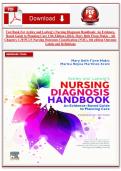
Test Bank For Ackley and Ladwig's Nursing
w# w# w# w# w# w# w#
Diagnosis Handbook 13th Edition: An Evid
w# w# w# w# w#
ence-Based Guide to Planning Care
w# w# w# w#
by Mary Beth Flynn Makic
w# w# w# w#
@2024
,Section I: Nursing Diagnosis, the Nursing Process, and Evidence-
w# w# w# w# w# w# w# w#
Based Nursing
w# w#
1. What is the primary goal of a nursing diagnosis?
w# w# w# w# w# w# w# w#
a. To identify a medical diagnosis
w# w# w# w# w#
b. To determine the effectiveness of medications
w# w# w# w# w# w#
c. To identify patient problems that can be managed by nursi
w# w# w# w# w# w# w# w# w# w#
ng interventions
w#
d. To prioritize physician orders
w# w# w# w#
ANS: C w#
Rationale: The primary goal of a nursing diagnosis is to identify patient proble
w# w# w# w# w# w# w# w# w# w# w# w#
ms that can be managed by nursing interventions, focusing on patient care rath
w# w# w# w# w# w# w# w# w# w# w# w#
er than medical diagnoses.
w# w# w#
NCLEX Preference: Understanding the distinction between nursing and medic
w# w# w# w# w# w# w# w#
al diagnoses is crucial for patient-centered care.
w# w# w# w# w# w#
2. Which component of the nursing diagnosis indicates the problem?
w# w# w# w# w# w# w# w#
a. Defining characteristics
w# w#
b. Related factors
w# w#
c. The actual diagnosis
w# w# w#
d. The patient’s history
w# w# w#
ANS: C w#
Rationale: The actual diagnosis represents the problem identified in the nursing
w# w# w# w# w# w# w# w# w# w#
assessment. It is essential for formulating a care plan.
w# w# w# w# w# w# w# w# w#
NCLEX Preference: Clear identification of nursing diagnoses is necessary for eff
w# w# w# w# w# w# w# w# w# w#
ective care planning.
w# w#
3. What does the "related to" (R/T) statement in a nursing diagnosis signify?
w# w# w# w# w# w# w# w# w# w# w#
a. It identifies the patient's response to the problem
w# w# w# w# w# w# w# w#
b. It indicates the underlying cause of the problem
w# w# w# w# w# w# w# w#
c. It lists the symptoms observed
w# w# w# w# w#
d. It describes the treatment plan
w# w# w# w# w#
ANS: B w#
Rationale: The "related to" (R/T) statement indicates the underlying cause or c
w# w# w# w# w# w# w# w# w# w# w#
ontributing factors of the patient’s problem, guiding intervention strategies.
w# w# w# w# w# w# w# w#
,NCLEX Preference: Understanding etiology is vital for targeted nursing interv
w# w# w# w# w# w# w# w# w#
entions.
4. Which nursing diagnosis format is used to articulate the problem clearly?
w# w# w# w# w# w# w# w# w# w#
a. Problem-focused diagnosis
w# w#
b. Risk diagnosis
w# w#
c. Health promotion diagnosis
w# w# w#
d. All of the above
w# w# w# w#
ANS: D w#
Rationale: All formats—problem-focused, risk, and health promotion—
w# w# w# w# w# w#
articulate different aspects of patient care and are important in various clinical
w# w# w# w# w# w# w# w# w# w# w# w#
situations.
NCLEX Preference: Familiarity with different nursing diagnosis formats enhan
w# w# w# w# w# w# w# w#
ces clinical reasoning.
w# w#
5. In which phase of the nursing process is the nursing diagnosis formulated?
w# w# w# w# w# w# w# w# w# w# w#
a. Assessment
w#
b. Diagnosis
w#
c. Planning
w#
d. Implementation
w#
ANS: B w#
Rationale: The nursing diagnosis is formulated during the diagnosis phase, afte
w# w# w# w# w# w# w# w# w# w#
r collecting and analyzing assessment data.
w# w# w# w# w#
NCLEX Preference: Understanding the nursing process phases is crucial for ef
w# w# w# w# w# w# w# w# w# w#
fective care delivery.
w# w#
6. What is a defining characteristic in a nursing diagnosis?
w# w# w# w# w# w# w# w#
a. The cause of the problem
w# w# w# w# w#
b. The observable signs and symptoms
w# w# w# w# w#
c. The expected outcomes
w# w# w#
d. The patient's medical history
w# w# w# w#
ANS: B w#
Rationale: Defining characteristics are the observable signs and symptoms that
w# w# w# w# w# w# w# w# w# w#
validate the nursing diagnosis and provide evidence of the problem.
w# w# w# w# w# w# w# w# w#
NCLEX Preference: Identifying defining characteristics is essential for accurate
w# w# w# w# w# w# w# w# w#
diagnosis and planning. w# w#
, 7. How can a nurse validate a nursing diagnosis?
w# w# w# w# w# w# w#
a. By relying solely on personal experience
w# w# w# w# w# w#
b. By collecting data from various sources, including the patient
w# w# w# w# w# w# w# w# w#
c. By discussing it only with physicians
w# w# w# w# w# w#
d. By documenting the diagnosis without evidence
w# w# w# w# w# w#
ANS: B w#
Rationale: Validating a nursing diagnosis involves collecting data from multipl
w# w# w# w# w# w# w# w# w#
e sources, including the patient, to ensure accuracy and relevance.
w# w# w# w# w# w# w# w# w#
NCLEX Preference: Validation of nursing diagnoses is critical for patient safet
w# w# w# w# w# w# w# w# w# w#
y and effective care.
w# w# w#
8. What role does evidence-based practice play in nursing diagnoses?
w# w# w# w# w# w# w# w#
a. It complicates the diagnosis process
w# w# w# w# w#
b. It provides a scientific basis for nursing decisions
w# w# w# w# w# w# w# w#
c. It is optional for nursing practice
w# w# w# w# w# w#
d. It focuses solely on traditional methods
w# w# w# w# w# w#
ANS: B w#
Rationale: Evidence- w#
based practice provides a scientific basis for nursing decisions, improving patie
w# w# w# w# w# w# w# w# w# w#
nt outcomes and ensuring care is effective and relevant. NCLEX Preference:
w# w# w# w# w# w# w# w# w# w# w#
Knowledge of evidence-based practice is essential for modern nursing.
w# w# w# w# w# w# w# w#
9. What is the purpose of the planning phase in the nursing process?
w# w# w# w# w# w# w# w# w# w# w#
a. To assess the patient’s condition
w# w# w# w# w#
b. To develop a care plan with measurable goals
w# w# w# w# w# w# w# w#
c. To implement interventions immediately
w# w# w# w#
**d. To evaluate patient outcomes
w# w# w# w#
ANS: B w#
Rationale: The planning phase involves developing a care plan with measurabl
w# w# w# w# w# w# w# w# w# w#
e goals and outcomes tailored to the patient’s needs.
w# w# w# w# w# w# w# w#
NCLEX Preference: Effective planning is key to successful patient outcomes.
w# w# w# w# w# w# w# w# w#
10. How should nursing diagnoses be prioritized?
w# w# w# w# w#
a. Based on the nurse’s preference
w# w# w# w# w#
w# w# w# w# w# w# w#
Diagnosis Handbook 13th Edition: An Evid
w# w# w# w# w#
ence-Based Guide to Planning Care
w# w# w# w#
by Mary Beth Flynn Makic
w# w# w# w#
@2024
,Section I: Nursing Diagnosis, the Nursing Process, and Evidence-
w# w# w# w# w# w# w# w#
Based Nursing
w# w#
1. What is the primary goal of a nursing diagnosis?
w# w# w# w# w# w# w# w#
a. To identify a medical diagnosis
w# w# w# w# w#
b. To determine the effectiveness of medications
w# w# w# w# w# w#
c. To identify patient problems that can be managed by nursi
w# w# w# w# w# w# w# w# w# w#
ng interventions
w#
d. To prioritize physician orders
w# w# w# w#
ANS: C w#
Rationale: The primary goal of a nursing diagnosis is to identify patient proble
w# w# w# w# w# w# w# w# w# w# w# w#
ms that can be managed by nursing interventions, focusing on patient care rath
w# w# w# w# w# w# w# w# w# w# w# w#
er than medical diagnoses.
w# w# w#
NCLEX Preference: Understanding the distinction between nursing and medic
w# w# w# w# w# w# w# w#
al diagnoses is crucial for patient-centered care.
w# w# w# w# w# w#
2. Which component of the nursing diagnosis indicates the problem?
w# w# w# w# w# w# w# w#
a. Defining characteristics
w# w#
b. Related factors
w# w#
c. The actual diagnosis
w# w# w#
d. The patient’s history
w# w# w#
ANS: C w#
Rationale: The actual diagnosis represents the problem identified in the nursing
w# w# w# w# w# w# w# w# w# w#
assessment. It is essential for formulating a care plan.
w# w# w# w# w# w# w# w# w#
NCLEX Preference: Clear identification of nursing diagnoses is necessary for eff
w# w# w# w# w# w# w# w# w# w#
ective care planning.
w# w#
3. What does the "related to" (R/T) statement in a nursing diagnosis signify?
w# w# w# w# w# w# w# w# w# w# w#
a. It identifies the patient's response to the problem
w# w# w# w# w# w# w# w#
b. It indicates the underlying cause of the problem
w# w# w# w# w# w# w# w#
c. It lists the symptoms observed
w# w# w# w# w#
d. It describes the treatment plan
w# w# w# w# w#
ANS: B w#
Rationale: The "related to" (R/T) statement indicates the underlying cause or c
w# w# w# w# w# w# w# w# w# w# w#
ontributing factors of the patient’s problem, guiding intervention strategies.
w# w# w# w# w# w# w# w#
,NCLEX Preference: Understanding etiology is vital for targeted nursing interv
w# w# w# w# w# w# w# w# w#
entions.
4. Which nursing diagnosis format is used to articulate the problem clearly?
w# w# w# w# w# w# w# w# w# w#
a. Problem-focused diagnosis
w# w#
b. Risk diagnosis
w# w#
c. Health promotion diagnosis
w# w# w#
d. All of the above
w# w# w# w#
ANS: D w#
Rationale: All formats—problem-focused, risk, and health promotion—
w# w# w# w# w# w#
articulate different aspects of patient care and are important in various clinical
w# w# w# w# w# w# w# w# w# w# w# w#
situations.
NCLEX Preference: Familiarity with different nursing diagnosis formats enhan
w# w# w# w# w# w# w# w#
ces clinical reasoning.
w# w#
5. In which phase of the nursing process is the nursing diagnosis formulated?
w# w# w# w# w# w# w# w# w# w# w#
a. Assessment
w#
b. Diagnosis
w#
c. Planning
w#
d. Implementation
w#
ANS: B w#
Rationale: The nursing diagnosis is formulated during the diagnosis phase, afte
w# w# w# w# w# w# w# w# w# w#
r collecting and analyzing assessment data.
w# w# w# w# w#
NCLEX Preference: Understanding the nursing process phases is crucial for ef
w# w# w# w# w# w# w# w# w# w#
fective care delivery.
w# w#
6. What is a defining characteristic in a nursing diagnosis?
w# w# w# w# w# w# w# w#
a. The cause of the problem
w# w# w# w# w#
b. The observable signs and symptoms
w# w# w# w# w#
c. The expected outcomes
w# w# w#
d. The patient's medical history
w# w# w# w#
ANS: B w#
Rationale: Defining characteristics are the observable signs and symptoms that
w# w# w# w# w# w# w# w# w# w#
validate the nursing diagnosis and provide evidence of the problem.
w# w# w# w# w# w# w# w# w#
NCLEX Preference: Identifying defining characteristics is essential for accurate
w# w# w# w# w# w# w# w# w#
diagnosis and planning. w# w#
, 7. How can a nurse validate a nursing diagnosis?
w# w# w# w# w# w# w#
a. By relying solely on personal experience
w# w# w# w# w# w#
b. By collecting data from various sources, including the patient
w# w# w# w# w# w# w# w# w#
c. By discussing it only with physicians
w# w# w# w# w# w#
d. By documenting the diagnosis without evidence
w# w# w# w# w# w#
ANS: B w#
Rationale: Validating a nursing diagnosis involves collecting data from multipl
w# w# w# w# w# w# w# w# w#
e sources, including the patient, to ensure accuracy and relevance.
w# w# w# w# w# w# w# w# w#
NCLEX Preference: Validation of nursing diagnoses is critical for patient safet
w# w# w# w# w# w# w# w# w# w#
y and effective care.
w# w# w#
8. What role does evidence-based practice play in nursing diagnoses?
w# w# w# w# w# w# w# w#
a. It complicates the diagnosis process
w# w# w# w# w#
b. It provides a scientific basis for nursing decisions
w# w# w# w# w# w# w# w#
c. It is optional for nursing practice
w# w# w# w# w# w#
d. It focuses solely on traditional methods
w# w# w# w# w# w#
ANS: B w#
Rationale: Evidence- w#
based practice provides a scientific basis for nursing decisions, improving patie
w# w# w# w# w# w# w# w# w# w#
nt outcomes and ensuring care is effective and relevant. NCLEX Preference:
w# w# w# w# w# w# w# w# w# w# w#
Knowledge of evidence-based practice is essential for modern nursing.
w# w# w# w# w# w# w# w#
9. What is the purpose of the planning phase in the nursing process?
w# w# w# w# w# w# w# w# w# w# w#
a. To assess the patient’s condition
w# w# w# w# w#
b. To develop a care plan with measurable goals
w# w# w# w# w# w# w# w#
c. To implement interventions immediately
w# w# w# w#
**d. To evaluate patient outcomes
w# w# w# w#
ANS: B w#
Rationale: The planning phase involves developing a care plan with measurabl
w# w# w# w# w# w# w# w# w# w#
e goals and outcomes tailored to the patient’s needs.
w# w# w# w# w# w# w# w#
NCLEX Preference: Effective planning is key to successful patient outcomes.
w# w# w# w# w# w# w# w# w#
10. How should nursing diagnoses be prioritized?
w# w# w# w# w#
a. Based on the nurse’s preference
w# w# w# w# w#