ASEXUAL AND SEXUAL REPRODUCTION
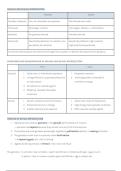
Asexual Sexual
Number of parents One, all individuals can produce Two (female and male)
Processes One stage : mitosis Two stages : Meiosis → Fertilisation
Gametes No gametes formed Gametes formed
End result Genetically identical, no variation, low Genetically different, High variation
possibility for evolution High evolutionary potential
Similaritie: both produce the same kind of organism as parent to prevent the species from dying out
ADVANTAGES AND DISADVANTAGES OF ASEXUAL AND SEXUAL REPRODUCTION
Pros Cons
Asexual 1. Faster rate: all individuals reproduce 1. No genetic variation
2. Energy-efficient: no gamete production 2. entire population vulnerable if
or mate search conditions change
3. No reliance on outside agents
4. Offspring: spread of favorable
mutations
Sexual 1. Genetic variation: basis of evolution 1. Slower rate: only half reproduces
2. Enhanced survival in change 2. High energy input: gamete, courtship
3. Enables diversity (new species) 3. Often requires outside agents
PROCESS OF SEXUAL REPRODUCTION
1. Diploid parents produce gametes in the gonads by the process of meiosis
→ Gametes are haploid because they contain one set (n) of chromosomes
2. The female and male gametes are brought together by pollination (plants) or mating (animals)
3. The gametes nuclei fuse in a process called fertilisation
→ A haploid zygote (2n) with is formed
4. Zygote divides by process of mitosis into a new individual
The gametes - In animals: male is mobile = sperm and female is imobile and large = egg or ovum
In plants: male is nucleus in pollen grain and female = egg in embryo sac
,REPRODUCTION IN FLOWERING PLANTS - SEXUAL REPRODUCTION IN ANGIOSPERMS
1. STRUCTURE AND FUNCTION OF THE FLOWER
MALE : STAMEN Function
Anther Where pollen grains ( male gametes ) are formed.
Filament Flexible stalk that holds the anther in the best position for pollen to be released
Female : CARPEL Function
Ovary Female organ where ovules ( eggs ) are formed,Ovule = seeds and ovary = into a fruit
Style Section joining stigma to ovary, holds stigma in best position
Stigma Is sticky and the part that receives pollen
Longitudinal section through a flower showing the female and male parts of a flower:
, 2. POLLINATION AND FERTILISATION
Pollination: transfer of pollen containing male gametes from the anther to the stigma to enable fertilisation
- Self pollination: transfer of pollen from anther → stigma of same flower or flower on the same plant
→Strategies to avoid self-fertilisation:
1. Timing: male and female flowers mature at different times
2. Morphological: the structure of male and female organs prevent self-pollination.
3. Biochemical: chemicals on pollen and stigma/style prevent pollen tube germination on same flower
- Cross pollination: transfer of pollen from anther of one flower to stigma of another
Pollinator - agent or vector that transfers pollen so that fertilisation can occur
Fertilisation:
- Pollen grain lands on receptive stigma and developed a pollen tube that grows along tyle
- Once the gamete enters the ovule fertilisation occurs - zygote develops into embryo
Formation of a seed:
- One sperm fuses with the egg cell → diploid zygote (→ future embryo)
- The other sperm fuses with two polar nuclei → endosperm (nutrient tissue)
○ Zygote divides by mitosis to form the embryo = cotyledons
○ Endosperm cells divide and accumulate starches, oils, and proteins to nourish the embryo
○ The ovule’s tissue harden into the testa (outer coat) and inner coat to protect the contents
Asexual Sexual
Number of parents One, all individuals can produce Two (female and male)
Processes One stage : mitosis Two stages : Meiosis → Fertilisation
Gametes No gametes formed Gametes formed
End result Genetically identical, no variation, low Genetically different, High variation
possibility for evolution High evolutionary potential
Similaritie: both produce the same kind of organism as parent to prevent the species from dying out
ADVANTAGES AND DISADVANTAGES OF ASEXUAL AND SEXUAL REPRODUCTION
Pros Cons
Asexual 1. Faster rate: all individuals reproduce 1. No genetic variation
2. Energy-efficient: no gamete production 2. entire population vulnerable if
or mate search conditions change
3. No reliance on outside agents
4. Offspring: spread of favorable
mutations
Sexual 1. Genetic variation: basis of evolution 1. Slower rate: only half reproduces
2. Enhanced survival in change 2. High energy input: gamete, courtship
3. Enables diversity (new species) 3. Often requires outside agents
PROCESS OF SEXUAL REPRODUCTION
1. Diploid parents produce gametes in the gonads by the process of meiosis
→ Gametes are haploid because they contain one set (n) of chromosomes
2. The female and male gametes are brought together by pollination (plants) or mating (animals)
3. The gametes nuclei fuse in a process called fertilisation
→ A haploid zygote (2n) with is formed
4. Zygote divides by process of mitosis into a new individual
The gametes - In animals: male is mobile = sperm and female is imobile and large = egg or ovum
In plants: male is nucleus in pollen grain and female = egg in embryo sac
,REPRODUCTION IN FLOWERING PLANTS - SEXUAL REPRODUCTION IN ANGIOSPERMS
1. STRUCTURE AND FUNCTION OF THE FLOWER
MALE : STAMEN Function
Anther Where pollen grains ( male gametes ) are formed.
Filament Flexible stalk that holds the anther in the best position for pollen to be released
Female : CARPEL Function
Ovary Female organ where ovules ( eggs ) are formed,Ovule = seeds and ovary = into a fruit
Style Section joining stigma to ovary, holds stigma in best position
Stigma Is sticky and the part that receives pollen
Longitudinal section through a flower showing the female and male parts of a flower:
, 2. POLLINATION AND FERTILISATION
Pollination: transfer of pollen containing male gametes from the anther to the stigma to enable fertilisation
- Self pollination: transfer of pollen from anther → stigma of same flower or flower on the same plant
→Strategies to avoid self-fertilisation:
1. Timing: male and female flowers mature at different times
2. Morphological: the structure of male and female organs prevent self-pollination.
3. Biochemical: chemicals on pollen and stigma/style prevent pollen tube germination on same flower
- Cross pollination: transfer of pollen from anther of one flower to stigma of another
Pollinator - agent or vector that transfers pollen so that fertilisation can occur
Fertilisation:
- Pollen grain lands on receptive stigma and developed a pollen tube that grows along tyle
- Once the gamete enters the ovule fertilisation occurs - zygote develops into embryo
Formation of a seed:
- One sperm fuses with the egg cell → diploid zygote (→ future embryo)
- The other sperm fuses with two polar nuclei → endosperm (nutrient tissue)
○ Zygote divides by mitosis to form the embryo = cotyledons
○ Endosperm cells divide and accumulate starches, oils, and proteins to nourish the embryo
○ The ovule’s tissue harden into the testa (outer coat) and inner coat to protect the contents