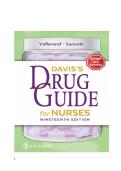
DAVIS'S DRUG GUIDE FOR NURSES
19TH EDITION
• AUTHOR(S)APRIL HAZARD
VALLERAND; CYNTHIA SANOSKI
TEST BANK
1
Drug Reference
Warfarin — Vitamin K Antagonist — Pharmacogenomics & Drug
Interactions
Stem
A 68-year-old man with atrial fibrillation is prescribed warfarin 5
mg PO nightly. His INR this morning is 1.2 (therapeutic goal 2–
3). He is also being treated for a urinary tract infection with
trimethoprim-sulfamethoxazole started yesterday. Which
nursing action is most appropriate now?
A. Administer the ordered warfarin and recheck INR in 3–5
days.
B. Hold the warfarin dose and notify prescriber about possible
,interaction and low INR.
C. Increase warfarin to 7.5 mg tonight to reach therapeutic INR
faster.
D. Administer warfarin and add oral vitamin K to prevent over-
anticoagulation.
Correct Answer: B
Rationale — Correct (B)
Trimethoprim-sulfamethoxazole can potentiate warfarin effect
by inhibiting warfarin metabolism and reducing vitamin K–
producing gut flora, increasing bleeding risk. Given the low INR
and recent antibiotic start (possible fluctuation) the safest
immediate nursing action is to hold and notify prescriber for re-
evaluation and closer INR monitoring. This prevents inadvertent
next-dose continuation when interaction may soon raise INR.
Rationale — Incorrect
A. Giving warfarin without reassessment risks overshoot if
interaction increases warfarin levels.
C. Empirically increasing dose risks dangerous INR elevation
once interaction manifests.
D. Giving vitamin K without prescriber order is inappropriate
and may counteract needed anticoagulation.
Teaching Point:
Antibiotics can alter warfarin effect — hold and consult
prescriber if unexpected INR change.
,Citation:
Vallerand, A. H., & Sanoski, C. (2025). Davis's Drug Guide for
Nurses (19th ed.). [Warfarin — Pharmacogenomics & Drug
Interactions].
2
Drug Reference
Codeine — Opioid Analgesic (Prodrug metabolized by CYP2D6)
— Pharmacogenomics & The Pediatric Patient
Stem
A 6-year-old boy is admitted for adenotonsillectomy and has
orders for codeine 0.5 mg/kg PO PRN for pain. His mother asks
if the medicine is safe. Which is the most appropriate nursing
response/action?
A. Administer codeine as ordered — opioid dosing is weight-
based for children.
B. Ask prescriber to change codeine due to risk of ultra-rapid
CYP2D6 metabolism causing toxicity.
C. Give half the ordered dose and monitor respiratory rate
closely.
D. Substitute ibuprofen without consulting prescriber because
NSAIDs are safer.
Correct Answer: B
Rationale — Correct (B)
Codeine is a prodrug converted to morphine by CYP2D6.
, Children who are CYP2D6 ultra-rapid metabolizers can develop
life-threatening respiratory depression after codeine,
particularly post-tonsillectomy. Current safety guidance
recommends avoiding codeine in children following
adenotonsillectomy. Requesting an alternative is the safest
nursing action.
Rationale — Incorrect
A. Administering as ordered risks severe respiratory depression
in ultra-rapid metabolizers.
C. Arbitrary dose reduction still risks harm and is not an
evidence-based mitigation.
D. Substituting without prescriber order is beyond nursing
scope; discuss alternatives with prescriber.
Teaching Point:
Avoid codeine in children post-tonsillectomy; CYP2D6 variability
increases overdose risk.
Citation:
Vallerand, A. H., & Sanoski, C. (2025). Davis's Drug Guide for
Nurses (19th ed.). [Codeine — Pharmacogenomics & The
Pediatric Patient].
3
Drug Reference
Carbamazepine — Anticonvulsant / Sodium Channel Blocker —
19TH EDITION
• AUTHOR(S)APRIL HAZARD
VALLERAND; CYNTHIA SANOSKI
TEST BANK
1
Drug Reference
Warfarin — Vitamin K Antagonist — Pharmacogenomics & Drug
Interactions
Stem
A 68-year-old man with atrial fibrillation is prescribed warfarin 5
mg PO nightly. His INR this morning is 1.2 (therapeutic goal 2–
3). He is also being treated for a urinary tract infection with
trimethoprim-sulfamethoxazole started yesterday. Which
nursing action is most appropriate now?
A. Administer the ordered warfarin and recheck INR in 3–5
days.
B. Hold the warfarin dose and notify prescriber about possible
,interaction and low INR.
C. Increase warfarin to 7.5 mg tonight to reach therapeutic INR
faster.
D. Administer warfarin and add oral vitamin K to prevent over-
anticoagulation.
Correct Answer: B
Rationale — Correct (B)
Trimethoprim-sulfamethoxazole can potentiate warfarin effect
by inhibiting warfarin metabolism and reducing vitamin K–
producing gut flora, increasing bleeding risk. Given the low INR
and recent antibiotic start (possible fluctuation) the safest
immediate nursing action is to hold and notify prescriber for re-
evaluation and closer INR monitoring. This prevents inadvertent
next-dose continuation when interaction may soon raise INR.
Rationale — Incorrect
A. Giving warfarin without reassessment risks overshoot if
interaction increases warfarin levels.
C. Empirically increasing dose risks dangerous INR elevation
once interaction manifests.
D. Giving vitamin K without prescriber order is inappropriate
and may counteract needed anticoagulation.
Teaching Point:
Antibiotics can alter warfarin effect — hold and consult
prescriber if unexpected INR change.
,Citation:
Vallerand, A. H., & Sanoski, C. (2025). Davis's Drug Guide for
Nurses (19th ed.). [Warfarin — Pharmacogenomics & Drug
Interactions].
2
Drug Reference
Codeine — Opioid Analgesic (Prodrug metabolized by CYP2D6)
— Pharmacogenomics & The Pediatric Patient
Stem
A 6-year-old boy is admitted for adenotonsillectomy and has
orders for codeine 0.5 mg/kg PO PRN for pain. His mother asks
if the medicine is safe. Which is the most appropriate nursing
response/action?
A. Administer codeine as ordered — opioid dosing is weight-
based for children.
B. Ask prescriber to change codeine due to risk of ultra-rapid
CYP2D6 metabolism causing toxicity.
C. Give half the ordered dose and monitor respiratory rate
closely.
D. Substitute ibuprofen without consulting prescriber because
NSAIDs are safer.
Correct Answer: B
Rationale — Correct (B)
Codeine is a prodrug converted to morphine by CYP2D6.
, Children who are CYP2D6 ultra-rapid metabolizers can develop
life-threatening respiratory depression after codeine,
particularly post-tonsillectomy. Current safety guidance
recommends avoiding codeine in children following
adenotonsillectomy. Requesting an alternative is the safest
nursing action.
Rationale — Incorrect
A. Administering as ordered risks severe respiratory depression
in ultra-rapid metabolizers.
C. Arbitrary dose reduction still risks harm and is not an
evidence-based mitigation.
D. Substituting without prescriber order is beyond nursing
scope; discuss alternatives with prescriber.
Teaching Point:
Avoid codeine in children post-tonsillectomy; CYP2D6 variability
increases overdose risk.
Citation:
Vallerand, A. H., & Sanoski, C. (2025). Davis's Drug Guide for
Nurses (19th ed.). [Codeine — Pharmacogenomics & The
Pediatric Patient].
3
Drug Reference
Carbamazepine — Anticonvulsant / Sodium Channel Blocker —