

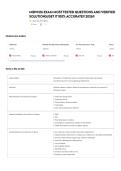
MIDW216 EXAM MOST TESTED QUESTIONS AND VERIFIED
SOLUTIONS/GET IT 100% ACCURATE!! 2026!!
Leave the first rating
Save
Students also studied
703d MOI Federal Nursing Home Administrato... CIC Personal Lines - Auto Army W
19 terms 266 terms 19 terms 13 terms
Heyboothing Preview shateria_michelle Preview jltorcivia Preview bec
Terms in this set (56)
Augmentation Stimulation of ineffective uterine contractions after labor has started
spontaneously but is not progressing satisfactorily
Induction artificial initiation of labour before its spontaneous onset for the purpose of
birthing the baby
Fetal indications for induction of labour 1. Fetal Macrosomia (LGA)
2. Suspected IUGR
3. Severe Rhesus Isoimmunisation
4. Fetal death
5. Non-reassuring fetal surveillance
Maternal indications for induction of labour 1. GDM
2. PET
3. Post dates (past 41 weeks)
4. prolonged or spontaneous rupture of membranes
5. Maternal request for social or logistic reasons
Contraindications for induction of labour 1. any maternal or fetal condition precludes vaginal birth
2. malpresentation (transverse or oblique lie, compound or shoulder presentation)
3. previous major uterine surgery (e.g. classical caesarean)
4. absolute cephalopelvic disproportion
5. cord prolapse
6. active genital herpes
7. placenta previa
8. invasive carcinoma of the cervix
9. severely compromised fetus
, Elements of bishops score 1. Dilation
2. Length of cervix
3. Station
4. Consistency
5. Position
All elements are assessed and scored between 0-3.
Bishops score of <6 indicates the cervix is unfavourable for induction of labour.
Discuss midwifery care during an induction of labour 1. 1-1 midwifery care with woman
using a Syntocinon infusion 2. If membranes intact, perform ARM
3. commence & maintain intrapartum record & fluid balance chart
4. ensure synto is run via sideline with IV fluids
5. Commence continuous CTG at the onset of
first contractions
6. Maternal & fetal observations as per 1st stage of active labour
7. record dose in milliunit/min
8. use minimum dose required to establish and maintain active labour
9. Increase at minimum of 30 mins
10. Maternal and fetal heart rate prior to increasing dosage
11. aim for 3-4:10 contractions lasting 40-60 seconds with resting period of no less
than 60 seconds
Discuss midwifery care after ARM Pre ARM
1. Complete pre IOL assessment
2. Encourage to empty bladder
3. Abdominal palpation to determine: descent, position and presentation
VE to identify:
1. Modified bishops score
2. stage of labour
3. presentation
4. position & descent
5. membranes
If indicated and no clinical concerns:
1. Continue to ARM from assessment VE
2. Confirm passage of fluid and check for presence of blood and meconium
3. Ensure good application of presenting
part before completing VE
4. FHR immediately following procedure
N.B. maintain documentation and continual monitoring of PV loss to assess for
mec liq
Discuss how the midwife would assess the progress of 1. Abdominal palpation to determine fetal descent
labour 2. Vaginal Examination to assess dilatation
3. Fundal dominance through palpation which can identify frequency, duration
and intensity of contractions
4. Maternal behaviour and reactions to contractions
SOLUTIONS/GET IT 100% ACCURATE!! 2026!!
Leave the first rating
Save
Students also studied
703d MOI Federal Nursing Home Administrato... CIC Personal Lines - Auto Army W
19 terms 266 terms 19 terms 13 terms
Heyboothing Preview shateria_michelle Preview jltorcivia Preview bec
Terms in this set (56)
Augmentation Stimulation of ineffective uterine contractions after labor has started
spontaneously but is not progressing satisfactorily
Induction artificial initiation of labour before its spontaneous onset for the purpose of
birthing the baby
Fetal indications for induction of labour 1. Fetal Macrosomia (LGA)
2. Suspected IUGR
3. Severe Rhesus Isoimmunisation
4. Fetal death
5. Non-reassuring fetal surveillance
Maternal indications for induction of labour 1. GDM
2. PET
3. Post dates (past 41 weeks)
4. prolonged or spontaneous rupture of membranes
5. Maternal request for social or logistic reasons
Contraindications for induction of labour 1. any maternal or fetal condition precludes vaginal birth
2. malpresentation (transverse or oblique lie, compound or shoulder presentation)
3. previous major uterine surgery (e.g. classical caesarean)
4. absolute cephalopelvic disproportion
5. cord prolapse
6. active genital herpes
7. placenta previa
8. invasive carcinoma of the cervix
9. severely compromised fetus
, Elements of bishops score 1. Dilation
2. Length of cervix
3. Station
4. Consistency
5. Position
All elements are assessed and scored between 0-3.
Bishops score of <6 indicates the cervix is unfavourable for induction of labour.
Discuss midwifery care during an induction of labour 1. 1-1 midwifery care with woman
using a Syntocinon infusion 2. If membranes intact, perform ARM
3. commence & maintain intrapartum record & fluid balance chart
4. ensure synto is run via sideline with IV fluids
5. Commence continuous CTG at the onset of
first contractions
6. Maternal & fetal observations as per 1st stage of active labour
7. record dose in milliunit/min
8. use minimum dose required to establish and maintain active labour
9. Increase at minimum of 30 mins
10. Maternal and fetal heart rate prior to increasing dosage
11. aim for 3-4:10 contractions lasting 40-60 seconds with resting period of no less
than 60 seconds
Discuss midwifery care after ARM Pre ARM
1. Complete pre IOL assessment
2. Encourage to empty bladder
3. Abdominal palpation to determine: descent, position and presentation
VE to identify:
1. Modified bishops score
2. stage of labour
3. presentation
4. position & descent
5. membranes
If indicated and no clinical concerns:
1. Continue to ARM from assessment VE
2. Confirm passage of fluid and check for presence of blood and meconium
3. Ensure good application of presenting
part before completing VE
4. FHR immediately following procedure
N.B. maintain documentation and continual monitoring of PV loss to assess for
mec liq
Discuss how the midwife would assess the progress of 1. Abdominal palpation to determine fetal descent
labour 2. Vaginal Examination to assess dilatation
3. Fundal dominance through palpation which can identify frequency, duration
and intensity of contractions
4. Maternal behaviour and reactions to contractions


