

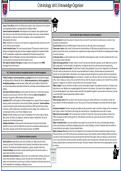
Criminology Unit 3 Knowledge Organiser
AC1.1 Evaluate the effectiveness of the roles of personnel involved in criminal investigations
Scenes of crime officers: work for the British police to gather, collect and process forensic evidence
e.g. photographing evidence, recovering physical or biological evidence
Forensics Scientists and Specialist: duties depend on area of expertise. Some specialists spend
their entire day in a lab, while others spend their days visiting crime scenes in search of evidence. AC1.4 Examine the rights of individuals in criminal investigations
Most specialize in a single area of forensic investigation, such as analysing fingerprints or
photographing crime scenes. Stop and Account: the police have powers to stop and ask you to account for your presence in a public space, your actions or your
Police: Usually first on a crime scene, with a vital role to safeguard the public and secure the crime possession of a particular item
scene in order to conserve evidence. Stop and Search: police have 19 different powers of stop and search e.g. for drugs, firearms and stolen goods
Crown Prosecution Service: The Crown Prosecution Service (CPS) prosecutes criminal cases that Police power of arrest: under section 24 of the police and criminal evidence act 1984, police may lawfully arrest you as a suspect
have been investigated by the police and other investigative organisations in England and Wales. without a warrant from court if; you have been or are suspected to have been involved or if the officer has reasonable ground to believe
The CPS is independent, making decisions independently of the police and government the arrest is necessary.
Pathologist: A Forensic Pathologist is primarily involved identifying the cause of death and At the police station: you will be handed over to the custody officer (ranked sergeant or above). You will be searched and held in a cell.
reconstructing the circumstances by which the death occurred. You possessions will be looked after.
Other Agencies: National Crime Agency (investigate serious and organised crime) HMRC Rights when being questioned: The rights to silence- You don’t have to answer the police’s questions, but this might harm you later on.
(investigate fraud and tax evasion) Right to legal advice- You have the right to free legal advice, including the right to have a solicitor present during questioning.
Fingerprints, photographs and samples: The police have the right to take photographs of you, as well as fingerprints and a DNA sample.
They don’t need your permission to do this, and can use reasonable force if necessary. The police need your permission and the
AC1.2 Assess the usefulness of investigative techniques in criminal investigations
authority of a senior police officer to take blood or urine samples (except when taking them in connection with drink or drug driving)
Profiling Techniques: Top-down approaches e.g. typological start with pre-established typology’s How long you can be held without charge: Police can hold you in custody for up to 24 hours. After that, they have to either charge you
and deciding which the offender best fits into. Bottom-up approaches e.g. clinical, geographical, with a crime or release you. Serious crimes can be held for 36 hours. After this, the police can detain you for a further 96 hours with the
investigative psychology are evidence based, profilers work up from evidence collected at the approval of a magistrate. If arrested for a terrorist offence, this can be extended to 14 days
crime scene to develop ideas about likely characteristics, motivations and social background of the Rights of appeal: If you are convicted for an offence, you have certain rights of appeal. These depend on two factors: The type of court-
offender magistrates or crown. Whether you are appealing against the conviction or the sentence. If you were tried in a magistrates court you
Interviews: Eye Witness Testimony accounts are given by witnesses to a crime and are generally can automatically appeal for your sentence and your conviction (if you pleaded not guilty). If you were tried in a Crown court, you have
accepted as accurate accounts of the crime. Police can interview experts and specialists for no automatic right to appeal (a judge decides whether to allow it)
information and advice on different aspects of their investigation Rights of the victim:
Surveillance: CCTV is used by police in criminal investigations as it can given 24 hour coverage of a When reporting a crime: When you report a crime, the police must give you written confirmation, a crime reference number and
location, provide a visual record of a crime and help to identify a perpetrator. Covert Surveillance contact details for the officer dealing with your case. They must also: Tell you what will happen next and how often they will update
is planned in advance by police and those being monitored are NOT aware that they are being you.
monitored e.g. GPS tracking devices, intercepting mail, phone tapping, static surveillance such as During the investigation: The police must give you updates and tell you when the suspect is arrested or charged, set free or released on
unmarked police vehicles, Covert Human Intelligence Sources bail, or given a caution. If the police drop the charge, they must also tell you. If you disagree then you can ask for a review
Forensics: Scientific techniques used to assist in investigating crime. Forensic evidence includes. Rights during court proceedings: CPS must tell you when and where the trial will be. If you have to give evidence, a Witness Care
Blood, semen, skin flakes, hair, fingerprints, shoeprints, weapons, clothing fibres. This can be Officer will support you before and during the trial. If the defendant is convicted, you may be able to read your Victim Personal
analysed and used to identify perpetrators Statement to the court.
Intelligence Databases: a storage space for information about crime/criminal that has been Rights of vulnerable victims: You are also entitled to extra support if you are the victim of a serious crime (wounding, attempted
obtained from many sources but collated into one area that is accessible by selected people e.g. murder, domestic abuse, sexual offences, kidnapping, hate crime, human trafficking or terrorism). Vulnerable victims are entitled to
police officers. Examples include the Police National Computer and CRIMINT. receive information more quickly, to be given specialist advice
Rights of witnesses: The Witness Charter sets out standards of care for witnesses that should be provided by the police, the Crown
Prosecution Service, court staff, the Witness Service and defence lawyers. These standards include the following: Witnesses will have a
AC1.3 Explain how evidence is processed main point of contact throughout the process who will keep them informed of the progress of the case. Measures to ensure that the
court is a safe environment and that prosecution and defence witnesses wait in separate areas. Information about the court process in
Physical evidence includes blood, semen, saliva, skin flakes, hair, finger prints, bite marks, advance of giving evidence so witnesses know what to expect. Prosecution witnesses will be informed of any appeal against conviction
shoeprints, tyre marks. Physical evidence must be collected, transferred and stored correctly to or sentence.
preserve it. This include use of protective equipment e.g. gloves, overshoes, hazmat suit
Testimonial Evidence include written or spoken statements given to the court by a witness, to
support either the defence or prosecution
Inadmissible Testimonial Evidence is evidence that is not considered when reaching a verdict and
includes Hearsay evidence: repeating a rumour they have heard. Forced confession: where
violence or threats have been used to extract a confession. Entrapment: where police have tried to
trick the defendant into committing or confessing to a crime.
AC1.1 Evaluate the effectiveness of the roles of personnel involved in criminal investigations
Scenes of crime officers: work for the British police to gather, collect and process forensic evidence
e.g. photographing evidence, recovering physical or biological evidence
Forensics Scientists and Specialist: duties depend on area of expertise. Some specialists spend
their entire day in a lab, while others spend their days visiting crime scenes in search of evidence. AC1.4 Examine the rights of individuals in criminal investigations
Most specialize in a single area of forensic investigation, such as analysing fingerprints or
photographing crime scenes. Stop and Account: the police have powers to stop and ask you to account for your presence in a public space, your actions or your
Police: Usually first on a crime scene, with a vital role to safeguard the public and secure the crime possession of a particular item
scene in order to conserve evidence. Stop and Search: police have 19 different powers of stop and search e.g. for drugs, firearms and stolen goods
Crown Prosecution Service: The Crown Prosecution Service (CPS) prosecutes criminal cases that Police power of arrest: under section 24 of the police and criminal evidence act 1984, police may lawfully arrest you as a suspect
have been investigated by the police and other investigative organisations in England and Wales. without a warrant from court if; you have been or are suspected to have been involved or if the officer has reasonable ground to believe
The CPS is independent, making decisions independently of the police and government the arrest is necessary.
Pathologist: A Forensic Pathologist is primarily involved identifying the cause of death and At the police station: you will be handed over to the custody officer (ranked sergeant or above). You will be searched and held in a cell.
reconstructing the circumstances by which the death occurred. You possessions will be looked after.
Other Agencies: National Crime Agency (investigate serious and organised crime) HMRC Rights when being questioned: The rights to silence- You don’t have to answer the police’s questions, but this might harm you later on.
(investigate fraud and tax evasion) Right to legal advice- You have the right to free legal advice, including the right to have a solicitor present during questioning.
Fingerprints, photographs and samples: The police have the right to take photographs of you, as well as fingerprints and a DNA sample.
They don’t need your permission to do this, and can use reasonable force if necessary. The police need your permission and the
AC1.2 Assess the usefulness of investigative techniques in criminal investigations
authority of a senior police officer to take blood or urine samples (except when taking them in connection with drink or drug driving)
Profiling Techniques: Top-down approaches e.g. typological start with pre-established typology’s How long you can be held without charge: Police can hold you in custody for up to 24 hours. After that, they have to either charge you
and deciding which the offender best fits into. Bottom-up approaches e.g. clinical, geographical, with a crime or release you. Serious crimes can be held for 36 hours. After this, the police can detain you for a further 96 hours with the
investigative psychology are evidence based, profilers work up from evidence collected at the approval of a magistrate. If arrested for a terrorist offence, this can be extended to 14 days
crime scene to develop ideas about likely characteristics, motivations and social background of the Rights of appeal: If you are convicted for an offence, you have certain rights of appeal. These depend on two factors: The type of court-
offender magistrates or crown. Whether you are appealing against the conviction or the sentence. If you were tried in a magistrates court you
Interviews: Eye Witness Testimony accounts are given by witnesses to a crime and are generally can automatically appeal for your sentence and your conviction (if you pleaded not guilty). If you were tried in a Crown court, you have
accepted as accurate accounts of the crime. Police can interview experts and specialists for no automatic right to appeal (a judge decides whether to allow it)
information and advice on different aspects of their investigation Rights of the victim:
Surveillance: CCTV is used by police in criminal investigations as it can given 24 hour coverage of a When reporting a crime: When you report a crime, the police must give you written confirmation, a crime reference number and
location, provide a visual record of a crime and help to identify a perpetrator. Covert Surveillance contact details for the officer dealing with your case. They must also: Tell you what will happen next and how often they will update
is planned in advance by police and those being monitored are NOT aware that they are being you.
monitored e.g. GPS tracking devices, intercepting mail, phone tapping, static surveillance such as During the investigation: The police must give you updates and tell you when the suspect is arrested or charged, set free or released on
unmarked police vehicles, Covert Human Intelligence Sources bail, or given a caution. If the police drop the charge, they must also tell you. If you disagree then you can ask for a review
Forensics: Scientific techniques used to assist in investigating crime. Forensic evidence includes. Rights during court proceedings: CPS must tell you when and where the trial will be. If you have to give evidence, a Witness Care
Blood, semen, skin flakes, hair, fingerprints, shoeprints, weapons, clothing fibres. This can be Officer will support you before and during the trial. If the defendant is convicted, you may be able to read your Victim Personal
analysed and used to identify perpetrators Statement to the court.
Intelligence Databases: a storage space for information about crime/criminal that has been Rights of vulnerable victims: You are also entitled to extra support if you are the victim of a serious crime (wounding, attempted
obtained from many sources but collated into one area that is accessible by selected people e.g. murder, domestic abuse, sexual offences, kidnapping, hate crime, human trafficking or terrorism). Vulnerable victims are entitled to
police officers. Examples include the Police National Computer and CRIMINT. receive information more quickly, to be given specialist advice
Rights of witnesses: The Witness Charter sets out standards of care for witnesses that should be provided by the police, the Crown
Prosecution Service, court staff, the Witness Service and defence lawyers. These standards include the following: Witnesses will have a
AC1.3 Explain how evidence is processed main point of contact throughout the process who will keep them informed of the progress of the case. Measures to ensure that the
court is a safe environment and that prosecution and defence witnesses wait in separate areas. Information about the court process in
Physical evidence includes blood, semen, saliva, skin flakes, hair, finger prints, bite marks, advance of giving evidence so witnesses know what to expect. Prosecution witnesses will be informed of any appeal against conviction
shoeprints, tyre marks. Physical evidence must be collected, transferred and stored correctly to or sentence.
preserve it. This include use of protective equipment e.g. gloves, overshoes, hazmat suit
Testimonial Evidence include written or spoken statements given to the court by a witness, to
support either the defence or prosecution
Inadmissible Testimonial Evidence is evidence that is not considered when reaching a verdict and
includes Hearsay evidence: repeating a rumour they have heard. Forced confession: where
violence or threats have been used to extract a confession. Entrapment: where police have tried to
trick the defendant into committing or confessing to a crime.


