

Edrftgyihu jiuh
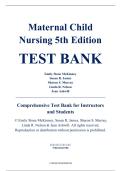
Maternal Child
Nursing 5th Edition
ST
UV
TEST BANK
IA
Emily Slone McKinney
_A
Susan R. James
Sharon S. Murray
Linda R. Nelson
PP
Jean Ashwill
────────────────────────────────────────────────────
RO
Comprehensive Test Bank for Instructors
and Students
VE
© Emily Slone McKinney, Susan R. James, Sharon S. Murray,
Linda R. Nelson & Jean Ashwill. All rights reserved.
Reproduction or distribution without permission is prohibited.
D?
||| ||| || ||| || | || ||| | || ||| |
9780323401708
© MEDCONNOISSEUR
, Edrftgyihu
TEST BANK jiuh— Maternal-Child Nursing, 5th Edition
Authors: McKinney, James, Murray, Nelson, Ashwill
ISBN: 978-0323401708
Chapter 1: Foundations of Maternity, Women’s Health, and Child Health Nursing
ST
Chapter 2: The Nurse’s Role in Maternity, Women’s Health, and Pediatric Nursing
Chapter 3: The Childbearing and Child-Rearing Family
Chapter 4: Communicating with Children and Families
Chapter 5: Health Promotion for the Developing Child
Chapter 6: Health Promotion for the Infant
UV
Chapter 7: Health Promotion During Early Childhood
Chapter 8: Health Promotion for the School-Age Child
Chapter 9: Health Promotion for the Adolescent
Chapter 10: Heredity and Environmental Influences on Development
IA
Chapter 11: Reproductive Anatomy and Physiology
Chapter 12: Conception and Prenatal Development
Chapter 13: Adaptations to Pregnancy
_A
Chapter 14: Nutrition for Childbearing
Chapter 15: Prenatal Diagnostic Tests
Chapter 16: Giving Birth
Chapter 17: Intrapartum Fetal Surveillance
Chapter 18: Pain Management for Childbirth
PP
Chapter 19: Nursing Care During Obstetric Procedures
Chapter 20: Postpartum Adaptations
RO
Chapter 21: The Normal Newborn: Adaptation and Assessment
Chapter 22: The Normal Newborn: Nursing Care
Chapter 23: Newborn Feeding
Chapter 24: The Childbearing Family with Special Needs
Chapter 25: Pregnancy-Related Complications
VE
Chapter 26: Concurrent Disorders During Pregnancy
Chapter 27: The Woman with an Intrapartum Complication
Chapter 28: The Woman with a Postpartum Complication
D?
Chapter 29: The High-Risk Newborn: Problems Related to Gestational Age and
Development
Chapter 30: The High-Risk Newborn: Acquired and Congenital Conditions
Chapter 31: Management of Fertility and Infertility
Chapter 32: Women’s Health Care
Chapter 33: Physical Assessment of Children
Chapter 34: Emergency Care of the Child
© MEDCONNOISSEUR
, Edrftgyihu jiuh
Chapter 35: The Ill Child in the Hospital and Other Care Settings
Chapter 36: The Child with a Chronic Condition or Terminal Illness
Chapter 37: Principles and Procedures for Nursing Care of Children
Chapter 38: Medication Administration and Safety for Infants and Children
Chapter 39: Pain Management for Children
ST
Chapter 40: The Child with a Fluid and Electrolyte Alteration
Chapter 41: The Child with an Infectious Disease
UV
Chapter 42: The Child with an Immunologic Alteration
Chapter 43: The Child with a Gastrointestinal Alteration
Chapter 44: The Child with a Genitourinary Alteration
Chapter 45: The Child with a Respiratory Alteration
Chapter 46: The Child with a Cardiovascular Alteration
Chapter 47: The Child with a Hematologic Alteration
IA
Chapter 48: The Child with Cancer
_A
Chapter 49: The Child with an Alteration in Tissue Integrity
Chapter 50: The Child with a Musculoskeletal Alteration
Chapter 51: The Child with an Endocrine or Metabolic Alteration
Chapter 52: The Child with a Neurologic Alteration
Chapter 53: Psychosocial Problems in Children and Families
PP
Chapter 54: The Child with a Developmental Disability
Chapter 55: The Child with a Sensory Alteration
RO
VE
D?
© MEDCONNOISSEUR
, Your
Chaptertext
55: TheLLLLLLLLLLLLLLLLL
Chapter 54: The Child with a Developmental Disability
Child with a Sensory Alteration
LLLLLLLLLLLLLLLLLLLLLLLLLLLhere 1
Chapter 01: Foundations of Maternity, Women’s Health, and Child Health Nursing
McKinney: Evolve Resources for Maternal-Child Nursing, 5th Edition
MULTIPLE CHOICE
SMT
1. Which factor significantly contributed to the shift from home births to hospital births in
the early 20th century?
a. Puerperal sepsis was identified as a risk factor in labor and delivery.
EUD
b. Forceps were developed to facilitate difficult births.
c. The importance of early parental-infant contact was identified.
d. Technologic developments became available to physicians.
V
ANS: D
Technologic developments were available to physicians, not lay midwives. So in-hospital
CIA
births increased in order to take advantage of these advancements. Puerperal sepsis has been a
known problem for generations. In the late 19th century, Semmelweis discovered how it could
be prevented with improved hygienic practices. The development of forceps is an example of
O_
a technology advance made in the early 20th century but is not the only reason birthplaces
moved. Unlike home births, early hospital births hindered bonding between parents and their
infants.
NA
PTS: 1 DIF: Cognitive Level: Knowledge/Remembering
REF: p. 1 OBJ: Integrated Process: Teaching-Learning
NP
MSC: Client Needs: Safe and Effective Care Environment
2. Family-centered maternity care developed in response to
OP
a. demands by physicians for family involvement in childbirth.
b. the Sheppard-Towner Act of 1921.
c. parental requests that infants be allowed to remain with them rather than in
RISO
a nursery.
d. changes in pharmacologic management of labor.
ANS: C
As research began to identify the benefits of early extended parent-infant contact, parents
SVE
began to insist that the infant remain with them. This gradually developed into the practice
of rooming-in and finally to family-centered maternity care. Family-centered care was a
request by parents, not physicians. The Sheppard-Towner Act of 1921 provided funds for
state-managed programs for mothers and children. The changes in pharmacologic
EUD
management of labor were not a factor in family-centered maternity care.
PTS: 1 DIF: Cognitive Level: Knowledge/Remembering
REF: p. 2 OBJ: Integrated Process: Teaching-Learning
MSC: Client Needs: Psychosocial Integrity
R?
3. Which setting for childbirth allows the least amount of parent-infant contact?
a. Labor/delivery/recovery/postpartum room
b. Birth center
c. Traditional hospital birth
d. Home birth
.
Maternal Child
Nursing 5th Edition
ST
UV
TEST BANK
IA
Emily Slone McKinney
_A
Susan R. James
Sharon S. Murray
Linda R. Nelson
PP
Jean Ashwill
────────────────────────────────────────────────────
RO
Comprehensive Test Bank for Instructors
and Students
VE
© Emily Slone McKinney, Susan R. James, Sharon S. Murray,
Linda R. Nelson & Jean Ashwill. All rights reserved.
Reproduction or distribution without permission is prohibited.
D?
||| ||| || ||| || | || ||| | || ||| |
9780323401708
© MEDCONNOISSEUR
, Edrftgyihu
TEST BANK jiuh— Maternal-Child Nursing, 5th Edition
Authors: McKinney, James, Murray, Nelson, Ashwill
ISBN: 978-0323401708
Chapter 1: Foundations of Maternity, Women’s Health, and Child Health Nursing
ST
Chapter 2: The Nurse’s Role in Maternity, Women’s Health, and Pediatric Nursing
Chapter 3: The Childbearing and Child-Rearing Family
Chapter 4: Communicating with Children and Families
Chapter 5: Health Promotion for the Developing Child
Chapter 6: Health Promotion for the Infant
UV
Chapter 7: Health Promotion During Early Childhood
Chapter 8: Health Promotion for the School-Age Child
Chapter 9: Health Promotion for the Adolescent
Chapter 10: Heredity and Environmental Influences on Development
IA
Chapter 11: Reproductive Anatomy and Physiology
Chapter 12: Conception and Prenatal Development
Chapter 13: Adaptations to Pregnancy
_A
Chapter 14: Nutrition for Childbearing
Chapter 15: Prenatal Diagnostic Tests
Chapter 16: Giving Birth
Chapter 17: Intrapartum Fetal Surveillance
Chapter 18: Pain Management for Childbirth
PP
Chapter 19: Nursing Care During Obstetric Procedures
Chapter 20: Postpartum Adaptations
RO
Chapter 21: The Normal Newborn: Adaptation and Assessment
Chapter 22: The Normal Newborn: Nursing Care
Chapter 23: Newborn Feeding
Chapter 24: The Childbearing Family with Special Needs
Chapter 25: Pregnancy-Related Complications
VE
Chapter 26: Concurrent Disorders During Pregnancy
Chapter 27: The Woman with an Intrapartum Complication
Chapter 28: The Woman with a Postpartum Complication
D?
Chapter 29: The High-Risk Newborn: Problems Related to Gestational Age and
Development
Chapter 30: The High-Risk Newborn: Acquired and Congenital Conditions
Chapter 31: Management of Fertility and Infertility
Chapter 32: Women’s Health Care
Chapter 33: Physical Assessment of Children
Chapter 34: Emergency Care of the Child
© MEDCONNOISSEUR
, Edrftgyihu jiuh
Chapter 35: The Ill Child in the Hospital and Other Care Settings
Chapter 36: The Child with a Chronic Condition or Terminal Illness
Chapter 37: Principles and Procedures for Nursing Care of Children
Chapter 38: Medication Administration and Safety for Infants and Children
Chapter 39: Pain Management for Children
ST
Chapter 40: The Child with a Fluid and Electrolyte Alteration
Chapter 41: The Child with an Infectious Disease
UV
Chapter 42: The Child with an Immunologic Alteration
Chapter 43: The Child with a Gastrointestinal Alteration
Chapter 44: The Child with a Genitourinary Alteration
Chapter 45: The Child with a Respiratory Alteration
Chapter 46: The Child with a Cardiovascular Alteration
Chapter 47: The Child with a Hematologic Alteration
IA
Chapter 48: The Child with Cancer
_A
Chapter 49: The Child with an Alteration in Tissue Integrity
Chapter 50: The Child with a Musculoskeletal Alteration
Chapter 51: The Child with an Endocrine or Metabolic Alteration
Chapter 52: The Child with a Neurologic Alteration
Chapter 53: Psychosocial Problems in Children and Families
PP
Chapter 54: The Child with a Developmental Disability
Chapter 55: The Child with a Sensory Alteration
RO
VE
D?
© MEDCONNOISSEUR
, Your
Chaptertext
55: TheLLLLLLLLLLLLLLLLL
Chapter 54: The Child with a Developmental Disability
Child with a Sensory Alteration
LLLLLLLLLLLLLLLLLLLLLLLLLLLhere 1
Chapter 01: Foundations of Maternity, Women’s Health, and Child Health Nursing
McKinney: Evolve Resources for Maternal-Child Nursing, 5th Edition
MULTIPLE CHOICE
SMT
1. Which factor significantly contributed to the shift from home births to hospital births in
the early 20th century?
a. Puerperal sepsis was identified as a risk factor in labor and delivery.
EUD
b. Forceps were developed to facilitate difficult births.
c. The importance of early parental-infant contact was identified.
d. Technologic developments became available to physicians.
V
ANS: D
Technologic developments were available to physicians, not lay midwives. So in-hospital
CIA
births increased in order to take advantage of these advancements. Puerperal sepsis has been a
known problem for generations. In the late 19th century, Semmelweis discovered how it could
be prevented with improved hygienic practices. The development of forceps is an example of
O_
a technology advance made in the early 20th century but is not the only reason birthplaces
moved. Unlike home births, early hospital births hindered bonding between parents and their
infants.
NA
PTS: 1 DIF: Cognitive Level: Knowledge/Remembering
REF: p. 1 OBJ: Integrated Process: Teaching-Learning
NP
MSC: Client Needs: Safe and Effective Care Environment
2. Family-centered maternity care developed in response to
OP
a. demands by physicians for family involvement in childbirth.
b. the Sheppard-Towner Act of 1921.
c. parental requests that infants be allowed to remain with them rather than in
RISO
a nursery.
d. changes in pharmacologic management of labor.
ANS: C
As research began to identify the benefits of early extended parent-infant contact, parents
SVE
began to insist that the infant remain with them. This gradually developed into the practice
of rooming-in and finally to family-centered maternity care. Family-centered care was a
request by parents, not physicians. The Sheppard-Towner Act of 1921 provided funds for
state-managed programs for mothers and children. The changes in pharmacologic
EUD
management of labor were not a factor in family-centered maternity care.
PTS: 1 DIF: Cognitive Level: Knowledge/Remembering
REF: p. 2 OBJ: Integrated Process: Teaching-Learning
MSC: Client Needs: Psychosocial Integrity
R?
3. Which setting for childbirth allows the least amount of parent-infant contact?
a. Labor/delivery/recovery/postpartum room
b. Birth center
c. Traditional hospital birth
d. Home birth
.


