1|Page
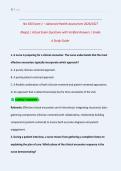
NU 650 Exam 1 – Advanced Health Assessment 2026/2027
(Regis) | Actual Exam Questions with Verified Answers | Grade
A Study Guide.
1. A nurse is preparing for a clinical encounter. The nurse understands that the most
effective encounters typically incorporate which approach?
A. A purely clinician-centered approach.
B. A purely patient-centered approach.
C. A flexible combination of both clinician-centered and patient-centered approaches.
D. An approach that is determined solely by the time constraints of the visit.
CORRECT ANSWER: C
Rationale: Effective clinical encounters are bi-directional, integrating structured, data-
gathering components (clinician-centered) with collaborative, relationship-building
components (patient-centered) to ensure both accurate diagnosis and patient
engagement.
2. During a patient interview, a nurse moves from gathering a complete history to
explaining the plan of care. Which phase of the clinical encounter sequence is the
nurse demonstrating?
,2|Page
A. Initiating the encounter.
B. Gathering information.
C. Explaining and planning.
D. Closing the encounter.
CORRECT ANSWER: C
Rationale: The sequence of the clinical encounter progresses from initiation, to
information gathering, to the physical exam, then to explaining findings and developing
a collaborative plan, before finally closing the encounter.
3. Which action by the nurse best exemplifies "setting the stage" when initiating a
clinical encounter?
A. Reviewing the patient's past medical history before entering the room.
B. Adjusting the room temperature and ensuring privacy before greeting the patient.
C. Introducing oneself and stating the purpose of the visit.
D. Asking the patient for a list of their current concerns.
CORRECT ANSWER: B
Rationale: Setting the stage involves logistical preparations like adjusting the
environment for comfort and privacy, reviewing records, and mentally setting an
agenda before the patient interaction begins.
,3|Page
4. A nurse asks a patient, "Can you tell me more about what this pain feels like?" This
question is most effective during which stage of the clinical encounter?
A. Initiating the encounter.
B. Gathering information—eliciting the patient's story.
C. Performing the physical examination.
D. Closing the encounter.
CORRECT ANSWER: B
Rationale: During the information-gathering stage, the clinician invites the patient's
story using open-ended questions to understand their perspective and the narrative of
their illness.
5. A nurse is caring for a patient whose health outcomes are significantly influenced by
their limited access to healthy food and safe housing. The nurse identifies these as
which type of factor?
A. Genetic determinants.
B. Social determinants of health.
C. Clinical comorbidities.
D. Personal health behaviors.
CORRECT ANSWER: B
Rationale: Social determinants of health are the non-medical, societal conditions (like
, 4|Page
socioeconomic status, education, and physical environment) in which people are born,
live, and work that profoundly impact health outcomes.
6. A nurse realizes they feel less inclined to spend extra time with a patient from a
different cultural background, despite no conscious negative feelings. The nurse
should recognize this as a potential example of:
A. Explicit bias.
B. Cultural competence.
C. Implicit bias.
D. Diagnostic momentum.
CORRECT ANSWER: C
Rationale: Implicit bias refers to unconscious attitudes or stereotypes that affect
understanding, actions, and decisions. It operates without the individual's conscious
awareness or control.
7. A nurse makes a conscious, negative generalization about a patient based on their
age group. This is an example of:
A. Implicit bias.
B. Explicit bias.
C. Cultural humility.
D. Clinical reasoning.
NU 650 Exam 1 – Advanced Health Assessment 2026/2027
(Regis) | Actual Exam Questions with Verified Answers | Grade
A Study Guide.
1. A nurse is preparing for a clinical encounter. The nurse understands that the most
effective encounters typically incorporate which approach?
A. A purely clinician-centered approach.
B. A purely patient-centered approach.
C. A flexible combination of both clinician-centered and patient-centered approaches.
D. An approach that is determined solely by the time constraints of the visit.
CORRECT ANSWER: C
Rationale: Effective clinical encounters are bi-directional, integrating structured, data-
gathering components (clinician-centered) with collaborative, relationship-building
components (patient-centered) to ensure both accurate diagnosis and patient
engagement.
2. During a patient interview, a nurse moves from gathering a complete history to
explaining the plan of care. Which phase of the clinical encounter sequence is the
nurse demonstrating?
,2|Page
A. Initiating the encounter.
B. Gathering information.
C. Explaining and planning.
D. Closing the encounter.
CORRECT ANSWER: C
Rationale: The sequence of the clinical encounter progresses from initiation, to
information gathering, to the physical exam, then to explaining findings and developing
a collaborative plan, before finally closing the encounter.
3. Which action by the nurse best exemplifies "setting the stage" when initiating a
clinical encounter?
A. Reviewing the patient's past medical history before entering the room.
B. Adjusting the room temperature and ensuring privacy before greeting the patient.
C. Introducing oneself and stating the purpose of the visit.
D. Asking the patient for a list of their current concerns.
CORRECT ANSWER: B
Rationale: Setting the stage involves logistical preparations like adjusting the
environment for comfort and privacy, reviewing records, and mentally setting an
agenda before the patient interaction begins.
,3|Page
4. A nurse asks a patient, "Can you tell me more about what this pain feels like?" This
question is most effective during which stage of the clinical encounter?
A. Initiating the encounter.
B. Gathering information—eliciting the patient's story.
C. Performing the physical examination.
D. Closing the encounter.
CORRECT ANSWER: B
Rationale: During the information-gathering stage, the clinician invites the patient's
story using open-ended questions to understand their perspective and the narrative of
their illness.
5. A nurse is caring for a patient whose health outcomes are significantly influenced by
their limited access to healthy food and safe housing. The nurse identifies these as
which type of factor?
A. Genetic determinants.
B. Social determinants of health.
C. Clinical comorbidities.
D. Personal health behaviors.
CORRECT ANSWER: B
Rationale: Social determinants of health are the non-medical, societal conditions (like
, 4|Page
socioeconomic status, education, and physical environment) in which people are born,
live, and work that profoundly impact health outcomes.
6. A nurse realizes they feel less inclined to spend extra time with a patient from a
different cultural background, despite no conscious negative feelings. The nurse
should recognize this as a potential example of:
A. Explicit bias.
B. Cultural competence.
C. Implicit bias.
D. Diagnostic momentum.
CORRECT ANSWER: C
Rationale: Implicit bias refers to unconscious attitudes or stereotypes that affect
understanding, actions, and decisions. It operates without the individual's conscious
awareness or control.
7. A nurse makes a conscious, negative generalization about a patient based on their
age group. This is an example of:
A. Implicit bias.
B. Explicit bias.
C. Cultural humility.
D. Clinical reasoning.