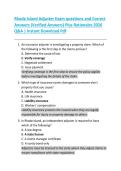
Rhode Island Adjuster Exam questions and Correct
Answers (Verified Answers) Plus Rationales 2026
Q&A | Instant Download Pdf
1. An insurance adjuster is investigating a property claim. Which of
the following is the first step in the claims process?
A. Determine the cause of loss
B. Verify coverage
C. Negotiate settlement
D. Issue payment
Verifying coverage is the first step to ensure the policy applies
before investigating the details of the claim.
2. Which type of insurance covers damages to someone else’s
property that you cause?
A. Health insurance
B. Life insurance
C. Liability insurance
D. Workers’ compensation
Liability insurance protects the insured when they are legally
responsible for injury or property damage to others.
3. In Rhode Island, an independent adjuster is required to have
which of the following?
A. A law degree
B. A state license
C. A claims manager certificate
D. A surety bond only
Adjusters must be licensed in the state where they adjust claims to
ensure compliance with state regulations.
,4. Which of the following is an example of a first-party claim?
A. Claim filed by a pedestrian hit by a car
B. Claim filed by a tenant against a landlord
C. Claim filed by a homeowner for fire damage to their own
house
D. Claim filed by a neighbor for tree damage to their fence
First-party claims involve the insured filing a claim for loss or
damage to their own property.
5. The principle of indemnity in insurance means:
A. The insured profits from a loss
B. Coverage is unlimited
C. The insured should not profit from a loss
D. The insurer can refuse all claims
Indemnity ensures the insured is restored to the financial position
they were in before the loss, without profit.
6. Which type of policy allows the insured to choose any repair shop
after a covered auto accident?
A. Collision coverage
B. Comprehensive coverage
C. Open shop endorsement
D. Liability-only policy
An open shop endorsement allows the policyholder freedom to
choose their repair shop.
7. In Rhode Island, how long does an adjuster have to acknowledge
receipt of a claim?
A. 5 days
B. 15 days
C. 30 days
D. 60 days
, State law requires insurers to acknowledge claims within a specific
timeframe, usually 15 days.
8. A “binder” in insurance terms refers to:
A. A policy renewal notice
B. A claims settlement document
C. Temporary insurance coverage before a formal policy is issued
D. A record of all claims
A binder provides immediate coverage while the official policy is
being processed.
9. Which of the following is considered moral hazard?
A. Flooding a basement accidentally
B. Falsifying a claim to get more money
C. Installing smoke detectors
D. Driving carefully
Moral hazard involves intentional or dishonest actions that
increase the likelihood or size of a claim.
10. An adjuster notices that the policyholder’s reported loss
does not match the actual damage. The adjuster should:
A. Ignore the discrepancy
B. Investigate further before recommending payment
C. Immediately deny the claim
D. Approve the claim partially
Investigating discrepancies is essential to ensure claims are
accurate and prevent fraud.
11. The term “subrogation” refers to:
A. Paying claims before investigation
B. Settling a claim with the insured
C. The insurer’s right to pursue a third party to recover loss
payments
Answers (Verified Answers) Plus Rationales 2026
Q&A | Instant Download Pdf
1. An insurance adjuster is investigating a property claim. Which of
the following is the first step in the claims process?
A. Determine the cause of loss
B. Verify coverage
C. Negotiate settlement
D. Issue payment
Verifying coverage is the first step to ensure the policy applies
before investigating the details of the claim.
2. Which type of insurance covers damages to someone else’s
property that you cause?
A. Health insurance
B. Life insurance
C. Liability insurance
D. Workers’ compensation
Liability insurance protects the insured when they are legally
responsible for injury or property damage to others.
3. In Rhode Island, an independent adjuster is required to have
which of the following?
A. A law degree
B. A state license
C. A claims manager certificate
D. A surety bond only
Adjusters must be licensed in the state where they adjust claims to
ensure compliance with state regulations.
,4. Which of the following is an example of a first-party claim?
A. Claim filed by a pedestrian hit by a car
B. Claim filed by a tenant against a landlord
C. Claim filed by a homeowner for fire damage to their own
house
D. Claim filed by a neighbor for tree damage to their fence
First-party claims involve the insured filing a claim for loss or
damage to their own property.
5. The principle of indemnity in insurance means:
A. The insured profits from a loss
B. Coverage is unlimited
C. The insured should not profit from a loss
D. The insurer can refuse all claims
Indemnity ensures the insured is restored to the financial position
they were in before the loss, without profit.
6. Which type of policy allows the insured to choose any repair shop
after a covered auto accident?
A. Collision coverage
B. Comprehensive coverage
C. Open shop endorsement
D. Liability-only policy
An open shop endorsement allows the policyholder freedom to
choose their repair shop.
7. In Rhode Island, how long does an adjuster have to acknowledge
receipt of a claim?
A. 5 days
B. 15 days
C. 30 days
D. 60 days
, State law requires insurers to acknowledge claims within a specific
timeframe, usually 15 days.
8. A “binder” in insurance terms refers to:
A. A policy renewal notice
B. A claims settlement document
C. Temporary insurance coverage before a formal policy is issued
D. A record of all claims
A binder provides immediate coverage while the official policy is
being processed.
9. Which of the following is considered moral hazard?
A. Flooding a basement accidentally
B. Falsifying a claim to get more money
C. Installing smoke detectors
D. Driving carefully
Moral hazard involves intentional or dishonest actions that
increase the likelihood or size of a claim.
10. An adjuster notices that the policyholder’s reported loss
does not match the actual damage. The adjuster should:
A. Ignore the discrepancy
B. Investigate further before recommending payment
C. Immediately deny the claim
D. Approve the claim partially
Investigating discrepancies is essential to ensure claims are
accurate and prevent fraud.
11. The term “subrogation” refers to:
A. Paying claims before investigation
B. Settling a claim with the insured
C. The insurer’s right to pursue a third party to recover loss
payments