

Edrftgyihu jiuh
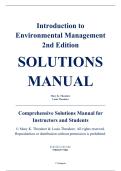
Introduction to
Environmental Management
ST
2nd Edition
UV
SOLUTIONS
IA
MANUAL
_A
PP
Mary K. Theodore
Louis Theodore
RO
────────────────────────────────────────────────────
Comprehensive Solutions Manual for
Instructors and Students
VE
© Mary K. Theodore & Louis Theodore. All rights reserved.
Reproduction or distribution without permission is prohibited.
D?
||| ||| || ||| || | || ||| | || ||| |
9780367773861
© Medgeek
, Edrftgyihu
Solutions jiuh
Manual — Introduction to Environmental Management, 2nd Edition — Mary
K. Theodore and Louis Theodore
Description
This solutions manual corresponds to the 2nd edition of Introduction to Environmental
ST
Management by Mary K. Theodore and Louis Theodore. It follows the official textbook
structure and provides comprehensive, step-by-step solutions across all sixty chapters. The
material supports environmental management education and practice, covering regulatory
frameworks, air and water systems, waste management, pollution prevention, risk assessment,
energy considerations, and emerging environmental issues.
UV
Table of Contents
PART I: OVERVIEW
Chapter 1: Introduction to Environmental Issues
Chapter 2: Environmental Regulations
IA
Chapter 3: International Environmental Regulations
Chapter 4: ISO 14000
Chapter 5: Multimedia Concerns
Chapter 6: Classification and Sources of Pollutants
_A
Chapter 7: Effects of Pollutants
Chapter 8: Measurement Methods
PART II: AIR
Chapter 9: Air Pollution Control Equipment
PP
Chapter 10: Atmospheric Dispersion Modeling
Chapter 11: Climate Change and Global Warming
Chapter 12: Indoor Air Quality
Chapter 13: Vapor Intrusion
Chapter 14: Air Toxics
RO
PART III: WATER
Chapter 15: Water Chemistry
Chapter 16: Safe Drinking Water
Chapter 17: Desalination
VE
Chapter 18: Municipal Wastewater Treatment
Chapter 19: Industrial Wastewater Management
Chapter 20: Dispersion Modeling in Water Systems
Chapter 21: Water Conservation
Chapter 22: Water Toxics
D?
PART IV: SOLID WASTE
Chapter 23: Municipal Waste Management
Chapter 24: Industrial Waste Management
Chapter 25: Hospital Waste Management
Chapter 26: Nuclear Waste Management
Chapter 27: Superfund
© Medgeek
, Edrftgyihu
Chapter 28:jiuh
Asbestos
Chapter 29: Metals
PART V: POLLUTION PREVENTION
Chapter 30: The Pollution Prevention Concept
Chapter 31: Pollution Prevention Applications
Chapter 32: Sustainability
ST
Chapter 33: Green Chemistry and Green Engineering
Chapter 34: Industrial Ecology
Chapter 35: Architecture in the Environment
PART VI: ENVIRONMENTAL RISK
UV
Chapter 36: Introduction to Environmental Risk Assessment
Chapter 37: Health Risk Assessment
Chapter 38: Hazard Risk Assessment
Chapter 39: Non-technical Risk
Chapter 40: Public Perception of Risk
Chapter 41: Risk Communication
IA
PART VII: ENERGY CONSIDERATIONS
Chapter 42: Energy Resources
Chapter 43: Energy Conservation
_A
Chapter 44: Energy Conservation Applications
Chapter 45: Heat Transfer and Heat Exchanger Principles
Chapter 46: Thermodynamics: Energy, Entropy, Exergy
Chapter 47: Energy—Environmental Interactions
PP
PART VIII: OTHER AREAS OF INTEREST
Chapter 48: The EPA Dilemma
Chapter 49: Electromagnetic Fields
Chapter 50: Noise Pollution
Chapter 51: Used Oil
RO
Chapter 52: Underground Storage Tanks
Chapter 53: Environmental Audits
Chapter 54: Economics
Chapter 55: Nanotechnology Concerns
Chapter 56: Acid Rain
VE
Chapter 57: Training Options
Chapter 58: Legal Issues
Chapter 59: Environmental Ethical Considerations
Chapter 60: Environmental Justice
D?
© Medgeek
, Solutions Manual for Introduction to
Environmental Management, 2e by Mary
Theodore, Louis Theodore (All Chapters)
PART I - OVERVIEW
CHAPTER 1 – Introduction To Environmental Issues
ST
1.1 Explain the original motivations for the protection of natural resources. What
were some of the early measures taken for the protection of the environment?
UV
Original motivations for protection of natural resources developed from a preservationist
attitude from which developed an appreciation for undisturbed open areas of nature and its
respected wildlife. The preservationist motivation inspired individuals like Theodore
Roosevelt, John Muir and Gifford Pinchot to propose legislation that set aside large area
of undeveloped land as reservations and wildlife sanctuaries. Other early legislation was
directed at regulating lumbering and protecting navigable waterways.
IA
1.2 What information did the Exxon Valdez and Love Canal incidents provide about
environmental awareness?
_A
The oil spills of the Exxon Valdez in 1989 and in the Gulf War of 1991 showed how
delicate the oceans and their ecosystems truly are. The disclosures of Love Canal in 1978
made the entire nation aware of the dangers of hazardous chemical waste.
1.3 List examples of technological innovations that significantly impacted the
PP
development of human culture during the industrial revolution.
1. Steam engine
2. Railroad
3. Mechanical thresher
4. Cotton gin
RO
5. Reaper
6. Combine harvester
7. Steam shovel
1.4 In 1980, The Global 2000 Report to the President warned that stresses caused by
global overpopulation, environmental abuse and resource depletion would
VE
deteriorate the earth’s ability to provide natural resources. The report predicted that
by the year 2000, the earth would experience overcrowding and heavy pollution and
will be susceptible to natural and human catastrophe. Now that the year 2000 has
come and passed, comment on this document?
D?
Introduction to
Environmental Management
ST
2nd Edition
UV
SOLUTIONS
IA
MANUAL
_A
PP
Mary K. Theodore
Louis Theodore
RO
────────────────────────────────────────────────────
Comprehensive Solutions Manual for
Instructors and Students
VE
© Mary K. Theodore & Louis Theodore. All rights reserved.
Reproduction or distribution without permission is prohibited.
D?
||| ||| || ||| || | || ||| | || ||| |
9780367773861
© Medgeek
, Edrftgyihu
Solutions jiuh
Manual — Introduction to Environmental Management, 2nd Edition — Mary
K. Theodore and Louis Theodore
Description
This solutions manual corresponds to the 2nd edition of Introduction to Environmental
ST
Management by Mary K. Theodore and Louis Theodore. It follows the official textbook
structure and provides comprehensive, step-by-step solutions across all sixty chapters. The
material supports environmental management education and practice, covering regulatory
frameworks, air and water systems, waste management, pollution prevention, risk assessment,
energy considerations, and emerging environmental issues.
UV
Table of Contents
PART I: OVERVIEW
Chapter 1: Introduction to Environmental Issues
Chapter 2: Environmental Regulations
IA
Chapter 3: International Environmental Regulations
Chapter 4: ISO 14000
Chapter 5: Multimedia Concerns
Chapter 6: Classification and Sources of Pollutants
_A
Chapter 7: Effects of Pollutants
Chapter 8: Measurement Methods
PART II: AIR
Chapter 9: Air Pollution Control Equipment
PP
Chapter 10: Atmospheric Dispersion Modeling
Chapter 11: Climate Change and Global Warming
Chapter 12: Indoor Air Quality
Chapter 13: Vapor Intrusion
Chapter 14: Air Toxics
RO
PART III: WATER
Chapter 15: Water Chemistry
Chapter 16: Safe Drinking Water
Chapter 17: Desalination
VE
Chapter 18: Municipal Wastewater Treatment
Chapter 19: Industrial Wastewater Management
Chapter 20: Dispersion Modeling in Water Systems
Chapter 21: Water Conservation
Chapter 22: Water Toxics
D?
PART IV: SOLID WASTE
Chapter 23: Municipal Waste Management
Chapter 24: Industrial Waste Management
Chapter 25: Hospital Waste Management
Chapter 26: Nuclear Waste Management
Chapter 27: Superfund
© Medgeek
, Edrftgyihu
Chapter 28:jiuh
Asbestos
Chapter 29: Metals
PART V: POLLUTION PREVENTION
Chapter 30: The Pollution Prevention Concept
Chapter 31: Pollution Prevention Applications
Chapter 32: Sustainability
ST
Chapter 33: Green Chemistry and Green Engineering
Chapter 34: Industrial Ecology
Chapter 35: Architecture in the Environment
PART VI: ENVIRONMENTAL RISK
UV
Chapter 36: Introduction to Environmental Risk Assessment
Chapter 37: Health Risk Assessment
Chapter 38: Hazard Risk Assessment
Chapter 39: Non-technical Risk
Chapter 40: Public Perception of Risk
Chapter 41: Risk Communication
IA
PART VII: ENERGY CONSIDERATIONS
Chapter 42: Energy Resources
Chapter 43: Energy Conservation
_A
Chapter 44: Energy Conservation Applications
Chapter 45: Heat Transfer and Heat Exchanger Principles
Chapter 46: Thermodynamics: Energy, Entropy, Exergy
Chapter 47: Energy—Environmental Interactions
PP
PART VIII: OTHER AREAS OF INTEREST
Chapter 48: The EPA Dilemma
Chapter 49: Electromagnetic Fields
Chapter 50: Noise Pollution
Chapter 51: Used Oil
RO
Chapter 52: Underground Storage Tanks
Chapter 53: Environmental Audits
Chapter 54: Economics
Chapter 55: Nanotechnology Concerns
Chapter 56: Acid Rain
VE
Chapter 57: Training Options
Chapter 58: Legal Issues
Chapter 59: Environmental Ethical Considerations
Chapter 60: Environmental Justice
D?
© Medgeek
, Solutions Manual for Introduction to
Environmental Management, 2e by Mary
Theodore, Louis Theodore (All Chapters)
PART I - OVERVIEW
CHAPTER 1 – Introduction To Environmental Issues
ST
1.1 Explain the original motivations for the protection of natural resources. What
were some of the early measures taken for the protection of the environment?
UV
Original motivations for protection of natural resources developed from a preservationist
attitude from which developed an appreciation for undisturbed open areas of nature and its
respected wildlife. The preservationist motivation inspired individuals like Theodore
Roosevelt, John Muir and Gifford Pinchot to propose legislation that set aside large area
of undeveloped land as reservations and wildlife sanctuaries. Other early legislation was
directed at regulating lumbering and protecting navigable waterways.
IA
1.2 What information did the Exxon Valdez and Love Canal incidents provide about
environmental awareness?
_A
The oil spills of the Exxon Valdez in 1989 and in the Gulf War of 1991 showed how
delicate the oceans and their ecosystems truly are. The disclosures of Love Canal in 1978
made the entire nation aware of the dangers of hazardous chemical waste.
1.3 List examples of technological innovations that significantly impacted the
PP
development of human culture during the industrial revolution.
1. Steam engine
2. Railroad
3. Mechanical thresher
4. Cotton gin
RO
5. Reaper
6. Combine harvester
7. Steam shovel
1.4 In 1980, The Global 2000 Report to the President warned that stresses caused by
global overpopulation, environmental abuse and resource depletion would
VE
deteriorate the earth’s ability to provide natural resources. The report predicted that
by the year 2000, the earth would experience overcrowding and heavy pollution and
will be susceptible to natural and human catastrophe. Now that the year 2000 has
come and passed, comment on this document?
D?


