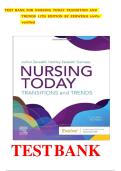
TEST BANK FOR NURSING TODAY TRANSITION AND
mm mm mm mm mm mm
TRENDS 11TH EDITION BY ZERWEKH 100%
mm mm mm mm mm
mm verified
TESTBANK
,Chapter s s 01: s s Role s s Transitions
.
abirb.com/test
MULTIPLE s s CHOICE
1. A graduate s s nurse s s has s s been s s hired s s as s s a s s nurse s s at s s a
s s
s s local s s hospital. s s The ssnew s s nurse s s is s s in s s the s s
. s s honeymoon
s s phase s s of s s role s s transition s s when s s making
which s s of s s the s s following s s statements? a. s s ―I s s am s s so s s nervous
s s about s s being s s on ssmy s s own s s as s s a s s nurse.‖
b. ―This s s will s s be s s a s s great s s learning s s experience.‖ .
c. ―I s s can‘t s s wait s s to s s have s s a s s steady s s paycheck.‖
d. ―This job is perfect. ss ssI can ss finally do things
mm mm mm mm mm mm mm mm
my own way.‖
ANS: s s D .
The s s honeymoon s s phase s s is s s when s s the s s student s s nurse s s sees s s the
s s world s s of s s nursing s s as ssquite s s rosy. s s Often, s s the s s new s s graduate s s is
s s fascinated s s with s s the s s thrill s s of s s arriving s s in s s the s s profession. s s Reality
s s shock s s occurs s s when s s one s s moves s s into s s the s s workforce s s after ssseveral
s s years s s of s s educational s s preparation. s s Recovery s s and s s resolution s s occur
.
s s when s s the ssgraduate s s nurse s s is s s able s s to s s laugh s s at s s s s encountered
s s situations. s s During s s this s s time, sstension s s decreases, s s perception s s increases,
s s and s s the s s nurse s s is s s able s s to s s grow s s as s s a ssperson.
.
PTS: s s 1 DIF: s s Cognitive s s Level: s s Application/Applying
REF: s s Table s s 1.1 OBJ: s s Identify s s the s s characteristics s s of s s reality s s shock.
TOP: s s Reality s s shock MSC: s s NCLEX®: s s Safe s s and s s effective s s care
s s environment
.
2. Which s s of s s the s s following s s actions s s by s s the s s graduate s s nurse s s is
an s s inappropriate ssmethodology s s to recover s s from s s reality s s shock?
s s
a. Networking .
b. Obtaining s s a s s mentor
c. Returning s s to s s school
d. Joining s s a s s support s s group
.
ANS: s s C
The s s transition s s period s s is s s successfully s s managed s s when s s the
s s graduate s s is s s able s s to ssevaluate s s the s s work situation s s objectively s s and
s s predict s s effectively s s the s s actions s s and ssreactions s s of s s other s s staff.
Nurturing
the s s ability s s to s s see s s humor s s in s s a s s situation s s may s s be s s a s s first
s s step. s s Returning s s to s s school ssis s s a s s positive s s step s s . s s after s s the
s s graduate s s has s s worked s s through s s role s s transition, s s has sssome s s clinical
s s experience, s s and s s is s s ready s s to s s focus s s on s s a s s new s s career
s s objective.
Networking, s s obtaining s s a s s mentor, s s and s s joining s s a s s support s s group
s s would s s give s s the ssgraduate s s nurse s s an s s opportunity s s to s s talk s s to s s others
s s experiencing s s the .
, stress s s associated s s with s s reality s s shock. s s The s s nurse s s would s s benefit s s from
s s ―talking s s through‖ s s issues s s and s s learning s s how s s to s s cope.
PTS: s s 1 DIF: s s Cognitive s s Level:
s s Application/Applying s s . ssREF: s s p. s s 9 OBJ: s s Describe
s s methods s s to s s promote s s a s s successful sstransition. s s TOP: s s Reality
s s shock
MSC: s s NCLEX®: s s Safe s s and s s effective s s care s s environment s s Not s s applicable
.
3. A s s nurse s s is s s trying s s to s s avoid s s burnout. s s Which s s of s s the s s following
s s actions s s is s s a s s valid ssway s s to s s achieve s s this?
a. Refusing to constantly workss extra shifts
mm mm mm mm . mm
b. Withdrawing s s from s s peer s s support s s group
c. ―Going s s native‖
d. Changing s s jobs s s every s s 6 s s to s s 12 s s months s s .
ANS: s s A
One s s of s s the s s quickest s s ways s s to s s experience s s burnout s s is s s to
s s ―overwork s s the s s overtime.‖ ssSet s s priorities s s with s s your s s mental s s and
s s physical s s health s s being s s the s s highest s s priority. ssLearning s s to s s say
s s ―no‖ s s to s s extra s s shifts s s is s s a s s positive s s means s s of s s coping s s of
s s avoiding ssburnout. s s ―Going s s native‖ s s is s s the s s term s s that s s . s s describes
s s how s s recent s s graduates s s begin ssto s s copy s s and s s identify s s the s s reality
s s of s s their s s role-transition s s experience s s by s s rejecting ssthe s s values s s from
s s nursing s s school s s and s s functioning s s more s s like s s a s s team s s member s s at
sstheir s s place s s of s s employment. s s Withdrawing s s from s s peer s s support
s s groups, s s ―going ssnative,‖ s s . s s and s s changing s s jobs s s every s s 6 s s to s s 12
s s months s s would s s increase s s the s s chance s s of s s the s s nurse s s experiencing
burnout. s s The s s nurse s s should s s instead s s focus s s on s s his/her s s practice s s and
s s seek s s out s s support ssfrom s s other nurses.
.
PTS: s s 1 DIF: s s Cognitive s s Level: s s Application/Applying
REF: s s p. s s 7 OBJ: s s Describe s s methods s s to s s promote s s a
s s successful sstransition. s s TOP: s s Reality s s shock
MSC: s s NCLEX®: s s Safe s s and s s effective s s care s s environment s s Not s s applicable s s .
4. Which of s s the s s following s s statements s s by s s the s s graduate
ss
s s nurse s s shows s s an ssunderstanding s s of s s reality shock s s as s s it
s s applies s s to s s nursing? s s .
a. ―Reality s s shock s s is s s the s s period s s when s s a s s person s s moves s s from s s school
s s into s s the
b. workforce.‖―Reality s s shock s s is s s the s s realization s s that s s practice s s and
ss education s s are ssnot s s the s s same.‖
c. ―Reality s s shock s s is s s the s s period s s from s s graduation s s to s s becoming s s an
experienced ssnurse.‖.
ss
d. ―Reality s s shock s s is s s a s s transition s s phase s s that s s new s s graduates s s go
s s through s s before s s changing s s jobs.‖
ANS: s s A .
, ―Reality s s shock‖ s s is s s a s s term s s often s s used s s to s s describe s s the s s reaction
s s experienced s s when ssone s s moves s s into s s the s s workforce s s after s s several
s s years s s of s s educational s s preparation. ssThe s s new s s graduate s s is s s caught
s s in s s the s s situation s s of s s moving s s from s s a s s familiar, sscomfortable
s s educational s s environment s s into s s a s s new s s role s s in s s . s s the
s s workforce s s where ssthe s s expectations s s are s s not s s clearly s s defined s s or
s s may s s not s s even s s be s s realistic. s s The ssrealization s s that s s practice s s and
s s nursing s s school s s are s s not s s the s s same s s is s s often s s associated s s with
s s ―going s s native.‖ s s When s s nurses s s move s s from s s one s s position s s to
ssanother, s s they s s have s s already s s experienced
reality s s shock. s s Becoming s s an s s experienced s s nurse s s takes s s time s s and s s is
s s not s s part s s of s s the ssdefinition s s of s s . s s reality s s shock.
PTS: s s 1 s s DIF: s s Cognitive s s Level: s s Application/Applying s s . ss REF:
p. s s 5 s s OBJ: s s Identify s s the s s characteristics s s of s s reality s s shock.
TOP: s s Reality s s shock MSC: s s NCLEX®: s s Not s s applicable
5. A new s s graduate s s of s s less s s than s s 1 s s year s s describes s s his/her
s s
s s perception s s of s s a s s staff ssnurse s s position, s s stating: s s ―It s s feels s s great
s s to s s be s s a s s nurse! s s In s s fact, s s it‘s s s a s s snap! s s I sscan s s hardly
s s believe s s there‘s s s no s s . s s instructor s s looking s s over s s my s s shoulder.‖
s s What ssphase s s of s s reality s s shock s s is s s the s s graduate s s experiencing?
a. Recovery .
b. Shock s s and s s rejection
c. Honeymoon
d. Transition .
ANS: s s C
In the s s first s s phase s s of s s the s s role s s transition s s process s s (the s s honeymoon
s s
s s phase), s s the s s graduate ssnurse s s is s s thrilled s s with s s completing s s school s s and
s s accepting s s the s s first s s job. s s Life s s is s s a s s bed ssof s s roses s s because
s s everyone s s knows s s nursing s s school s s is s s much s s harder s s than s s nursing
sspractice. s s Shock s s and s s rejection s s
. s s occur s s as s s the s s nurse s s tries s s to
s s understand s s how s s nursing ssschool s s and s s the s s ―real s s world‖ s s come
s s together. s s Transition s s occurs s s as s s the s s nurse s s begins ssthe s s move s s from
s s student s s to s s nurse s s and s s refers s s to s s the s s entire s s process, s s not s s just s s a
ssparticular s s phase. s s The s s recovery s s phase s s is s s when s s the s s nurse s s can
s s laugh s s at s s . s s situations s s that s s he/she s s is s s in s s and s s is s s able s s to s s cope
s s with s s the s s situations s s that s s are s s being s s faced.
PTS: s s 1 DIF: s s Cognitive s s Level: s s Application/Applying
REF: s s p. s s 7 OBJ: s s Compare s s and s s contrast s s the s s phases s s of s s reality s s shock. s s .
TOP: s s Reality s s shock MSC: s s NCLEX®: s s Not s s applicable
6. A student s s in s s the s s last s s semester s s of s s nursing s s school s s has s s established s s a
ss
s s goal s s of ssmaking s s a s s successful s s s s . s s role s s transition s s to s s graduate
s s nurse. s s Which s s statement s s by ssthe s s student s s indicates s s his/her s s
I should cares sfor
s s understanding
mm of sincreased
mm mm numbers
s how s s ss to mm of patients
s s achieve s s this s sto
mm enhance work
goal? mm mm mm mm mm
a. organization
mm
mm mm mm mm mm mm
TRENDS 11TH EDITION BY ZERWEKH 100%
mm mm mm mm mm
mm verified
TESTBANK
,Chapter s s 01: s s Role s s Transitions
.
abirb.com/test
MULTIPLE s s CHOICE
1. A graduate s s nurse s s has s s been s s hired s s as s s a s s nurse s s at s s a
s s
s s local s s hospital. s s The ssnew s s nurse s s is s s in s s the s s
. s s honeymoon
s s phase s s of s s role s s transition s s when s s making
which s s of s s the s s following s s statements? a. s s ―I s s am s s so s s nervous
s s about s s being s s on ssmy s s own s s as s s a s s nurse.‖
b. ―This s s will s s be s s a s s great s s learning s s experience.‖ .
c. ―I s s can‘t s s wait s s to s s have s s a s s steady s s paycheck.‖
d. ―This job is perfect. ss ssI can ss finally do things
mm mm mm mm mm mm mm mm
my own way.‖
ANS: s s D .
The s s honeymoon s s phase s s is s s when s s the s s student s s nurse s s sees s s the
s s world s s of s s nursing s s as ssquite s s rosy. s s Often, s s the s s new s s graduate s s is
s s fascinated s s with s s the s s thrill s s of s s arriving s s in s s the s s profession. s s Reality
s s shock s s occurs s s when s s one s s moves s s into s s the s s workforce s s after ssseveral
s s years s s of s s educational s s preparation. s s Recovery s s and s s resolution s s occur
.
s s when s s the ssgraduate s s nurse s s is s s able s s to s s laugh s s at s s s s encountered
s s situations. s s During s s this s s time, sstension s s decreases, s s perception s s increases,
s s and s s the s s nurse s s is s s able s s to s s grow s s as s s a ssperson.
.
PTS: s s 1 DIF: s s Cognitive s s Level: s s Application/Applying
REF: s s Table s s 1.1 OBJ: s s Identify s s the s s characteristics s s of s s reality s s shock.
TOP: s s Reality s s shock MSC: s s NCLEX®: s s Safe s s and s s effective s s care
s s environment
.
2. Which s s of s s the s s following s s actions s s by s s the s s graduate s s nurse s s is
an s s inappropriate ssmethodology s s to recover s s from s s reality s s shock?
s s
a. Networking .
b. Obtaining s s a s s mentor
c. Returning s s to s s school
d. Joining s s a s s support s s group
.
ANS: s s C
The s s transition s s period s s is s s successfully s s managed s s when s s the
s s graduate s s is s s able s s to ssevaluate s s the s s work situation s s objectively s s and
s s predict s s effectively s s the s s actions s s and ssreactions s s of s s other s s staff.
Nurturing
the s s ability s s to s s see s s humor s s in s s a s s situation s s may s s be s s a s s first
s s step. s s Returning s s to s s school ssis s s a s s positive s s step s s . s s after s s the
s s graduate s s has s s worked s s through s s role s s transition, s s has sssome s s clinical
s s experience, s s and s s is s s ready s s to s s focus s s on s s a s s new s s career
s s objective.
Networking, s s obtaining s s a s s mentor, s s and s s joining s s a s s support s s group
s s would s s give s s the ssgraduate s s nurse s s an s s opportunity s s to s s talk s s to s s others
s s experiencing s s the .
, stress s s associated s s with s s reality s s shock. s s The s s nurse s s would s s benefit s s from
s s ―talking s s through‖ s s issues s s and s s learning s s how s s to s s cope.
PTS: s s 1 DIF: s s Cognitive s s Level:
s s Application/Applying s s . ssREF: s s p. s s 9 OBJ: s s Describe
s s methods s s to s s promote s s a s s successful sstransition. s s TOP: s s Reality
s s shock
MSC: s s NCLEX®: s s Safe s s and s s effective s s care s s environment s s Not s s applicable
.
3. A s s nurse s s is s s trying s s to s s avoid s s burnout. s s Which s s of s s the s s following
s s actions s s is s s a s s valid ssway s s to s s achieve s s this?
a. Refusing to constantly workss extra shifts
mm mm mm mm . mm
b. Withdrawing s s from s s peer s s support s s group
c. ―Going s s native‖
d. Changing s s jobs s s every s s 6 s s to s s 12 s s months s s .
ANS: s s A
One s s of s s the s s quickest s s ways s s to s s experience s s burnout s s is s s to
s s ―overwork s s the s s overtime.‖ ssSet s s priorities s s with s s your s s mental s s and
s s physical s s health s s being s s the s s highest s s priority. ssLearning s s to s s say
s s ―no‖ s s to s s extra s s shifts s s is s s a s s positive s s means s s of s s coping s s of
s s avoiding ssburnout. s s ―Going s s native‖ s s is s s the s s term s s that s s . s s describes
s s how s s recent s s graduates s s begin ssto s s copy s s and s s identify s s the s s reality
s s of s s their s s role-transition s s experience s s by s s rejecting ssthe s s values s s from
s s nursing s s school s s and s s functioning s s more s s like s s a s s team s s member s s at
sstheir s s place s s of s s employment. s s Withdrawing s s from s s peer s s support
s s groups, s s ―going ssnative,‖ s s . s s and s s changing s s jobs s s every s s 6 s s to s s 12
s s months s s would s s increase s s the s s chance s s of s s the s s nurse s s experiencing
burnout. s s The s s nurse s s should s s instead s s focus s s on s s his/her s s practice s s and
s s seek s s out s s support ssfrom s s other nurses.
.
PTS: s s 1 DIF: s s Cognitive s s Level: s s Application/Applying
REF: s s p. s s 7 OBJ: s s Describe s s methods s s to s s promote s s a
s s successful sstransition. s s TOP: s s Reality s s shock
MSC: s s NCLEX®: s s Safe s s and s s effective s s care s s environment s s Not s s applicable s s .
4. Which of s s the s s following s s statements s s by s s the s s graduate
ss
s s nurse s s shows s s an ssunderstanding s s of s s reality shock s s as s s it
s s applies s s to s s nursing? s s .
a. ―Reality s s shock s s is s s the s s period s s when s s a s s person s s moves s s from s s school
s s into s s the
b. workforce.‖―Reality s s shock s s is s s the s s realization s s that s s practice s s and
ss education s s are ssnot s s the s s same.‖
c. ―Reality s s shock s s is s s the s s period s s from s s graduation s s to s s becoming s s an
experienced ssnurse.‖.
ss
d. ―Reality s s shock s s is s s a s s transition s s phase s s that s s new s s graduates s s go
s s through s s before s s changing s s jobs.‖
ANS: s s A .
, ―Reality s s shock‖ s s is s s a s s term s s often s s used s s to s s describe s s the s s reaction
s s experienced s s when ssone s s moves s s into s s the s s workforce s s after s s several
s s years s s of s s educational s s preparation. ssThe s s new s s graduate s s is s s caught
s s in s s the s s situation s s of s s moving s s from s s a s s familiar, sscomfortable
s s educational s s environment s s into s s a s s new s s role s s in s s . s s the
s s workforce s s where ssthe s s expectations s s are s s not s s clearly s s defined s s or
s s may s s not s s even s s be s s realistic. s s The ssrealization s s that s s practice s s and
s s nursing s s school s s are s s not s s the s s same s s is s s often s s associated s s with
s s ―going s s native.‖ s s When s s nurses s s move s s from s s one s s position s s to
ssanother, s s they s s have s s already s s experienced
reality s s shock. s s Becoming s s an s s experienced s s nurse s s takes s s time s s and s s is
s s not s s part s s of s s the ssdefinition s s of s s . s s reality s s shock.
PTS: s s 1 s s DIF: s s Cognitive s s Level: s s Application/Applying s s . ss REF:
p. s s 5 s s OBJ: s s Identify s s the s s characteristics s s of s s reality s s shock.
TOP: s s Reality s s shock MSC: s s NCLEX®: s s Not s s applicable
5. A new s s graduate s s of s s less s s than s s 1 s s year s s describes s s his/her
s s
s s perception s s of s s a s s staff ssnurse s s position, s s stating: s s ―It s s feels s s great
s s to s s be s s a s s nurse! s s In s s fact, s s it‘s s s a s s snap! s s I sscan s s hardly
s s believe s s there‘s s s no s s . s s instructor s s looking s s over s s my s s shoulder.‖
s s What ssphase s s of s s reality s s shock s s is s s the s s graduate s s experiencing?
a. Recovery .
b. Shock s s and s s rejection
c. Honeymoon
d. Transition .
ANS: s s C
In the s s first s s phase s s of s s the s s role s s transition s s process s s (the s s honeymoon
s s
s s phase), s s the s s graduate ssnurse s s is s s thrilled s s with s s completing s s school s s and
s s accepting s s the s s first s s job. s s Life s s is s s a s s bed ssof s s roses s s because
s s everyone s s knows s s nursing s s school s s is s s much s s harder s s than s s nursing
sspractice. s s Shock s s and s s rejection s s
. s s occur s s as s s the s s nurse s s tries s s to
s s understand s s how s s nursing ssschool s s and s s the s s ―real s s world‖ s s come
s s together. s s Transition s s occurs s s as s s the s s nurse s s begins ssthe s s move s s from
s s student s s to s s nurse s s and s s refers s s to s s the s s entire s s process, s s not s s just s s a
ssparticular s s phase. s s The s s recovery s s phase s s is s s when s s the s s nurse s s can
s s laugh s s at s s . s s situations s s that s s he/she s s is s s in s s and s s is s s able s s to s s cope
s s with s s the s s situations s s that s s are s s being s s faced.
PTS: s s 1 DIF: s s Cognitive s s Level: s s Application/Applying
REF: s s p. s s 7 OBJ: s s Compare s s and s s contrast s s the s s phases s s of s s reality s s shock. s s .
TOP: s s Reality s s shock MSC: s s NCLEX®: s s Not s s applicable
6. A student s s in s s the s s last s s semester s s of s s nursing s s school s s has s s established s s a
ss
s s goal s s of ssmaking s s a s s successful s s s s . s s role s s transition s s to s s graduate
s s nurse. s s Which s s statement s s by ssthe s s student s s indicates s s his/her s s
I should cares sfor
s s understanding
mm of sincreased
mm mm numbers
s how s s ss to mm of patients
s s achieve s s this s sto
mm enhance work
goal? mm mm mm mm mm
a. organization
mm