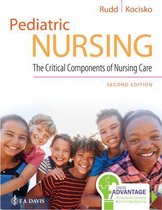
TEST BANK
Davis Advantage for Pediatric Nursing: The
Critical Components of Nursing Care
KATHRYN RUDD
Second Edition
,Pediatric Nursing The Critical Components of Nursing Care
2nd Edition Rudd Test Bank
Chapter 1. Issues and Trends in Pediatric Nursing
MULTIPLE CHOICE
1. A nurse is reviewing changes in healthcare delivery and funding for pediatric
populations. Which current trend in the pediatric setting should the nurse
expect to find?
a. Increased hospitalization of children
b. Decreased number of uninsured children
c. An increase in ambulatory care
d. Decreased use of managed
care ANS: C
One effect of managed care is that pediatric healthcare delivery has shifted
dramatically from the
acute care setting to the ambulatory setting. The number of hospital beds being
used has decreased as more care is provided in outpatient and home settings. The
number of uninsured children in the United States continues to grow. One of the
biggest changes in healthcare has been the growth of managed care.
DIF: Cognitive Level:
Comprehension REF: p. 3
OBJ: Nursing Process Step: Planning
MSC: Safe and Effective Care Environment
2. A nurse is referring a low-income family with three children under the age of 5
years to a program that assists with supplemental food supplies. Which program
should the nurse refer this family to?
a. Medicaid
b. Medicare
c. Early and Periodic Screening, Diagnostic, and Treatment (EPSDT) program
d. Women, Infants, and Children (WIC)
program ANS: D
WIC is a federal program that provides supplemental food supplies to low-income
women who
are pregnant or breast-feeding and to their children until the age of 5 years.
Medicaid and the Medicaid Early and Periodic Screening, Diagnostic, and Treatment
(EPSDT) program provides for well-child examinations and related treatment of
medical problems. Children in the WIC program are often referred for
immunizations, but that is not the primary focus of the program. Public Law 99-
457 provides financial incentives to states to establish comprehensive early
intervention services for infants and toddlers with, or at risk for, developmental
disabilities.
,Medicare is the program for Senior
Citizens. DIF: Cognitive Level:
Application REF: p. 7 OBJ: Nursing
Process Step: Implementation MSC:
Health Promotion and Maintenance
3. In most states, adolescents who are not emancipated minors must have
parental permission before:
a. treatment for drug abuse.
b. treatment for sexually transmitted diseases (STDs).
c. obtaining birth control.
d. surger
y. ANS: D
An emancipated minor is a minor child who has the legal competence of an adult.
Legal counsel
may be consulted to verify the status of the emancipated minor for consent
purposes. Most states allow minors to obtain treatment for drug or alcohol abuse and
STDs and allow access to birth control without parental consent.
DIF: Cognitive Level: Application REF: p. 12
OBJ: Nursing Process Step: Planning MSC: Safe and Effective Care Environment
4. A nurse is completing a clinical pathway for a child admitted to the hospital with
pneumonia. Which characteristic of a clinical pathway is correct?
a. Developed and implemented by nurses
b. Used primarily in the pediatric setting
c. Specific time lines for sequencing interventions
d. One of the steps in the nursing
process ANS: C
Clinical pathways measure outcomes of client care and are developed by multiple
healthcare
professionals. Each pathway outlines specific time lines for sequencing interventions
and reflects interdisciplinary interventions. Clinical pathways are used in multiple
settings and for clients throughout the life span. The steps of the nursing process are
assessment, diagnosis, planning, implementation, and evaluation.
DIF: Cognitive Level: Comprehension REF: p. 6
, OBJ: Nursing Process Step: Planning MSC: Safe and Effective Care Environment
5. When planning a parenting class, the nurse should explain that the leading
cause of death in children 1 to 4 years of age in the United States is:
a. premature birth.
b. congenital anomalies.
c. accidental death.
d. respiratory tract
illness. ANS: C
Accidents are the leading cause of death in children ages 1 to 19 years. Disorders of
short
gestation and unspecified low birth weight make up one of the leading causes of
death in neonates. One of the leading causes of infant death after the first month
of life is congenital anomalies. Respiratory tract illnesses are a major cause of
morbidity in children.
DIF: Cognitive Level: Application REF:
p. 9 OBJ: Nursing Process Step:
Implementation MSC: Safe and
Effective Care Environment
6. Which statement is true regarding the quality assurance or incident report?
a. The report assures the legal department that there is no problem.
b. Reports are a permanent part of the clients chart.
c. The nurses notes should contain the following: Incident report
filed and copy placed in chart.
d. This report is a form of documentation of an event that may result in
legal action. ANS: D
An incident report is a warning to the legal department to be prepared for potential
legal action;
it is not a part of the clients chart or nurse
documentation. DIF: Cognitive Level: Knowledge
REF: p. 14
OBJ: Nursing Process Step:
Implementation MSC: Safe and Effective
Care Environment
7. Which client situation fails to meet the first requirement of informed consent?
a. The parent does not understand the physicians explanations.
b. The physician gives the parent only a partial list of possible side effects and
Davis Advantage for Pediatric Nursing: The
Critical Components of Nursing Care
KATHRYN RUDD
Second Edition
,Pediatric Nursing The Critical Components of Nursing Care
2nd Edition Rudd Test Bank
Chapter 1. Issues and Trends in Pediatric Nursing
MULTIPLE CHOICE
1. A nurse is reviewing changes in healthcare delivery and funding for pediatric
populations. Which current trend in the pediatric setting should the nurse
expect to find?
a. Increased hospitalization of children
b. Decreased number of uninsured children
c. An increase in ambulatory care
d. Decreased use of managed
care ANS: C
One effect of managed care is that pediatric healthcare delivery has shifted
dramatically from the
acute care setting to the ambulatory setting. The number of hospital beds being
used has decreased as more care is provided in outpatient and home settings. The
number of uninsured children in the United States continues to grow. One of the
biggest changes in healthcare has been the growth of managed care.
DIF: Cognitive Level:
Comprehension REF: p. 3
OBJ: Nursing Process Step: Planning
MSC: Safe and Effective Care Environment
2. A nurse is referring a low-income family with three children under the age of 5
years to a program that assists with supplemental food supplies. Which program
should the nurse refer this family to?
a. Medicaid
b. Medicare
c. Early and Periodic Screening, Diagnostic, and Treatment (EPSDT) program
d. Women, Infants, and Children (WIC)
program ANS: D
WIC is a federal program that provides supplemental food supplies to low-income
women who
are pregnant or breast-feeding and to their children until the age of 5 years.
Medicaid and the Medicaid Early and Periodic Screening, Diagnostic, and Treatment
(EPSDT) program provides for well-child examinations and related treatment of
medical problems. Children in the WIC program are often referred for
immunizations, but that is not the primary focus of the program. Public Law 99-
457 provides financial incentives to states to establish comprehensive early
intervention services for infants and toddlers with, or at risk for, developmental
disabilities.
,Medicare is the program for Senior
Citizens. DIF: Cognitive Level:
Application REF: p. 7 OBJ: Nursing
Process Step: Implementation MSC:
Health Promotion and Maintenance
3. In most states, adolescents who are not emancipated minors must have
parental permission before:
a. treatment for drug abuse.
b. treatment for sexually transmitted diseases (STDs).
c. obtaining birth control.
d. surger
y. ANS: D
An emancipated minor is a minor child who has the legal competence of an adult.
Legal counsel
may be consulted to verify the status of the emancipated minor for consent
purposes. Most states allow minors to obtain treatment for drug or alcohol abuse and
STDs and allow access to birth control without parental consent.
DIF: Cognitive Level: Application REF: p. 12
OBJ: Nursing Process Step: Planning MSC: Safe and Effective Care Environment
4. A nurse is completing a clinical pathway for a child admitted to the hospital with
pneumonia. Which characteristic of a clinical pathway is correct?
a. Developed and implemented by nurses
b. Used primarily in the pediatric setting
c. Specific time lines for sequencing interventions
d. One of the steps in the nursing
process ANS: C
Clinical pathways measure outcomes of client care and are developed by multiple
healthcare
professionals. Each pathway outlines specific time lines for sequencing interventions
and reflects interdisciplinary interventions. Clinical pathways are used in multiple
settings and for clients throughout the life span. The steps of the nursing process are
assessment, diagnosis, planning, implementation, and evaluation.
DIF: Cognitive Level: Comprehension REF: p. 6
, OBJ: Nursing Process Step: Planning MSC: Safe and Effective Care Environment
5. When planning a parenting class, the nurse should explain that the leading
cause of death in children 1 to 4 years of age in the United States is:
a. premature birth.
b. congenital anomalies.
c. accidental death.
d. respiratory tract
illness. ANS: C
Accidents are the leading cause of death in children ages 1 to 19 years. Disorders of
short
gestation and unspecified low birth weight make up one of the leading causes of
death in neonates. One of the leading causes of infant death after the first month
of life is congenital anomalies. Respiratory tract illnesses are a major cause of
morbidity in children.
DIF: Cognitive Level: Application REF:
p. 9 OBJ: Nursing Process Step:
Implementation MSC: Safe and
Effective Care Environment
6. Which statement is true regarding the quality assurance or incident report?
a. The report assures the legal department that there is no problem.
b. Reports are a permanent part of the clients chart.
c. The nurses notes should contain the following: Incident report
filed and copy placed in chart.
d. This report is a form of documentation of an event that may result in
legal action. ANS: D
An incident report is a warning to the legal department to be prepared for potential
legal action;
it is not a part of the clients chart or nurse
documentation. DIF: Cognitive Level: Knowledge
REF: p. 14
OBJ: Nursing Process Step:
Implementation MSC: Safe and Effective
Care Environment
7. Which client situation fails to meet the first requirement of informed consent?
a. The parent does not understand the physicians explanations.
b. The physician gives the parent only a partial list of possible side effects and