

Business Environments
Terminology:
Competitive advantage: What does the business do better than its competitors? What keeps customers
coming to the business.
The Constitution: The highest law in the country, no other laws/contracts can go against the Constitution.
Strategies: A plan of action that is implemented to improve the overall performance of the business.
The Macro environment:
• External environment.
• The business has no control over what happens in this environment.
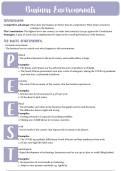
P
olitical
- The political situation in the local country and world politics at large.
Examples:
1. The Russia and Ukraine war has a ected the price of products worldwide.
2. The South African government went into a state of emergency during the COVID-19 pandemic
and went into a nationwide lockdown.
E
conomic
- The state of the economy of the country that the business operates in.
Examples:
1. Interest rates in SA increased to 4.57% per year.
2. SA has been in junk status.
E
thical
- The principles and values in the business that guides actions and decisions.
- The di erence beterrn right and wrong.
Examples:
1. Getting invloved in Corporate Social Responsibility.
2. Making use of child labour in overseas countries.
S
ocial
- Social trends in the country that impacts the economy’s role players.
Examples:
1. The COVID-19 pandemic killed many South Africans and kept employees from work.
2. SA has very high HIV/AIDS rates.
T
echnological
- Rapid development of technology, businesses need to stay up-to-date to avoid falling behind.
Examples:
1. Incorporation of social media in marketing.
2. Adapt to new payment methods e.g. ApplePay.
ff ff
, L
egal
- All the laws in a country that impact businesses.
Examples:
1. Changes made to the PopiAct.
2. Businesses need to stay up-to-date with any changes in legislation like BCEA etc.
E
nvironmental
- Anything and everything in the physical environment that impacts the business.
Examples:
1. The oods in KZN affected so many employees and businesses.
2. More and more businesses are focused on being environmentally friendly.
The Market Environment:
• The external environment.
• The business has no control over the factors in this environment.
Look at competitors:
1. Size and nancial resources.
The level of rivalry 2. Market share.
3. Quality.
• Current competitors.
4. Customer loyalty.
• Identify where your competitors are succeeding or struggling.
5. Prices.
• Develop strategies to outperform competitors and lure customers away.
6. Location.
7. Trading hours.
Threat of New Entrants
• NOT IN THE MARKET YET!!!
• Could be a successful international business that comes to SA or a new business that is planning on opening
in SA.
• Barriers to keep new entrants out:
1. Negotiate with centre management so competitors aren’t allowed in the mall with you.
2. Register a patent.
3. Spend more money on advertising.
4. Consider government legislation.
5. Import duties.
Availability of substitutes
• NOT A DIFFERENT BRAND!!!
• It is a completely di erent product that satis es the same need.
• Butter and margarine / Milk and Cremora.
Availability of complementary
products
• Products that are used together.
• They can be bundled and discounted.
• Razors and shaving cream / co ee and milk.
fi ff fl ff fi
Terminology:
Competitive advantage: What does the business do better than its competitors? What keeps customers
coming to the business.
The Constitution: The highest law in the country, no other laws/contracts can go against the Constitution.
Strategies: A plan of action that is implemented to improve the overall performance of the business.
The Macro environment:
• External environment.
• The business has no control over what happens in this environment.
P
olitical
- The political situation in the local country and world politics at large.
Examples:
1. The Russia and Ukraine war has a ected the price of products worldwide.
2. The South African government went into a state of emergency during the COVID-19 pandemic
and went into a nationwide lockdown.
E
conomic
- The state of the economy of the country that the business operates in.
Examples:
1. Interest rates in SA increased to 4.57% per year.
2. SA has been in junk status.
E
thical
- The principles and values in the business that guides actions and decisions.
- The di erence beterrn right and wrong.
Examples:
1. Getting invloved in Corporate Social Responsibility.
2. Making use of child labour in overseas countries.
S
ocial
- Social trends in the country that impacts the economy’s role players.
Examples:
1. The COVID-19 pandemic killed many South Africans and kept employees from work.
2. SA has very high HIV/AIDS rates.
T
echnological
- Rapid development of technology, businesses need to stay up-to-date to avoid falling behind.
Examples:
1. Incorporation of social media in marketing.
2. Adapt to new payment methods e.g. ApplePay.
ff ff
, L
egal
- All the laws in a country that impact businesses.
Examples:
1. Changes made to the PopiAct.
2. Businesses need to stay up-to-date with any changes in legislation like BCEA etc.
E
nvironmental
- Anything and everything in the physical environment that impacts the business.
Examples:
1. The oods in KZN affected so many employees and businesses.
2. More and more businesses are focused on being environmentally friendly.
The Market Environment:
• The external environment.
• The business has no control over the factors in this environment.
Look at competitors:
1. Size and nancial resources.
The level of rivalry 2. Market share.
3. Quality.
• Current competitors.
4. Customer loyalty.
• Identify where your competitors are succeeding or struggling.
5. Prices.
• Develop strategies to outperform competitors and lure customers away.
6. Location.
7. Trading hours.
Threat of New Entrants
• NOT IN THE MARKET YET!!!
• Could be a successful international business that comes to SA or a new business that is planning on opening
in SA.
• Barriers to keep new entrants out:
1. Negotiate with centre management so competitors aren’t allowed in the mall with you.
2. Register a patent.
3. Spend more money on advertising.
4. Consider government legislation.
5. Import duties.
Availability of substitutes
• NOT A DIFFERENT BRAND!!!
• It is a completely di erent product that satis es the same need.
• Butter and margarine / Milk and Cremora.
Availability of complementary
products
• Products that are used together.
• They can be bundled and discounted.
• Razors and shaving cream / co ee and milk.
fi ff fl ff fi


