

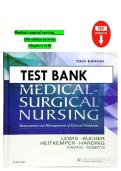
Medical surgical nursing
10th edition by lewis
Chapter 1 to 68
TEST BANK
, TABLE OF CONTENT
1. Professional Nursing Practice
2. Health Disparities and Culturally Competent Care
3. Health History and Physical Examination
4. Patient and Caregiver Teaching
5. Chronic Illness and Older Adults
6. Stress and Stress Management
7. Sleep and Sleep Disorders
8. Pain
9. Palliative Care at End of Life
10. Substance Abuse
11. Inflammation and Wound Healing
12. Genetics and Genomics
13. Altered Immune Responses and Transplantation
14. Infection
15. Cancer
16. Fluid, Electrolyte, and Acid-Base Imbalances
17. Preoperative Care
18. Intraoperative Care
19. Postoperative Care
20. Assessment of Visual and Auditory Systems
21. Visual and Auditory Problems
22. Assessment of Integumentary System
23. Integumentary Problems
24. Burns
25. Assessment of Respiratory System
26. Upper Respiratory Problems
27. Lower Respiratory Problems
28. Obstructive Pulmonary Diseases
29. Assessment of Hematologic System
30. Hematologic Problems
,31. Assessment of Cardiovascular System
32. Hypertension
33. Coronary Artery Disease and Acute Coronary Syndrome
34. Heart Failure
35. Dysrhythmias
36. Inflammatory and Structural Heart Disorders
37. Vascular Disorders
38. Assessment of Gastrointestinal System
39. Nutritional Problems
40. Obesity
41. Upper Gastrointestinal Problems
42. Lower Gastrointestinal Problems
43. Liver, Pancreas, and Biliary Tract Problems
44. Assessment of Urinary System
45. Renal and Urologic Problems
46. Acute Renal Failure and Chronic Kidney Disease
47. Assessment of Endocrine System
48. Diabetes Mellitus
49. Endocrine Problems
50. Reproductive System
51. Breast Disorders
52. Sexually Transmitted Infections
53. Female Reproductive Problems
54. Male Reproductive Problems
55. Assessment of Nervous System
56. Acute Intracranial Problems
57. Stroke
58. Chronic Neurologic Problems
59. Alzheimer’s Disease and Dementia
60. Spinal Cord and Peripheral Nerve Problems
61. Assessment of Musculoskeletal System
, 62. Musculoskeletal Trauma and Orthopedic Surgery
63. Musculoskeletal Problems
64. Arthritis and Connective Tissue Diseases
65. Critical Care
66. Shock, Systemic Inflammatory Response Syndrome, and Multiple Organ
Dysfunction Syndrome
67. Respiratory Failure and Acute Respiratory Distress Syndrome
68. Emergency, Terrorism, and Disaster Nursing
professional Nursing Practice
MULTIPLE CHOICE
1. The nurse completes an admission database and explains that the plan of care and discharge
goals will be developed with the patient’s input. The patient states, “How is this different
fromwhat the doctor does?” Which response would be most appropriate for the nurse to
make?
a. “The role of the nurse is to administer medications and other treatments
prescribedby your doctor.”
b. “The nurse’s job is to help the doctor by collecting information
andcommunicating any problems that occur.”
c. “Nurses perform many of the same procedures as the doctor, but nurses
are withthe patients for a longer time than the doctor.”
d. “In addition to caring for you while you are sick, the nurses will assist you
todevelop an individualized plan to maintain your health.”
ANS: D
This response is consistent with the American Nurses Association (ANA) definition of nursing,
which describes the role of nurses in promoting health. The other responses describesome of
the dependent and collaborative functions of the nursing role but do not accurately describe
the nurse’s role in the health care system.
DIF: Cognitive Level: Understand (comprehension) REF: 3
TOP: Nursing Process: Implementation MSC: NCLEX: Safe and Effective Care
Environment
2. The nurse describes to a student nurse how to use evidence-based practice guidelines
whencaring for patients. Which statement, if made by the nurse, would be the most
accurate?
a. “Inferences from clinical research studies are used as a guide.”
b. “Patient care is based on clinical judgment, experience, and traditions.”
c. “Data are evaluated to show that the patient outcomes are consistently met.”
d. “Recommendations are based on research, clinical expertise, and
patientpreferences.”
ANS: D
Evidence-based practice (EBP) is the use of the best research-based evidence combined
withclinician expertise. Clinical judgment based on the nurse’s clinical experience is part of
EBP,but clinical decision making should also incorporate current research and research-
10th edition by lewis
Chapter 1 to 68
TEST BANK
, TABLE OF CONTENT
1. Professional Nursing Practice
2. Health Disparities and Culturally Competent Care
3. Health History and Physical Examination
4. Patient and Caregiver Teaching
5. Chronic Illness and Older Adults
6. Stress and Stress Management
7. Sleep and Sleep Disorders
8. Pain
9. Palliative Care at End of Life
10. Substance Abuse
11. Inflammation and Wound Healing
12. Genetics and Genomics
13. Altered Immune Responses and Transplantation
14. Infection
15. Cancer
16. Fluid, Electrolyte, and Acid-Base Imbalances
17. Preoperative Care
18. Intraoperative Care
19. Postoperative Care
20. Assessment of Visual and Auditory Systems
21. Visual and Auditory Problems
22. Assessment of Integumentary System
23. Integumentary Problems
24. Burns
25. Assessment of Respiratory System
26. Upper Respiratory Problems
27. Lower Respiratory Problems
28. Obstructive Pulmonary Diseases
29. Assessment of Hematologic System
30. Hematologic Problems
,31. Assessment of Cardiovascular System
32. Hypertension
33. Coronary Artery Disease and Acute Coronary Syndrome
34. Heart Failure
35. Dysrhythmias
36. Inflammatory and Structural Heart Disorders
37. Vascular Disorders
38. Assessment of Gastrointestinal System
39. Nutritional Problems
40. Obesity
41. Upper Gastrointestinal Problems
42. Lower Gastrointestinal Problems
43. Liver, Pancreas, and Biliary Tract Problems
44. Assessment of Urinary System
45. Renal and Urologic Problems
46. Acute Renal Failure and Chronic Kidney Disease
47. Assessment of Endocrine System
48. Diabetes Mellitus
49. Endocrine Problems
50. Reproductive System
51. Breast Disorders
52. Sexually Transmitted Infections
53. Female Reproductive Problems
54. Male Reproductive Problems
55. Assessment of Nervous System
56. Acute Intracranial Problems
57. Stroke
58. Chronic Neurologic Problems
59. Alzheimer’s Disease and Dementia
60. Spinal Cord and Peripheral Nerve Problems
61. Assessment of Musculoskeletal System
, 62. Musculoskeletal Trauma and Orthopedic Surgery
63. Musculoskeletal Problems
64. Arthritis and Connective Tissue Diseases
65. Critical Care
66. Shock, Systemic Inflammatory Response Syndrome, and Multiple Organ
Dysfunction Syndrome
67. Respiratory Failure and Acute Respiratory Distress Syndrome
68. Emergency, Terrorism, and Disaster Nursing
professional Nursing Practice
MULTIPLE CHOICE
1. The nurse completes an admission database and explains that the plan of care and discharge
goals will be developed with the patient’s input. The patient states, “How is this different
fromwhat the doctor does?” Which response would be most appropriate for the nurse to
make?
a. “The role of the nurse is to administer medications and other treatments
prescribedby your doctor.”
b. “The nurse’s job is to help the doctor by collecting information
andcommunicating any problems that occur.”
c. “Nurses perform many of the same procedures as the doctor, but nurses
are withthe patients for a longer time than the doctor.”
d. “In addition to caring for you while you are sick, the nurses will assist you
todevelop an individualized plan to maintain your health.”
ANS: D
This response is consistent with the American Nurses Association (ANA) definition of nursing,
which describes the role of nurses in promoting health. The other responses describesome of
the dependent and collaborative functions of the nursing role but do not accurately describe
the nurse’s role in the health care system.
DIF: Cognitive Level: Understand (comprehension) REF: 3
TOP: Nursing Process: Implementation MSC: NCLEX: Safe and Effective Care
Environment
2. The nurse describes to a student nurse how to use evidence-based practice guidelines
whencaring for patients. Which statement, if made by the nurse, would be the most
accurate?
a. “Inferences from clinical research studies are used as a guide.”
b. “Patient care is based on clinical judgment, experience, and traditions.”
c. “Data are evaluated to show that the patient outcomes are consistently met.”
d. “Recommendations are based on research, clinical expertise, and
patientpreferences.”
ANS: D
Evidence-based practice (EBP) is the use of the best research-based evidence combined
withclinician expertise. Clinical judgment based on the nurse’s clinical experience is part of
EBP,but clinical decision making should also incorporate current research and research-


