1 | Page
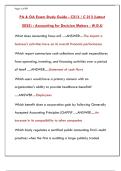
NR 547 Final Study Guide – PMHNP Exam
2026 | Comprehensive Q&A For
Certification Success
Nonpharmacologic Interventions: Depression Older Adult -correct-answer-
Engagement
Social support
Exercise
Relaxation
Mini-Cog Test -correct-answer-Assess Dementia:
Step 1: Three Word Registration.
Step 2: Clock Drawing.
Step 3: Three Word Recall.
If abnormal, screen further w/MMSE
Children's Depression Inventory -correct-answer-can be used in both educational
and clinical settings to evaluate depressive symptoms in children and adolescents
(7-17 years old)
,2 | Page
CDI 2 can aid in the early identification of depressive symptoms, the diagnosis of
depression and related disorders, as well as, the monitoring of treatment
effectiveness
Edinburgh Postnatal Depression Scale (EPDS) -correct-answer-Screening test used
to identify depression during pregnancy or in the postpartum period
ASQ screening -correct-answer-The Ask Suicide-Screening Questions (ASQ) tool is
a brief validated tool for use among both youth and adults.
DSM5-TR Diagnostic Criteria for Depression -correct-answer-MDD, five or more of
the symptoms below need to be present for at least 2 weeks continuously. (5/9)
feeling low most of the day for most days decreased
interest in activities substantial weight loss,
significant change in appetite fidgeting, random
movement (i.e. pacing) decreased energy sense of
guilt or worthlessness lack of focus or ability to make
decisions repeated thoughts of death and suicide
Depressed mood and/or Loss of interest/pleasure must be present.
, 3 | Page
MDD statistics -correct-answer-An estimated 4 percent of the United States' adult
population has experienced at least one major depressive episode.
The condition is more prevalent in women than in men.
It is three times more likely for people between the ages of 18-25 to experience
depression as compared to adults 60 and over.
MDD frequently occurs with other medical or psychological conditions like
substance abuse, anxiety, hypothyroidism and diabetes.
People who have experienced cancer, a heart attack, post-traumatic stress
disorder or Parkinson's Disease are likely to be diagnosed with MDD.
MDD (major depressive disorder) -correct-answer-5 symptoms during the same
two week period that are a change from previous functioning;
depressed mood and/or loss of interest/pleasure must be present;
exclude symptoms clearly attributable to another medical condition
Adjustment disorder with depressed mood -correct-answer-Adjustment Disorder
with Depressed Mood, also called Situational Depression, may sometimes feel
NR 547 Final Study Guide – PMHNP Exam
2026 | Comprehensive Q&A For
Certification Success
Nonpharmacologic Interventions: Depression Older Adult -correct-answer-
Engagement
Social support
Exercise
Relaxation
Mini-Cog Test -correct-answer-Assess Dementia:
Step 1: Three Word Registration.
Step 2: Clock Drawing.
Step 3: Three Word Recall.
If abnormal, screen further w/MMSE
Children's Depression Inventory -correct-answer-can be used in both educational
and clinical settings to evaluate depressive symptoms in children and adolescents
(7-17 years old)
,2 | Page
CDI 2 can aid in the early identification of depressive symptoms, the diagnosis of
depression and related disorders, as well as, the monitoring of treatment
effectiveness
Edinburgh Postnatal Depression Scale (EPDS) -correct-answer-Screening test used
to identify depression during pregnancy or in the postpartum period
ASQ screening -correct-answer-The Ask Suicide-Screening Questions (ASQ) tool is
a brief validated tool for use among both youth and adults.
DSM5-TR Diagnostic Criteria for Depression -correct-answer-MDD, five or more of
the symptoms below need to be present for at least 2 weeks continuously. (5/9)
feeling low most of the day for most days decreased
interest in activities substantial weight loss,
significant change in appetite fidgeting, random
movement (i.e. pacing) decreased energy sense of
guilt or worthlessness lack of focus or ability to make
decisions repeated thoughts of death and suicide
Depressed mood and/or Loss of interest/pleasure must be present.
, 3 | Page
MDD statistics -correct-answer-An estimated 4 percent of the United States' adult
population has experienced at least one major depressive episode.
The condition is more prevalent in women than in men.
It is three times more likely for people between the ages of 18-25 to experience
depression as compared to adults 60 and over.
MDD frequently occurs with other medical or psychological conditions like
substance abuse, anxiety, hypothyroidism and diabetes.
People who have experienced cancer, a heart attack, post-traumatic stress
disorder or Parkinson's Disease are likely to be diagnosed with MDD.
MDD (major depressive disorder) -correct-answer-5 symptoms during the same
two week period that are a change from previous functioning;
depressed mood and/or loss of interest/pleasure must be present;
exclude symptoms clearly attributable to another medical condition
Adjustment disorder with depressed mood -correct-answer-Adjustment Disorder
with Depressed Mood, also called Situational Depression, may sometimes feel