achieve exam success in Nr 507 pathophysiology
Nr 507 week
pathophysiology
/ 2026,
4 midterm
featuring
exam
week
real
latest
4 exam-style
midterm
question
exam
questions,
review.pdf
latest question
detailedreview
explanations, and accurate answers with solution
NR 507 PATHOPHYSIOLOGY WEEK 4 MIDTERM EXAM LATEST
QUESTION REVIEW
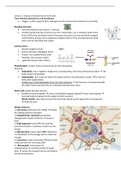
Hypersensitivity
Type 1
• Mediated by IgE
• Inflammation due to mast cell
degranulation
• Local symptoms:
o Itching
o Rash
• Systemic symptoms:
o Wheezing
• Most dangerous from is an
anaphylactic reaction
o Systemic response
▪ Hypotension
▪ Severe bronchoconstriction
o Treatment:
▪ Epinephrine reverses the effects
Type 2
• Cytotoxic reaction
o Tissue specific
▪ Ex. thyroid tissue
• Macrophages are the primary effector cells involved
• Grave’s Disease (hyperthyroidism)
o Example of altering thyroid function but does not
destroy thyroid tissue
• Incompatible blood type
o Example of cell/tissue damage that occurs
o Severe transfusion reaction occurs, and the
transfused erythrocytes are destroyed by
agglutination or complement-mediated lysis
• Immediate hypersensitivity reactions
o Atopic dermatitis
▪ Widely distributed lesions
▪ IMMEDIATE
Type 3
• Rheumatoid arthritis
o antigen/antibodies are deposited in
the joints
• Systemic Lupus Erythematosus (SLE)
o Very closely related to
autoimmunity
Nr 507 pathophysiology week 4 midterm exam latest question review Page 1 Questions Answers Updated 2026
, achieve exam success in Nr 507 pathophysiology
Nr 507 week
pathophysiology
/ 2026,
4 midterm
featuring
exam
week
real
latest
4 exam-style
midterm
question
exam
questions,
review.pdf
latest question
detailedreview
explanations, and accurate answers with solution
o antigen/antibodies deposit in organs that
CAUSE tissue damage
o result in the production of a large variety of
autoantibodies against nucleic acids,
erythrocytes, coagulation proteins,
phospholipids, lymphocytes, platelets, and
many other self-components.
o Score of Damage of SLE:
▪ Facial rash confined to the cheeks
(malar rash)
▪ Discoid rash (raised patched,
scaling)
▪ Photosensitivity (develop of skin
rash due to exposure to sunlight)
▪ Oral or nasopharyngeal ulcers
▪ Hematological disorders
▪ Hemolytic anemia, leukopenia, lymphopenia, or thrombocytopenia
▪ Immunologic disorders
▪ Antibodies against double-stranded DNA [dsDNA] or Smith [Sm]
antigen, false positive serologic test for syphilis, or
antiphospholipid antibodies [anticardiolipin antibody or lupus
anticoagulant]
▪ Non-erosive arthritis of at least two peripheral joints
▪ Serositis (pleurisy, pericarditis)
▪ Renal disorder
▪ Persistent proteinuria of >0.5g/day or >3g/day on dipstick or
cellular casts
▪ Neurologic disorders
▪ Seizures, or psychosis in the absence of known cause
▪ Presence of antinuclear antibody (ANA)
Difference between Type 2 and Type 3 Hypersensitivities
Type 2 Type 3
• Organ specific • NOT organ specific
• Antibody binds to the • Antibody binds to SOLUBLE ANTIGEN
antigen ON THE OUTSIDE THE CELL SURFACE that was
CELL SURFACE released into the blood or body fluids, and the
complex is then deposited in the tissues
Type 4
• Delayed response
• Does not involve antigen/antibody complexes like Types 1, 2, and 3
• Is T-cell mediated
• Contact dermatitis
Nr 507 pathophysiology week 4 midterm exam latest question review Page 2 Questions Answers Updated 2026
Nr 507 week
pathophysiology
/ 2026,
4 midterm
featuring
exam
week
real
latest
4 exam-style
midterm
question
exam
questions,
review.pdf
latest question
detailedreview
explanations, and accurate answers with solution
NR 507 PATHOPHYSIOLOGY WEEK 4 MIDTERM EXAM LATEST
QUESTION REVIEW
Hypersensitivity
Type 1
• Mediated by IgE
• Inflammation due to mast cell
degranulation
• Local symptoms:
o Itching
o Rash
• Systemic symptoms:
o Wheezing
• Most dangerous from is an
anaphylactic reaction
o Systemic response
▪ Hypotension
▪ Severe bronchoconstriction
o Treatment:
▪ Epinephrine reverses the effects
Type 2
• Cytotoxic reaction
o Tissue specific
▪ Ex. thyroid tissue
• Macrophages are the primary effector cells involved
• Grave’s Disease (hyperthyroidism)
o Example of altering thyroid function but does not
destroy thyroid tissue
• Incompatible blood type
o Example of cell/tissue damage that occurs
o Severe transfusion reaction occurs, and the
transfused erythrocytes are destroyed by
agglutination or complement-mediated lysis
• Immediate hypersensitivity reactions
o Atopic dermatitis
▪ Widely distributed lesions
▪ IMMEDIATE
Type 3
• Rheumatoid arthritis
o antigen/antibodies are deposited in
the joints
• Systemic Lupus Erythematosus (SLE)
o Very closely related to
autoimmunity
Nr 507 pathophysiology week 4 midterm exam latest question review Page 1 Questions Answers Updated 2026
, achieve exam success in Nr 507 pathophysiology
Nr 507 week
pathophysiology
/ 2026,
4 midterm
featuring
exam
week
real
latest
4 exam-style
midterm
question
exam
questions,
review.pdf
latest question
detailedreview
explanations, and accurate answers with solution
o antigen/antibodies deposit in organs that
CAUSE tissue damage
o result in the production of a large variety of
autoantibodies against nucleic acids,
erythrocytes, coagulation proteins,
phospholipids, lymphocytes, platelets, and
many other self-components.
o Score of Damage of SLE:
▪ Facial rash confined to the cheeks
(malar rash)
▪ Discoid rash (raised patched,
scaling)
▪ Photosensitivity (develop of skin
rash due to exposure to sunlight)
▪ Oral or nasopharyngeal ulcers
▪ Hematological disorders
▪ Hemolytic anemia, leukopenia, lymphopenia, or thrombocytopenia
▪ Immunologic disorders
▪ Antibodies against double-stranded DNA [dsDNA] or Smith [Sm]
antigen, false positive serologic test for syphilis, or
antiphospholipid antibodies [anticardiolipin antibody or lupus
anticoagulant]
▪ Non-erosive arthritis of at least two peripheral joints
▪ Serositis (pleurisy, pericarditis)
▪ Renal disorder
▪ Persistent proteinuria of >0.5g/day or >3g/day on dipstick or
cellular casts
▪ Neurologic disorders
▪ Seizures, or psychosis in the absence of known cause
▪ Presence of antinuclear antibody (ANA)
Difference between Type 2 and Type 3 Hypersensitivities
Type 2 Type 3
• Organ specific • NOT organ specific
• Antibody binds to the • Antibody binds to SOLUBLE ANTIGEN
antigen ON THE OUTSIDE THE CELL SURFACE that was
CELL SURFACE released into the blood or body fluids, and the
complex is then deposited in the tissues
Type 4
• Delayed response
• Does not involve antigen/antibody complexes like Types 1, 2, and 3
• Is T-cell mediated
• Contact dermatitis
Nr 507 pathophysiology week 4 midterm exam latest question review Page 2 Questions Answers Updated 2026