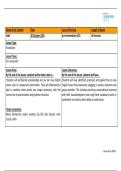
Name of the Teacher Date Level of the class Length of lesson
Sade 30 October 2024 pre-intermediate (A2) 60 minutes
Lesson Type:
Vocabulary
Lesson Topic:
At a restaurant
Lesson Aims: Lesson Outcomes:
By the end of the lesson, students will be better able to… By the end of the lesson, students will have…
Students will proficiently acknowledge and use ten new English Students will have identified, practiced, and applied the ten new
nouns used in a restaurant environment. They will effectively be English nouns they learned by engaging in various classroom and
able to combine these words into simple sentences, with the group activities. This includes practicing conversational exercises
correct use of pronunciation and grammar structure. with their classmates(peers) and using these vocabulary words in
worksheets to reinforce their ability to understand.
Target vocabulary:
Menu, Restaurant, waiter, waitress, tip, bill, dish, dessert, main
course, drink
Lesson plan 150823
, Anticipated difficulties: Suggested solutions:
Include one relating to L1/age/level of the students and one for the
10 words (meaning, form, or pronunciation). 1. Making use of vocal speaking, modelling the words, and
group activities, will assist students to be able to practice and
1. Chinese students may find it difficult to pronounce certain pronounce the target words correctly. Especially those with
words in the English language. For example, words with the the (r) sound, for example, “restaurant”. The teacher will use
sound (r) can be difficult because their native language some methods to motivate students by demonstrating
Mandarin lacks this sound. They will then substitute this with mouth movements, repetition of the target words, saying
sounds (l) or (w). This could lead to the result that students them slowly, and splitting word syllables for students to have
may pronounce certain words incorrectly. a better understanding. Students will then practice by
repeating the target words so that they can get familiar,
2. Some creations may have cultural implications or may not be comfortable, and more confident with pronouncing the
as common in their native language (L1). This situation can target words given.
cause a lack of interest and understanding.
2. Making use of flashcards and vocabulary games can
3. There may be some students who will participate more than introduce and capture students' attention to unfamiliar
others due to their higher vocabulary skills of the target topic words that aren’t common to them in their native languages
(“At the restaurant”). This can be the result of other students (L1), displaying short videos, including storytelling, and other
who have fewer vocabulary skills of the target topic (“at the fun creative interactive activities specifically focused on the
restaurant”, feeling less interested and less confident to students' levels, thereby strengthening the students'
participate. They usually end up with them being left in the interests and ability to understand.
background and find it more challenging to participate in the
lesson. 3. The teacher can organize activities such as creating teams
(placing higher level students with the lower level students),
Lesson plan 150823
Sade 30 October 2024 pre-intermediate (A2) 60 minutes
Lesson Type:
Vocabulary
Lesson Topic:
At a restaurant
Lesson Aims: Lesson Outcomes:
By the end of the lesson, students will be better able to… By the end of the lesson, students will have…
Students will proficiently acknowledge and use ten new English Students will have identified, practiced, and applied the ten new
nouns used in a restaurant environment. They will effectively be English nouns they learned by engaging in various classroom and
able to combine these words into simple sentences, with the group activities. This includes practicing conversational exercises
correct use of pronunciation and grammar structure. with their classmates(peers) and using these vocabulary words in
worksheets to reinforce their ability to understand.
Target vocabulary:
Menu, Restaurant, waiter, waitress, tip, bill, dish, dessert, main
course, drink
Lesson plan 150823
, Anticipated difficulties: Suggested solutions:
Include one relating to L1/age/level of the students and one for the
10 words (meaning, form, or pronunciation). 1. Making use of vocal speaking, modelling the words, and
group activities, will assist students to be able to practice and
1. Chinese students may find it difficult to pronounce certain pronounce the target words correctly. Especially those with
words in the English language. For example, words with the the (r) sound, for example, “restaurant”. The teacher will use
sound (r) can be difficult because their native language some methods to motivate students by demonstrating
Mandarin lacks this sound. They will then substitute this with mouth movements, repetition of the target words, saying
sounds (l) or (w). This could lead to the result that students them slowly, and splitting word syllables for students to have
may pronounce certain words incorrectly. a better understanding. Students will then practice by
repeating the target words so that they can get familiar,
2. Some creations may have cultural implications or may not be comfortable, and more confident with pronouncing the
as common in their native language (L1). This situation can target words given.
cause a lack of interest and understanding.
2. Making use of flashcards and vocabulary games can
3. There may be some students who will participate more than introduce and capture students' attention to unfamiliar
others due to their higher vocabulary skills of the target topic words that aren’t common to them in their native languages
(“At the restaurant”). This can be the result of other students (L1), displaying short videos, including storytelling, and other
who have fewer vocabulary skills of the target topic (“at the fun creative interactive activities specifically focused on the
restaurant”, feeling less interested and less confident to students' levels, thereby strengthening the students'
participate. They usually end up with them being left in the interests and ability to understand.
background and find it more challenging to participate in the
lesson. 3. The teacher can organize activities such as creating teams
(placing higher level students with the lower level students),
Lesson plan 150823