

IICRC Carpet Cleaning Technician: Fiber Identification, Construction &
Chemistry
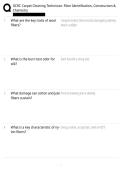
1. What are the key traits of wool Crimped, resilient, flame resistant; damaged by alkalinity,
fibers? bleach, sunlight.
2. What is the burn test odor for Burnt hair with a strong odor.
silk?
3. What damage can cotton and jute Prone to browning due to alkalinity.
fibers sustain?
4. What is a key characteristic of ny- Strong, resilient, accepts dyes, melts at 425°F.
lon fibers?
, IICRC Carpet Cleaning Technician: Fiber Identification, Construction &
Chemistry
5. What is the burn test odor for Sweet, fruity.
polyester?
6. What is the primary construction Tufted, where yarns are stitched into backing.
method for 90% of carpets?
7. What are the two types of woven Wilton and Axminster.
carpet designs?
8. What is the pH range recom- 4.5-8.5.
mended for cleaning wool?
9. What does the acronym 'CHAT' Chemical, Heat, Agitation, Time.
stand for in cleaning principles?
, IICRC Carpet Cleaning Technician: Fiber Identification, Construction &
Chemistry
10. What is the main advantage of Deep cleaning.
the Hot Water Extraction (HWE)
method?
11. What is a disadvantage of the Can cause pile distortion.
Absorbent Pad (Bonnet) cleaning
method?
12. What are the types of soil in car- 74-79% insoluble, 10% water-soluble, 10% solvent-solu-
pet cleaning? ble.
13. What is the difference between a Spot = on surface; Stain = within fiber.
spot and a stain?
14. What is the universal solvent? Water.
, IICRC Carpet Cleaning Technician: Fiber Identification, Construction &
Chemistry
15. What should never be mixed due Ammonia and bleach.
to toxic gas production?
16. What is the main cause of wicking Slow drying or over-wetting.
in carpets?
17. What does 'BCF' stand for? Bulk Continuous Filament.
18. What is the purpose of surfac- They lower surface tension.
tants in cleaning?
19. What is the CRI Seal of Approval? Indicates product safety and performance.
20. What is the recommended clean- Less than 10.
ing pH for nylon?
21. What are common chemical Oxidizers, reducers, acids, alkalines, solvents.
types used in spotting?
22. What is the purpose of builders Maintain pH, soften water, emulsify oils.
and buffers in cleaning?
23. What is the recommended drying 6-8 hours maximum.
time for carpets after cleaning?
Chemistry
1. What are the key traits of wool Crimped, resilient, flame resistant; damaged by alkalinity,
fibers? bleach, sunlight.
2. What is the burn test odor for Burnt hair with a strong odor.
silk?
3. What damage can cotton and jute Prone to browning due to alkalinity.
fibers sustain?
4. What is a key characteristic of ny- Strong, resilient, accepts dyes, melts at 425°F.
lon fibers?
, IICRC Carpet Cleaning Technician: Fiber Identification, Construction &
Chemistry
5. What is the burn test odor for Sweet, fruity.
polyester?
6. What is the primary construction Tufted, where yarns are stitched into backing.
method for 90% of carpets?
7. What are the two types of woven Wilton and Axminster.
carpet designs?
8. What is the pH range recom- 4.5-8.5.
mended for cleaning wool?
9. What does the acronym 'CHAT' Chemical, Heat, Agitation, Time.
stand for in cleaning principles?
, IICRC Carpet Cleaning Technician: Fiber Identification, Construction &
Chemistry
10. What is the main advantage of Deep cleaning.
the Hot Water Extraction (HWE)
method?
11. What is a disadvantage of the Can cause pile distortion.
Absorbent Pad (Bonnet) cleaning
method?
12. What are the types of soil in car- 74-79% insoluble, 10% water-soluble, 10% solvent-solu-
pet cleaning? ble.
13. What is the difference between a Spot = on surface; Stain = within fiber.
spot and a stain?
14. What is the universal solvent? Water.
, IICRC Carpet Cleaning Technician: Fiber Identification, Construction &
Chemistry
15. What should never be mixed due Ammonia and bleach.
to toxic gas production?
16. What is the main cause of wicking Slow drying or over-wetting.
in carpets?
17. What does 'BCF' stand for? Bulk Continuous Filament.
18. What is the purpose of surfac- They lower surface tension.
tants in cleaning?
19. What is the CRI Seal of Approval? Indicates product safety and performance.
20. What is the recommended clean- Less than 10.
ing pH for nylon?
21. What are common chemical Oxidizers, reducers, acids, alkalines, solvents.
types used in spotting?
22. What is the purpose of builders Maintain pH, soften water, emulsify oils.
and buffers in cleaning?
23. What is the recommended drying 6-8 hours maximum.
time for carpets after cleaning?


