1|Page
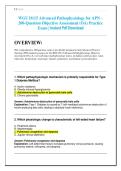
WGU D115 Advanced Pathophysiology for APN –
200-Question Objective Assessment (OA) Practice
Exam | Instant Pdf Download
OVERVIEW:
This comprehensive 200-question exam is specifically designed to help Advanced Practice
Nursing (APN) students prepare for the WGU D115 Advanced Pathophysiology Objective
Assessment (OA). It covers all major pathophysiology topics, including cardiovascular, renal,
endocrine, hematologic, neurologic, hepatic, pulmonary, and immune system disorders.
1. Which pathophysiologic mechanism is primarily responsible for Type
1 Diabetes Mellitus?
A. Insulin resistance
B. Obesity-induced hyperglycemia
C. Autoimmune destruction of pancreatic beta cells
D. Chronic pancreatitis
Answer: Autoimmune destruction of pancreatic beta cells
Explanation: Type 1 Diabetes is caused by T-cell–mediated autoimmune destruction of
insulin-producing beta cells, leading to absolute insulin deficiency.
2. Which physiologic change is characteristic of left-sided heart failure?
A. Peripheral edema
B. Hepatomegaly
C. Pulmonary congestion and dyspnea
D. Jugular venous distension
Answer: Pulmonary congestion and dyspnea
Explanation: Left-sided heart failure increases pulmonary venous pressure, causing
pulmonary edema, orthopnea, and dyspnea.
,2|Page
3. In asthma, which cell type primarily mediates airway inflammation?
A. Neutrophils
B. Eosinophils
C. Basophils
D. Monocytes
Answer: Eosinophils
Explanation: Eosinophils release inflammatory mediators causing airway
hyperresponsiveness and remodeling in asthma.
4. Which electrolyte imbalance is most likely in diabetic ketoacidosis
(DKA)?
A. Hypernatremia
B. Hyperkalemia
C. Hypocalcemia
D. Hypomagnesemia
Answer: Hyperkalemia
Explanation: Insulin deficiency and acidosis shift potassium from cells to extracellular
fluid, causing hyperkalemia despite total body potassium depletion.
5. What is the hallmark laboratory finding in iron-deficiency anemia?
A. Macrocytosis
B. Microcytosis with low ferritin
C. Pancytopenia
D. Reticulocytosis
Answer: Microcytosis with low ferritin
Explanation: Iron-deficiency anemia presents with small, hypochromic RBCs and
depleted iron stores (low ferritin).
6. Which mechanism primarily contributes to hyperthyroidism in Graves’
disease?
A. Pituitary adenoma
B. Iodine deficiency
,3|Page
C. Autoantibodies stimulating TSH receptors
D. Thyroid hormone resistance
Answer: Autoantibodies stimulating TSH receptors
Explanation: Graves’ disease involves thyroid-stimulating immunoglobulins activating
the TSH receptor, causing overproduction of T3/T4.
7. What is the primary cause of acute tubular necrosis (ATN)?
A. Autoimmune reaction
B. Infection
C. Ischemia or nephrotoxic injury to renal tubules
D. Obstruction
Answer: Ischemia or nephrotoxic injury to renal tubules
Explanation: ATN is caused by decreased perfusion or toxins damaging renal tubular
epithelial cells, leading to acute kidney injury.
8. Which pathophysiologic process is most associated with cirrhosis?
A. Hepatitis A infection only
B. Chronic liver injury leading to fibrosis and nodular regeneration
C. Acute cholangitis
D. Portal vein thrombosis
Answer: Chronic liver injury leading to fibrosis and nodular regeneration
Explanation: Cirrhosis develops from long-term liver injury, resulting in fibrosis, altered
architecture, and impaired liver function.
9. What is the primary mechanism of hypoxemia in chronic obstructive
pulmonary disease (COPD)?
A. Increased alveolar oxygen
B. Hyperventilation
C. Ventilation-perfusion (V/Q) mismatch
D. Pulmonary embolism
Answer: Ventilation-perfusion (V/Q) mismatch
Explanation: In COPD, airflow obstruction and alveolar destruction cause areas of low
ventilation relative to perfusion, resulting in hypoxemia.
, 4|Page
10. Which immune mechanism mediates systemic lupus erythematosus
(SLE)?
A. IgE-mediated hypersensitivity
B. Autoantibody formation and immune complex deposition
C. T-cell cytotoxicity only
D. Complement deficiency only
Answer: Autoantibody formation and immune complex deposition
Explanation: SLE involves autoantibodies targeting nuclear antigens, forming immune
complexes that deposit in tissues and trigger inflammation.
11. Which electrolyte abnormality is commonly seen in Addison’s
disease?
A. Hypokalemia
B. Hypercalcemia
C. Hyperkalemia
D. Hypophosphatemia
Answer: Hyperkalemia
Explanation: Aldosterone deficiency reduces potassium excretion, causing
hyperkalemia in Addison’s disease.
12. In septic shock, which hemodynamic change is most characteristic?
A. Low cardiac output with high systemic vascular resistance
B. High cardiac output with low systemic vascular resistance
C. Low cardiac output with low vascular resistance
D. High cardiac output with high vascular resistance
Answer: High cardiac output with low systemic vascular resistance
Explanation: Septic shock involves vasodilation, capillary leak, and compensatory
tachycardia, producing high-output, low-resistance shock.
13. Which lab marker is most specific for myocardial injury?
WGU D115 Advanced Pathophysiology for APN –
200-Question Objective Assessment (OA) Practice
Exam | Instant Pdf Download
OVERVIEW:
This comprehensive 200-question exam is specifically designed to help Advanced Practice
Nursing (APN) students prepare for the WGU D115 Advanced Pathophysiology Objective
Assessment (OA). It covers all major pathophysiology topics, including cardiovascular, renal,
endocrine, hematologic, neurologic, hepatic, pulmonary, and immune system disorders.
1. Which pathophysiologic mechanism is primarily responsible for Type
1 Diabetes Mellitus?
A. Insulin resistance
B. Obesity-induced hyperglycemia
C. Autoimmune destruction of pancreatic beta cells
D. Chronic pancreatitis
Answer: Autoimmune destruction of pancreatic beta cells
Explanation: Type 1 Diabetes is caused by T-cell–mediated autoimmune destruction of
insulin-producing beta cells, leading to absolute insulin deficiency.
2. Which physiologic change is characteristic of left-sided heart failure?
A. Peripheral edema
B. Hepatomegaly
C. Pulmonary congestion and dyspnea
D. Jugular venous distension
Answer: Pulmonary congestion and dyspnea
Explanation: Left-sided heart failure increases pulmonary venous pressure, causing
pulmonary edema, orthopnea, and dyspnea.
,2|Page
3. In asthma, which cell type primarily mediates airway inflammation?
A. Neutrophils
B. Eosinophils
C. Basophils
D. Monocytes
Answer: Eosinophils
Explanation: Eosinophils release inflammatory mediators causing airway
hyperresponsiveness and remodeling in asthma.
4. Which electrolyte imbalance is most likely in diabetic ketoacidosis
(DKA)?
A. Hypernatremia
B. Hyperkalemia
C. Hypocalcemia
D. Hypomagnesemia
Answer: Hyperkalemia
Explanation: Insulin deficiency and acidosis shift potassium from cells to extracellular
fluid, causing hyperkalemia despite total body potassium depletion.
5. What is the hallmark laboratory finding in iron-deficiency anemia?
A. Macrocytosis
B. Microcytosis with low ferritin
C. Pancytopenia
D. Reticulocytosis
Answer: Microcytosis with low ferritin
Explanation: Iron-deficiency anemia presents with small, hypochromic RBCs and
depleted iron stores (low ferritin).
6. Which mechanism primarily contributes to hyperthyroidism in Graves’
disease?
A. Pituitary adenoma
B. Iodine deficiency
,3|Page
C. Autoantibodies stimulating TSH receptors
D. Thyroid hormone resistance
Answer: Autoantibodies stimulating TSH receptors
Explanation: Graves’ disease involves thyroid-stimulating immunoglobulins activating
the TSH receptor, causing overproduction of T3/T4.
7. What is the primary cause of acute tubular necrosis (ATN)?
A. Autoimmune reaction
B. Infection
C. Ischemia or nephrotoxic injury to renal tubules
D. Obstruction
Answer: Ischemia or nephrotoxic injury to renal tubules
Explanation: ATN is caused by decreased perfusion or toxins damaging renal tubular
epithelial cells, leading to acute kidney injury.
8. Which pathophysiologic process is most associated with cirrhosis?
A. Hepatitis A infection only
B. Chronic liver injury leading to fibrosis and nodular regeneration
C. Acute cholangitis
D. Portal vein thrombosis
Answer: Chronic liver injury leading to fibrosis and nodular regeneration
Explanation: Cirrhosis develops from long-term liver injury, resulting in fibrosis, altered
architecture, and impaired liver function.
9. What is the primary mechanism of hypoxemia in chronic obstructive
pulmonary disease (COPD)?
A. Increased alveolar oxygen
B. Hyperventilation
C. Ventilation-perfusion (V/Q) mismatch
D. Pulmonary embolism
Answer: Ventilation-perfusion (V/Q) mismatch
Explanation: In COPD, airflow obstruction and alveolar destruction cause areas of low
ventilation relative to perfusion, resulting in hypoxemia.
, 4|Page
10. Which immune mechanism mediates systemic lupus erythematosus
(SLE)?
A. IgE-mediated hypersensitivity
B. Autoantibody formation and immune complex deposition
C. T-cell cytotoxicity only
D. Complement deficiency only
Answer: Autoantibody formation and immune complex deposition
Explanation: SLE involves autoantibodies targeting nuclear antigens, forming immune
complexes that deposit in tissues and trigger inflammation.
11. Which electrolyte abnormality is commonly seen in Addison’s
disease?
A. Hypokalemia
B. Hypercalcemia
C. Hyperkalemia
D. Hypophosphatemia
Answer: Hyperkalemia
Explanation: Aldosterone deficiency reduces potassium excretion, causing
hyperkalemia in Addison’s disease.
12. In septic shock, which hemodynamic change is most characteristic?
A. Low cardiac output with high systemic vascular resistance
B. High cardiac output with low systemic vascular resistance
C. Low cardiac output with low vascular resistance
D. High cardiac output with high vascular resistance
Answer: High cardiac output with low systemic vascular resistance
Explanation: Septic shock involves vasodilation, capillary leak, and compensatory
tachycardia, producing high-output, low-resistance shock.
13. Which lab marker is most specific for myocardial injury?