

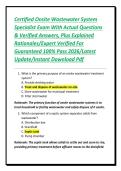
Certified Onsite Wastewater System
Specialist Exam With Actual Questions
& Verified Answers, Plus Explained
Rationales/Expert Verified For
Guaranteed 100% Pass 2026/Latest
Update/Instant Download Pdf
1. What is the primary purpose of an onsite wastewater treatment
system?
A. Provide drinking water
B. Treat and dispose of wastewater on-site
C. Store wastewater for municipal treatment
D. Filter stormwater
Rationale: The primary function of onsite wastewater systems is to
treat household or facility wastewater and safely dispose of it onsite.
2. Which component of a septic system separates solids from
wastewater?
A. Distribution box
B. Drainfield
C. Septic tank
D. Pump chamber
Rationale: The septic tank allows solids to settle out and scum to rise,
providing primary treatment before effluent moves to the drainfield.
, 3. What type of soil is most suitable for a conventional drainfield?
A. Clay
B. Sandy loam
C. Pure sand
D. Heavy clay
Rationale: Sandy loam provides good permeability while retaining
enough moisture for treatment, making it ideal for a drainfield.
4. How often should a conventional septic tank typically be
pumped?
A. Every year
B. Every 2 years
C. Every 3–5 years
D. Every 10 years
Rationale: Pumping frequency depends on tank size and household
use, but generally, every 3–5 years prevents solids from overloading
the drainfield.
5. What is the function of a distribution box?
A. Remove solids from wastewater
B. Evenly distribute effluent to drainfield lines
C. Increase effluent nutrient content
D. Aerate the effluent
Rationale: The distribution box ensures uniform flow to all parts of the
drainfield, preventing overloading of any single trench.
6. What type of system is required when site soils have low
permeability?
A. Conventional septic system
B. Mound system
, C. Lagoon system
D. Direct discharge system
Rationale: Mound systems elevate effluent above poor soils to allow
adequate treatment and absorption.
7. Which parameter is most critical in evaluating soil for onsite
wastewater absorption?
A. Soil color
B. Soil temperature
C. Hydraulic conductivity
D. Soil depth
Rationale: Hydraulic conductivity measures the soil’s ability to
transmit water, directly affecting effluent dispersal and treatment.
8. Which microorganism plays a major role in septic tank
wastewater treatment?
A. Viruses
B. Bacteria
C. Protozoa
D. Algae
Rationale: Bacteria break down organic matter in wastewater,
reducing solids and odor.
9. What is the minimum distance a drainfield should be from a
drinking water well?
A. 10 feet
B. 25 feet
C. 50 feet
D. 100 feet
Rationale: Proper separation prevents contamination of drinking
water by pathogens from the effluent.
Specialist Exam With Actual Questions
& Verified Answers, Plus Explained
Rationales/Expert Verified For
Guaranteed 100% Pass 2026/Latest
Update/Instant Download Pdf
1. What is the primary purpose of an onsite wastewater treatment
system?
A. Provide drinking water
B. Treat and dispose of wastewater on-site
C. Store wastewater for municipal treatment
D. Filter stormwater
Rationale: The primary function of onsite wastewater systems is to
treat household or facility wastewater and safely dispose of it onsite.
2. Which component of a septic system separates solids from
wastewater?
A. Distribution box
B. Drainfield
C. Septic tank
D. Pump chamber
Rationale: The septic tank allows solids to settle out and scum to rise,
providing primary treatment before effluent moves to the drainfield.
, 3. What type of soil is most suitable for a conventional drainfield?
A. Clay
B. Sandy loam
C. Pure sand
D. Heavy clay
Rationale: Sandy loam provides good permeability while retaining
enough moisture for treatment, making it ideal for a drainfield.
4. How often should a conventional septic tank typically be
pumped?
A. Every year
B. Every 2 years
C. Every 3–5 years
D. Every 10 years
Rationale: Pumping frequency depends on tank size and household
use, but generally, every 3–5 years prevents solids from overloading
the drainfield.
5. What is the function of a distribution box?
A. Remove solids from wastewater
B. Evenly distribute effluent to drainfield lines
C. Increase effluent nutrient content
D. Aerate the effluent
Rationale: The distribution box ensures uniform flow to all parts of the
drainfield, preventing overloading of any single trench.
6. What type of system is required when site soils have low
permeability?
A. Conventional septic system
B. Mound system
, C. Lagoon system
D. Direct discharge system
Rationale: Mound systems elevate effluent above poor soils to allow
adequate treatment and absorption.
7. Which parameter is most critical in evaluating soil for onsite
wastewater absorption?
A. Soil color
B. Soil temperature
C. Hydraulic conductivity
D. Soil depth
Rationale: Hydraulic conductivity measures the soil’s ability to
transmit water, directly affecting effluent dispersal and treatment.
8. Which microorganism plays a major role in septic tank
wastewater treatment?
A. Viruses
B. Bacteria
C. Protozoa
D. Algae
Rationale: Bacteria break down organic matter in wastewater,
reducing solids and odor.
9. What is the minimum distance a drainfield should be from a
drinking water well?
A. 10 feet
B. 25 feet
C. 50 feet
D. 100 feet
Rationale: Proper separation prevents contamination of drinking
water by pathogens from the effluent.


