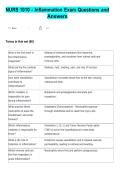
NURS 1010 - Inflammation Exam Questions and
Answers
Save
Terms in this set (60)
What is the first event in Release of chemical mediators like histamine,
the inflammatory prostaglandins, and cytokines from injured cells and
response? immune cells.
What are the five cardinal Redness, heat, swelling, pain, and loss of function.
signs of inflammation?
How does vasodilation Vasodilation increases blood flow to the site, causing
contribute to redness and heat.
inflammation?
Which mediator is Bradykinin and prostaglandins stimulate pain
responsible for pain receptors.
during inflammation?
What process allows Diapedesis (Extravasation) - Neutrophils squeeze
neutrophils to leave the through endothelial cells to reach the injury site.
bloodstream and enter
tissues?
Which inflammatory Interleukin-1 (IL-1) and Tumor Necrosis Factor-alpha
mediator is responsible for (TNF-α) act on the hypothalamus to raise body
fever? temperature.
What is the role of Histamine causes vasodilation and increased vascular
histamine in inflammation? permeability, leading to redness and swelling.
Which immune cells are Neutrophils arrive first and perform phagocytosis.
the first responders in
acute inflammation?
, Which cytokines are TNF-α, IL-1, and IL-6 promote continuous immune
involved in chronic activation and tissue damage.
inflammation?
How does the C3a & C5a recruit immune cells, C3b opsonizes
complement system bacteria, and MAC (Membrane Attack Complex) lyses
enhance inflammation? pathogens.
Acute inflammation is short-term (minutes to days),
What is the main resolving with healing.
difference between acute
and chronic inflammation? Chronic inflammation is long-term (weeks to years),
leading to tissue damage and fibrosis.
Give an example of a Rheumatoid arthritis, atherosclerosis, Crohn's disease.
disease caused by chronic
inflammation.
Why does chronic Prolonged activation of immune cells causes fibrosis
inflammation lead to tissue (scar tissue), loss of function, and destruction of
damage? normal cells.
Which type of Serous exudate (low protein, seen in mild
inflammatory exudate is inflammation)
clear and watery?
Which exudate contains Purulent (pus-filled) exudate
WBCs, bacteria, and dead
tissue, often seen in
infections?
Which exudate is thick, Fibrinous exudate, common in severe inflammation
sticky, and high in protein?
Which exudate has serous Serosanguineous exudate
and some blood?
Which exudate has red Hemorrhagic exudate
blood cells?
Answers
Save
Terms in this set (60)
What is the first event in Release of chemical mediators like histamine,
the inflammatory prostaglandins, and cytokines from injured cells and
response? immune cells.
What are the five cardinal Redness, heat, swelling, pain, and loss of function.
signs of inflammation?
How does vasodilation Vasodilation increases blood flow to the site, causing
contribute to redness and heat.
inflammation?
Which mediator is Bradykinin and prostaglandins stimulate pain
responsible for pain receptors.
during inflammation?
What process allows Diapedesis (Extravasation) - Neutrophils squeeze
neutrophils to leave the through endothelial cells to reach the injury site.
bloodstream and enter
tissues?
Which inflammatory Interleukin-1 (IL-1) and Tumor Necrosis Factor-alpha
mediator is responsible for (TNF-α) act on the hypothalamus to raise body
fever? temperature.
What is the role of Histamine causes vasodilation and increased vascular
histamine in inflammation? permeability, leading to redness and swelling.
Which immune cells are Neutrophils arrive first and perform phagocytosis.
the first responders in
acute inflammation?
, Which cytokines are TNF-α, IL-1, and IL-6 promote continuous immune
involved in chronic activation and tissue damage.
inflammation?
How does the C3a & C5a recruit immune cells, C3b opsonizes
complement system bacteria, and MAC (Membrane Attack Complex) lyses
enhance inflammation? pathogens.
Acute inflammation is short-term (minutes to days),
What is the main resolving with healing.
difference between acute
and chronic inflammation? Chronic inflammation is long-term (weeks to years),
leading to tissue damage and fibrosis.
Give an example of a Rheumatoid arthritis, atherosclerosis, Crohn's disease.
disease caused by chronic
inflammation.
Why does chronic Prolonged activation of immune cells causes fibrosis
inflammation lead to tissue (scar tissue), loss of function, and destruction of
damage? normal cells.
Which type of Serous exudate (low protein, seen in mild
inflammatory exudate is inflammation)
clear and watery?
Which exudate contains Purulent (pus-filled) exudate
WBCs, bacteria, and dead
tissue, often seen in
infections?
Which exudate is thick, Fibrinous exudate, common in severe inflammation
sticky, and high in protein?
Which exudate has serous Serosanguineous exudate
and some blood?
Which exudate has red Hemorrhagic exudate
blood cells?