Gluconeogenesis
Learning objectives:
1. Tissues where gluconeogenesis occurs
2. Important precursors for gluconeogenesis
3. Identify sites of entry of precursors into gluconeogenesis pathway ]recognise irreversible steps in glycolysis &
bypass pathways used in gluconeogenesis
4. Describe and explain the important role of fructose 2,6-BP to the regulation of both glycolysis and
gluconeogenesis
5. Describe and explain regulation of these 2 competing pathways
6. Describe and explain futile cycles (use example)
7. Describe Cori cycle
8. Role of G6P in the liver
UTP IS THE SORCE OF ENERGY FOR ACTIVATING GLUCOSE IN GLYCOGAN SYNTHESIS
Gluconeogenesis
The gluconeogenesis pathway converts pyruvate to glucose
- Precursors are either converted to pyruvate or enter pathway as later intermediates
- Precursors include
Lactate (lactic acid from anaerobic respiration in the muscle)
Glycerol
AA
In animals, the gluconeogenesis pathway is for the most part the reverse of glycolysis
- There are substitute or bypass reactions for the irreversible steps of glycolysis
Why do we need gluconeogenesis?
Under starvation condition, need to synthesis glucose as it is the main source of fuel for brain and there’s only a
small amount of glycogen stores
Glucose is a vital fuel
Biosynthesis is a necessity in all vertebrates
160g utilised per day
- Brain consumes 120g of glucose/day
We have about 20g in body fluid and approx. 190g in glycogen stores
Thus only have stress for 1 day
During long periods of starvation need to synthesis glucose from other non-carbohydrate sourced
LO2. IMPORTANT PRECURSORS OF GLUCONEOGENESIS
LO3. IDENTIFY SITE OF ENTRY OF PRECURSORS INTO GLUCONEOGENESIS PATHWAY
Precursors to gluconeogenesis
Lactate
- formed in the active skeletal muscle when glycolysis exceeds rate of oxidative metabolism
- readily converts to pyruvate by lactate dehydrogenase
, Amino acids
- Derived from proteins in diet
- During starvation get AA through the breakdown of proteins in skeletal muscle
Glycerol
- Hydrolysis of triacylglycerol in fat cells give glycerol and fatty acids (glycerol is a glucose precursor but
fatty acids are not)
- Glycerol enters gluconeogenesis or glycolytic pathway at the dihydroxyacetone phosphate (DHAP
stage)
LO1.TISSUES WHERE GLUCONEOGENESIS OCCURS
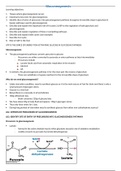
Gluconeogenesis not a complete reversal of glycolysis
Gluconeogenesis occurs in the liver (small amounts in the kidney)
very little if any occurs in the brain, skeletal muscle or heart muscle
gluconeogenesis helps maintain glucose levels in the blood so that the brain and muscles can extract sufficient
glucose to meet their needs
Although the process converts pyruvate to glucose it is not the complete revers
This is because in glycolysis there are certain reactions that are basically irreversible due to their equilibrium
position these are:
- Step 1 hexokinase
- Step 3 phosphofructokinase
- Step 10 pyruvate kinase
All other reactions are reversible
Gluconeogenesis has 3 separate and unique reactions that are irreversible and pull pathways in direction of
glucose synthesis
Learning objectives:
1. Tissues where gluconeogenesis occurs
2. Important precursors for gluconeogenesis
3. Identify sites of entry of precursors into gluconeogenesis pathway ]recognise irreversible steps in glycolysis &
bypass pathways used in gluconeogenesis
4. Describe and explain the important role of fructose 2,6-BP to the regulation of both glycolysis and
gluconeogenesis
5. Describe and explain regulation of these 2 competing pathways
6. Describe and explain futile cycles (use example)
7. Describe Cori cycle
8. Role of G6P in the liver
UTP IS THE SORCE OF ENERGY FOR ACTIVATING GLUCOSE IN GLYCOGAN SYNTHESIS
Gluconeogenesis
The gluconeogenesis pathway converts pyruvate to glucose
- Precursors are either converted to pyruvate or enter pathway as later intermediates
- Precursors include
Lactate (lactic acid from anaerobic respiration in the muscle)
Glycerol
AA
In animals, the gluconeogenesis pathway is for the most part the reverse of glycolysis
- There are substitute or bypass reactions for the irreversible steps of glycolysis
Why do we need gluconeogenesis?
Under starvation condition, need to synthesis glucose as it is the main source of fuel for brain and there’s only a
small amount of glycogen stores
Glucose is a vital fuel
Biosynthesis is a necessity in all vertebrates
160g utilised per day
- Brain consumes 120g of glucose/day
We have about 20g in body fluid and approx. 190g in glycogen stores
Thus only have stress for 1 day
During long periods of starvation need to synthesis glucose from other non-carbohydrate sourced
LO2. IMPORTANT PRECURSORS OF GLUCONEOGENESIS
LO3. IDENTIFY SITE OF ENTRY OF PRECURSORS INTO GLUCONEOGENESIS PATHWAY
Precursors to gluconeogenesis
Lactate
- formed in the active skeletal muscle when glycolysis exceeds rate of oxidative metabolism
- readily converts to pyruvate by lactate dehydrogenase
, Amino acids
- Derived from proteins in diet
- During starvation get AA through the breakdown of proteins in skeletal muscle
Glycerol
- Hydrolysis of triacylglycerol in fat cells give glycerol and fatty acids (glycerol is a glucose precursor but
fatty acids are not)
- Glycerol enters gluconeogenesis or glycolytic pathway at the dihydroxyacetone phosphate (DHAP
stage)
LO1.TISSUES WHERE GLUCONEOGENESIS OCCURS
Gluconeogenesis not a complete reversal of glycolysis
Gluconeogenesis occurs in the liver (small amounts in the kidney)
very little if any occurs in the brain, skeletal muscle or heart muscle
gluconeogenesis helps maintain glucose levels in the blood so that the brain and muscles can extract sufficient
glucose to meet their needs
Although the process converts pyruvate to glucose it is not the complete revers
This is because in glycolysis there are certain reactions that are basically irreversible due to their equilibrium
position these are:
- Step 1 hexokinase
- Step 3 phosphofructokinase
- Step 10 pyruvate kinase
All other reactions are reversible
Gluconeogenesis has 3 separate and unique reactions that are irreversible and pull pathways in direction of
glucose synthesis