

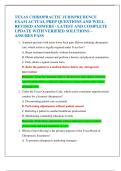
TEXAS CHIROPRACTIC JURISPRUDENCE
EXAM ACTUAL PREP QUESTIONS AND WELL
REVISED ANSWERS - LATEST AND COMPLETE
UPDATE WITH VERIFIED SOLUTIONS –
ASSURES PASS
1. A patient presents with acute lower back pain. Before initiating chiropractic
care, which action is legally required under Texas law?
A. Begin treatment immediately without documentation
B. Obtain informed consent and perform a history and physical examination
C. Only obtain a signed consent form
D. Refer the patient to a medical doctor before any chiropractic
intervention
Rationale: Texas law mandates that a chiropractor must obtain informed
consent and perform a clinical evaluation to ensure patient safety before
initiating care.
2. Under the Texas Occupations Code, which action constitutes unprofessional
conduct for a licensed chiropractor?
A. Documenting patient care accurately
B. Performing adjustments without patient consent
C. Referring a patient to another healthcare professional
D. Maintaining continuing education records
Rationale: Performing adjustments without informed consent violates
professional and legal standards of care.
3. Which of the following is the primary purpose of the Texas Board of
Chiropractic Examiners?
A. To promote chiropractic marketing strategies
, B. To protect public health and ensure professional compliance
C. To provide clinical care for underserved communities
D. To conduct basic science research in chiropractic
Rationale: The Board exists to regulate and oversee chiropractors to ensure
public safety and professional adherence to the law.
4. Which of the following is a requirement for licensure as a chiropractor in
Texas?
A. Completion of a 2-year chiropractic program
B. Residency in Texas for at least 5 years
C. Graduation from an accredited chiropractic college and passage of
board exams
D. Membership in a professional chiropractic association
Rationale: Texas requires graduation from an accredited chiropractic
program and successful completion of national and state examinations for
licensure.
5. A patient refuses treatment after a full explanation of risks and benefits. The
chiropractor should:
A. Coerce the patient to accept treatment
B. Begin treatment regardless
C. Respect the refusal and document the decision
D. Notify law enforcement
Rationale: Patient autonomy is legally protected, and refusal must be
respected and documented.
6. Which ethical principle is primarily involved when a chiropractor ensures
treatment is in the patient’s best interest and avoids harm?
A. Autonomy
B. Justice
, C. Beneficence
D. Confidentiality
Rationale: Beneficence requires the practitioner to act in the patient’s best
interest and minimize harm.
7. A patient presents with numbness, weakness, and urinary incontinence.
According to Texas standard of care, the chiropractor should:
A. Begin spinal adjustments immediately
B. Prescribe physical therapy without referral
C. Refer urgently to a medical doctor or emergency services
D. Monitor symptoms over several visits
Rationale: These are red-flag neurological signs; immediate referral is
required to avoid serious harm.
8. When documenting patient records in Texas, which statement is TRUE?
A. Records may be destroyed after one year
B. Accurate, complete, and timely documentation is required by law
C. Only subjective notes are legally necessary
D. Handwritten records are prohibited
Rationale: The Texas Board requires complete and accurate records for
legal compliance and patient safety.
9. Which of the following is considered a therapeutic procedure under Texas
chiropractic law?
A. Surgical decompression
B. Prescribing opioids
C. Spinal manipulation
D. Radiologic surgery
Rationale: Spinal manipulation is the core therapeutic intervention legally
allowed for chiropractors.
, 10.According to Texas regulations, how often must a chiropractor renew their
license?
A. Every year
B. Every three years
C. Every two years
D. Every five years
Rationale: Texas requires chiropractors to renew their license biennially
and meet continuing education requirements.
11.Which of the following actions could result in disciplinary action by the
Texas Board of Chiropractic Examiners?
A. Providing evidence-based care
B. Maintaining patient confidentiality
C. Accurate billing
D. Practicing while impaired by drugs or alcohol
Rationale: Practicing while impaired is considered unethical and unsafe,
leading to disciplinary action.
12.A chiropractor in Texas uses an unapproved device for spinal traction. This
is:
A. Acceptable if the patient consents
B. Legal if used off-label
C. Considered unprofessional conduct and a violation of state law
D. Encouraged as innovation
Rationale: Only approved and standard methods are legally permitted;
using unapproved devices can lead to sanctions.
13.A chiropractor is asked to write a letter stating a patient can return to work.
What is required?
A. Copying the employer’s requested text
EXAM ACTUAL PREP QUESTIONS AND WELL
REVISED ANSWERS - LATEST AND COMPLETE
UPDATE WITH VERIFIED SOLUTIONS –
ASSURES PASS
1. A patient presents with acute lower back pain. Before initiating chiropractic
care, which action is legally required under Texas law?
A. Begin treatment immediately without documentation
B. Obtain informed consent and perform a history and physical examination
C. Only obtain a signed consent form
D. Refer the patient to a medical doctor before any chiropractic
intervention
Rationale: Texas law mandates that a chiropractor must obtain informed
consent and perform a clinical evaluation to ensure patient safety before
initiating care.
2. Under the Texas Occupations Code, which action constitutes unprofessional
conduct for a licensed chiropractor?
A. Documenting patient care accurately
B. Performing adjustments without patient consent
C. Referring a patient to another healthcare professional
D. Maintaining continuing education records
Rationale: Performing adjustments without informed consent violates
professional and legal standards of care.
3. Which of the following is the primary purpose of the Texas Board of
Chiropractic Examiners?
A. To promote chiropractic marketing strategies
, B. To protect public health and ensure professional compliance
C. To provide clinical care for underserved communities
D. To conduct basic science research in chiropractic
Rationale: The Board exists to regulate and oversee chiropractors to ensure
public safety and professional adherence to the law.
4. Which of the following is a requirement for licensure as a chiropractor in
Texas?
A. Completion of a 2-year chiropractic program
B. Residency in Texas for at least 5 years
C. Graduation from an accredited chiropractic college and passage of
board exams
D. Membership in a professional chiropractic association
Rationale: Texas requires graduation from an accredited chiropractic
program and successful completion of national and state examinations for
licensure.
5. A patient refuses treatment after a full explanation of risks and benefits. The
chiropractor should:
A. Coerce the patient to accept treatment
B. Begin treatment regardless
C. Respect the refusal and document the decision
D. Notify law enforcement
Rationale: Patient autonomy is legally protected, and refusal must be
respected and documented.
6. Which ethical principle is primarily involved when a chiropractor ensures
treatment is in the patient’s best interest and avoids harm?
A. Autonomy
B. Justice
, C. Beneficence
D. Confidentiality
Rationale: Beneficence requires the practitioner to act in the patient’s best
interest and minimize harm.
7. A patient presents with numbness, weakness, and urinary incontinence.
According to Texas standard of care, the chiropractor should:
A. Begin spinal adjustments immediately
B. Prescribe physical therapy without referral
C. Refer urgently to a medical doctor or emergency services
D. Monitor symptoms over several visits
Rationale: These are red-flag neurological signs; immediate referral is
required to avoid serious harm.
8. When documenting patient records in Texas, which statement is TRUE?
A. Records may be destroyed after one year
B. Accurate, complete, and timely documentation is required by law
C. Only subjective notes are legally necessary
D. Handwritten records are prohibited
Rationale: The Texas Board requires complete and accurate records for
legal compliance and patient safety.
9. Which of the following is considered a therapeutic procedure under Texas
chiropractic law?
A. Surgical decompression
B. Prescribing opioids
C. Spinal manipulation
D. Radiologic surgery
Rationale: Spinal manipulation is the core therapeutic intervention legally
allowed for chiropractors.
, 10.According to Texas regulations, how often must a chiropractor renew their
license?
A. Every year
B. Every three years
C. Every two years
D. Every five years
Rationale: Texas requires chiropractors to renew their license biennially
and meet continuing education requirements.
11.Which of the following actions could result in disciplinary action by the
Texas Board of Chiropractic Examiners?
A. Providing evidence-based care
B. Maintaining patient confidentiality
C. Accurate billing
D. Practicing while impaired by drugs or alcohol
Rationale: Practicing while impaired is considered unethical and unsafe,
leading to disciplinary action.
12.A chiropractor in Texas uses an unapproved device for spinal traction. This
is:
A. Acceptable if the patient consents
B. Legal if used off-label
C. Considered unprofessional conduct and a violation of state law
D. Encouraged as innovation
Rationale: Only approved and standard methods are legally permitted;
using unapproved devices can lead to sanctions.
13.A chiropractor is asked to write a letter stating a patient can return to work.
What is required?
A. Copying the employer’s requested text


