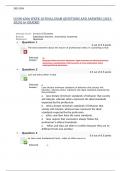
A Psychiatric Mental Health Nurse Practitioner (PMHNP) working in a community mental
health clinic is assessing a 25-year-old patient with a history of bipolar disorder who presents
with manic symptoms, including increased energy, decreased need for sleep, racing thoughts, and
impulsivity. The patient is not currently taking any medication for their condition. The PMHNP
confirms the diagnosis of acute mania. What is the most appropriate initial intervention of the
PMHNP?
A.Initiate Lithium therapy immediately
B.Refer the patient to a psychotherapist for cognitive-behavioral therapy (CBT)
C.Prescribe Fluoxetine
D.Prescribe a low-dose antipsychotic medication like Olanzapine (Zyprexa)
Correct answer: Prescribe a low-dose antipsychotic medication like Olanzapine (Zyprexa):
Rationale: This option is generally considered the most appropriate initial intervention for a patient
with acute mania. Antipsychotic medications like Olanzapine can help rapidly reduce the severity of
manic symptoms, such as impulsivity, racing thoughts, and agitation. They can provide quick relief and
help the patient regain some stability. However, it's essential to monitor for potential side effects and
adjust the medication as needed.
Initiate Lithium therapy immediately. Lithium is a mood-stabilizing medication commonly used to treat
bipolar disorder, particularly for managing manic episodes. It can help stabilize mood and reduce the
severity of manic symptoms. However, initiating Lithium therapy immediately may not be the best
option as it typically takes some time for Lithium to reach therapeutic levels in the blood. Additionally,
the patient's renal function and overall health should be assessed before starting Lithium, as it requires
close monitoring and can have potential side effects.
Refer the patient to a psychotherapist for cognitive-behavioral therapy (CBT). Psychotherapy,
including cognitive-behavioral therapy (CBT), can be an essential component of bipolar disorder
treatment. While it may not be the most appropriate initial intervention for acute mania, it is a valuable
long-term strategy to address underlying issues, improve coping skills, and prevent future episodes.
However, in a case of acute mania, psychotherapy alone may not provide rapid relief from severe
manic symptoms
Prescribe Fluoxetine. Fluoxetine is a selective serotonin reuptake inhibitor (SSRI) commonly used to
treat depression and some anxiety disorders. It is generally not recommended as a first-line treatment
for acute mania in bipolar disorder. In fact, it can potentially exacerbate manic symptoms and is not
appropriate as an initial intervention for this patient.
,A 34-year-old female patient with a history of major depressive disorder (MDD) presents to your
psychiatric clinic. She has been on a stable dose of a selective serotonin reuptake inhibitor (SSRI)
for the past 6 months and reports an improvement in mood and functioning. However, in the last
two weeks, she has been experiencing increased sadness, insomnia, and difficulty concentrating.
She has no history of bipolar disorder or substance use disorder. Physical examination and
laboratory tests are unremarkable. Which of the following is the most appropriate initial action
for the PMHNP?
A.Increase the dose of the current SSRI.
B.Switch to a different class of antidepressant.
C.Add a low-dose atypical antipsychotic.
D.Assess for potential psychosocial stressors.
The most appropriate initial action in this case is to assess for potential psychosocial stressors. While
the patient denies any recent stressors, it is essential to explore this further, as psychosocial factors can
contribute to the worsening of depressive symptoms. It is crucial to rule out any underlying stressors
before making medication changes.
Increasing the dose of the current SSRI should be considered if there is a partial response to treatment,
but in this case, the patient's symptoms are worsening despite being on a stable dose. This option is not
the most appropriate initial action.
Switching to a different class of antidepressant may be warranted if there is a lack of response or
worsening of symptoms on the current medication. However, before making such a change, other
potential causes of symptom exacerbation should be explored.
Adding a low-dose atypical antipsychotic, such as aripiprazole, to the current treatment regimen is a
reasonable option in cases of treatment-resistant depression or when there are features suggestive of
bipolar disorder. However, there is no indication of manic or hypomanic symptoms in this case, and
adding an antipsychotic should not be the initial action.
You are a psychiatric mental health nurse practitioner (PMHNP) working in a pain management
clinic. Your patient, Tom, a 45-year-old man, has been prescribed oxycodone (OxyContin, 10 mg
q12h) for chronic lower back pain for the past five years. Tom reports that he used to feel relief
with one tablet, but now he requires three tablets to achieve the same level of pain relief. What
process might explain Tom's increased need for opioids?
A.Kindling
B.Addiction
C.Tolerance
D.Potency
,The correct answer is C. Tolerance. Tolerance is a process in which an individual requires higher doses
of a medication over time to achieve the same therapeutic effect. In Tom's case, his need for an
increased dosage of oxycodone to achieve the same level of pain relief he initially experienced suggests
that he may be developing tolerance to the medication. This is a common phenomenon in long-term
opioid therapy for chronic pain management.
A. Kindling: Kindling is a process where repeated withdrawal from a substance leads to increased
sensitivity to its effects. It is more commonly associated with substances like alcohol and
benzodiazepines. Tom's situation is more indicative of tolerance rather than kindling.
B. Addiction: Addiction involves psychological and physical dependence on a substance, characterized
by compulsive use, loss of control, and continued use despite negative consequences. While Tom may
have developed some level of dependence due to long-term opioid use, his primary issue appears to be
tolerance rather than addiction based on the provided information.
D. Potency: Potency refers to the strength or concentration of a medication. It does not explain why
Tom would require an increased dosage of oxycodone over time, as the potency of his prescribed dose
remains constant.
You are a psychiatric mental health nurse practitioner (PMHNP) working in a pediatric clinic.
Sarah, a 7-year-old girl, has been referred to you due to concerns about her behavior at school
and home. Her teacher reports that Sarah frequently interrupts others, has difficulty staying
seated, and often seems forgetful and disorganized. Her parents also note that she is often
restless, struggles to follow instructions, and frequently loses her belongings. In the assessment
process for ADHD, which of the following option is an important consideration?
A.Symptoms occurring only in one setting (e.g., school) do not support an ADHD diagnosis.
B.Symptoms of inattention are typically not seen in children with ADHD.
C.ADHD can be definitively diagnosed through a single behavioral assessment.
D.The presence of symptoms in multiple settings (e.g., home and school) is an essential criterion.
Correct Answer: D. The presence of symptoms in multiple settings (e.g., home and school) is an
essential criterion.One of the key criteria for diagnosing ADHD is the presence of symptoms in
multiple settings, such as both at home and school. This criterion helps differentiate ADHD from
situational behaviors and provides a more accurate picture of the child's functioning.
In the assessment of ADHD, it is important to consider the presence of symptoms in multiple settings to
make an accurate diagnosis. Gathering information from different environments and sources helps
ensure that the observed behaviors are consistent and not solely attributable to a specific context or
situation.
A. Symptoms occurring only in one setting (e.g., school) do not support an ADHD diagnosis:
, This statement is not accurate. The presence of symptoms in a single setting, such as school, can indeed
support an ADHD diagnosis. ADHD symptoms can manifest differently in various environments, and it
is not necessary for them to be present in every setting for a diagnosis.
B. Symptoms of inattention are typically not seen in children with ADHD:
This statement is incorrect. Inattention is one of the core symptoms of ADHD. ADHD is categorized
into two main subtypes: predominantly inattentive presentation and predominantly hyperactive-
impulsive presentation. A child with ADHD may exhibit symptoms of inattention, hyperactivity, or
impulsivity, or a combination of these.
C. ADHD can be definitively diagnosed through a single behavioral assessment:
This statement is not accurate. A comprehensive ADHD diagnosis requires a thorough evaluation
involving multiple sources of information, including observations, interviews, and rating scales. A
single behavioral assessment is not sufficient to definitively diagnose ADHD.
You are a psychiatric mental health nurse practitioner (PMHNP) working in an outpatient
pediatric clinic. Sarah's parents have brought her for an evaluation due to concerns about her
behavior. Sarah is an 8-year-old girl who frequently exhibits symptoms such as difficulty paying
attention, forgetfulness, impulsivity, and frequent restlessness. You are considering various
diagnoses. Which diagnosis should you prioritize based on the provided information?
A.Attention-Deficit/Hyperactivity Disorder (ADHD)
B.Conduct Disorder
C.Generalized Anxiety Disorder (GAD)
D.Autism Spectrum Disorder (ASD)
Correct Answer: A. Attention-Deficit/Hyperactivity Disorder (ADHD). The symptoms described,
including difficulty paying attention, forgetfulness, impulsivity, and restlessness, align with the
presentation of ADHD. ADHD should be a priority diagnosis to investigate further. Based on the
presented symptoms of difficulty paying attention, forgetfulness, impulsivity, and restlessness, ADHD
is the most appropriate diagnosis to prioritize. However, it is important for the PMHNP to conduct a
comprehensive assessment, rule out other possible conditions, and consider comorbidities to arrive at a
definitive diagnosis and develop an appropriate treatment plan for Sarah.
B. Conduct Disorder: Conduct Disorder is characterized by a persistent pattern of behavior that violates
the rights of others or societal norms. While disruptive behavior may be present in children with
ADHD, it does not take precedence over the core symptoms described.
C. Generalized Anxiety Disorder (GAD): While anxiety can coexist with ADHD, the primary
symptoms mentioned (difficulty paying attention, forgetfulness, impulsivity, and restlessness) are not
consistent with a primary diagnosis of GAD. It is essential to consider comorbid conditions, but ADHD
should be prioritized based on the provided information.
health clinic is assessing a 25-year-old patient with a history of bipolar disorder who presents
with manic symptoms, including increased energy, decreased need for sleep, racing thoughts, and
impulsivity. The patient is not currently taking any medication for their condition. The PMHNP
confirms the diagnosis of acute mania. What is the most appropriate initial intervention of the
PMHNP?
A.Initiate Lithium therapy immediately
B.Refer the patient to a psychotherapist for cognitive-behavioral therapy (CBT)
C.Prescribe Fluoxetine
D.Prescribe a low-dose antipsychotic medication like Olanzapine (Zyprexa)
Correct answer: Prescribe a low-dose antipsychotic medication like Olanzapine (Zyprexa):
Rationale: This option is generally considered the most appropriate initial intervention for a patient
with acute mania. Antipsychotic medications like Olanzapine can help rapidly reduce the severity of
manic symptoms, such as impulsivity, racing thoughts, and agitation. They can provide quick relief and
help the patient regain some stability. However, it's essential to monitor for potential side effects and
adjust the medication as needed.
Initiate Lithium therapy immediately. Lithium is a mood-stabilizing medication commonly used to treat
bipolar disorder, particularly for managing manic episodes. It can help stabilize mood and reduce the
severity of manic symptoms. However, initiating Lithium therapy immediately may not be the best
option as it typically takes some time for Lithium to reach therapeutic levels in the blood. Additionally,
the patient's renal function and overall health should be assessed before starting Lithium, as it requires
close monitoring and can have potential side effects.
Refer the patient to a psychotherapist for cognitive-behavioral therapy (CBT). Psychotherapy,
including cognitive-behavioral therapy (CBT), can be an essential component of bipolar disorder
treatment. While it may not be the most appropriate initial intervention for acute mania, it is a valuable
long-term strategy to address underlying issues, improve coping skills, and prevent future episodes.
However, in a case of acute mania, psychotherapy alone may not provide rapid relief from severe
manic symptoms
Prescribe Fluoxetine. Fluoxetine is a selective serotonin reuptake inhibitor (SSRI) commonly used to
treat depression and some anxiety disorders. It is generally not recommended as a first-line treatment
for acute mania in bipolar disorder. In fact, it can potentially exacerbate manic symptoms and is not
appropriate as an initial intervention for this patient.
,A 34-year-old female patient with a history of major depressive disorder (MDD) presents to your
psychiatric clinic. She has been on a stable dose of a selective serotonin reuptake inhibitor (SSRI)
for the past 6 months and reports an improvement in mood and functioning. However, in the last
two weeks, she has been experiencing increased sadness, insomnia, and difficulty concentrating.
She has no history of bipolar disorder or substance use disorder. Physical examination and
laboratory tests are unremarkable. Which of the following is the most appropriate initial action
for the PMHNP?
A.Increase the dose of the current SSRI.
B.Switch to a different class of antidepressant.
C.Add a low-dose atypical antipsychotic.
D.Assess for potential psychosocial stressors.
The most appropriate initial action in this case is to assess for potential psychosocial stressors. While
the patient denies any recent stressors, it is essential to explore this further, as psychosocial factors can
contribute to the worsening of depressive symptoms. It is crucial to rule out any underlying stressors
before making medication changes.
Increasing the dose of the current SSRI should be considered if there is a partial response to treatment,
but in this case, the patient's symptoms are worsening despite being on a stable dose. This option is not
the most appropriate initial action.
Switching to a different class of antidepressant may be warranted if there is a lack of response or
worsening of symptoms on the current medication. However, before making such a change, other
potential causes of symptom exacerbation should be explored.
Adding a low-dose atypical antipsychotic, such as aripiprazole, to the current treatment regimen is a
reasonable option in cases of treatment-resistant depression or when there are features suggestive of
bipolar disorder. However, there is no indication of manic or hypomanic symptoms in this case, and
adding an antipsychotic should not be the initial action.
You are a psychiatric mental health nurse practitioner (PMHNP) working in a pain management
clinic. Your patient, Tom, a 45-year-old man, has been prescribed oxycodone (OxyContin, 10 mg
q12h) for chronic lower back pain for the past five years. Tom reports that he used to feel relief
with one tablet, but now he requires three tablets to achieve the same level of pain relief. What
process might explain Tom's increased need for opioids?
A.Kindling
B.Addiction
C.Tolerance
D.Potency
,The correct answer is C. Tolerance. Tolerance is a process in which an individual requires higher doses
of a medication over time to achieve the same therapeutic effect. In Tom's case, his need for an
increased dosage of oxycodone to achieve the same level of pain relief he initially experienced suggests
that he may be developing tolerance to the medication. This is a common phenomenon in long-term
opioid therapy for chronic pain management.
A. Kindling: Kindling is a process where repeated withdrawal from a substance leads to increased
sensitivity to its effects. It is more commonly associated with substances like alcohol and
benzodiazepines. Tom's situation is more indicative of tolerance rather than kindling.
B. Addiction: Addiction involves psychological and physical dependence on a substance, characterized
by compulsive use, loss of control, and continued use despite negative consequences. While Tom may
have developed some level of dependence due to long-term opioid use, his primary issue appears to be
tolerance rather than addiction based on the provided information.
D. Potency: Potency refers to the strength or concentration of a medication. It does not explain why
Tom would require an increased dosage of oxycodone over time, as the potency of his prescribed dose
remains constant.
You are a psychiatric mental health nurse practitioner (PMHNP) working in a pediatric clinic.
Sarah, a 7-year-old girl, has been referred to you due to concerns about her behavior at school
and home. Her teacher reports that Sarah frequently interrupts others, has difficulty staying
seated, and often seems forgetful and disorganized. Her parents also note that she is often
restless, struggles to follow instructions, and frequently loses her belongings. In the assessment
process for ADHD, which of the following option is an important consideration?
A.Symptoms occurring only in one setting (e.g., school) do not support an ADHD diagnosis.
B.Symptoms of inattention are typically not seen in children with ADHD.
C.ADHD can be definitively diagnosed through a single behavioral assessment.
D.The presence of symptoms in multiple settings (e.g., home and school) is an essential criterion.
Correct Answer: D. The presence of symptoms in multiple settings (e.g., home and school) is an
essential criterion.One of the key criteria for diagnosing ADHD is the presence of symptoms in
multiple settings, such as both at home and school. This criterion helps differentiate ADHD from
situational behaviors and provides a more accurate picture of the child's functioning.
In the assessment of ADHD, it is important to consider the presence of symptoms in multiple settings to
make an accurate diagnosis. Gathering information from different environments and sources helps
ensure that the observed behaviors are consistent and not solely attributable to a specific context or
situation.
A. Symptoms occurring only in one setting (e.g., school) do not support an ADHD diagnosis:
, This statement is not accurate. The presence of symptoms in a single setting, such as school, can indeed
support an ADHD diagnosis. ADHD symptoms can manifest differently in various environments, and it
is not necessary for them to be present in every setting for a diagnosis.
B. Symptoms of inattention are typically not seen in children with ADHD:
This statement is incorrect. Inattention is one of the core symptoms of ADHD. ADHD is categorized
into two main subtypes: predominantly inattentive presentation and predominantly hyperactive-
impulsive presentation. A child with ADHD may exhibit symptoms of inattention, hyperactivity, or
impulsivity, or a combination of these.
C. ADHD can be definitively diagnosed through a single behavioral assessment:
This statement is not accurate. A comprehensive ADHD diagnosis requires a thorough evaluation
involving multiple sources of information, including observations, interviews, and rating scales. A
single behavioral assessment is not sufficient to definitively diagnose ADHD.
You are a psychiatric mental health nurse practitioner (PMHNP) working in an outpatient
pediatric clinic. Sarah's parents have brought her for an evaluation due to concerns about her
behavior. Sarah is an 8-year-old girl who frequently exhibits symptoms such as difficulty paying
attention, forgetfulness, impulsivity, and frequent restlessness. You are considering various
diagnoses. Which diagnosis should you prioritize based on the provided information?
A.Attention-Deficit/Hyperactivity Disorder (ADHD)
B.Conduct Disorder
C.Generalized Anxiety Disorder (GAD)
D.Autism Spectrum Disorder (ASD)
Correct Answer: A. Attention-Deficit/Hyperactivity Disorder (ADHD). The symptoms described,
including difficulty paying attention, forgetfulness, impulsivity, and restlessness, align with the
presentation of ADHD. ADHD should be a priority diagnosis to investigate further. Based on the
presented symptoms of difficulty paying attention, forgetfulness, impulsivity, and restlessness, ADHD
is the most appropriate diagnosis to prioritize. However, it is important for the PMHNP to conduct a
comprehensive assessment, rule out other possible conditions, and consider comorbidities to arrive at a
definitive diagnosis and develop an appropriate treatment plan for Sarah.
B. Conduct Disorder: Conduct Disorder is characterized by a persistent pattern of behavior that violates
the rights of others or societal norms. While disruptive behavior may be present in children with
ADHD, it does not take precedence over the core symptoms described.
C. Generalized Anxiety Disorder (GAD): While anxiety can coexist with ADHD, the primary
symptoms mentioned (difficulty paying attention, forgetfulness, impulsivity, and restlessness) are not
consistent with a primary diagnosis of GAD. It is essential to consider comorbid conditions, but ADHD
should be prioritized based on the provided information.