NBDHE Questions and Answers with
graphics
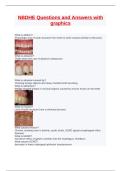
What is attrition?
Physiologic loss of tooth structure from tooth to tooth contact (Similar to Bruxism)
What is abrasion?
Teeth wear from use of abrasive substances
Brainpower
What is abrasion caused by?
Chewing foreign objects and heavy handed tooth brushing
What is abfraction?
Wedge shaped breaks in cervical regions caused by excess forces on the teeth
What is erosion?
Loss of tooth structure from a chemical process
What causes erosion?
Chronic vomiting seen in bulimia, acidic foods, GERD (gastro-esophageal reflux
disease)
What is GERD?
excessive reflux of gastric contents into the esophagus, heartburn
What causes GERD?
decrease in lower esphogeal sphincter tone/pressure
,What muscle will become more prominent if a patient engages in bruxism?
TMJ (Temporomandibular Joint)
What is supernumerary teeth also known as?
Hyperdontia
What is hyperdontia?
excessive number of teeth
What is the most common form of hyperdontia?
mesiodens
Where can mesiodens be found on the teeth?
Between #8 and #9 (maxillary midline) (MOST COMMON)
What is anodontia?
complete absence of teeth
What is hypodontia?
partial anodontia: one or several teeth are missing; less than normal teeth
,What kind of teeth is hypodontia more common with?
conical-shaped teeth
What is ectodermal dysplasia?
poor development of ectodermal structures
What is oligodontia?
having 6 or more congenitally missing teeth
Which teeth are common with oligodontia?
3rd molars
What is microdontia?
small teeth
What tooth is common with microdontia?
Maxillary lateral incisor
What is macrodontia?
large teeth (rare)
What is taurodontism?
*bull like tooth*, pulp chamber is enlarged, with the furcation located near the apex,
no constriction of tooth at CEJ. No treatment.
, What syndrome is taurodontism commonly seen in?
Down Syndrome (Trisomy 21)
What is amelogenesis imperfecta?
genetic disorder that has defective enamel formation
What is dentinogenesis imperfecta?
Disturbance of dentin formation
*consists of opalescent teeth that have unmineralized dentin, obliterated pulp
chambers, and shortened roots with bulbous crowns*
What is a diastema?
hereditary space between two adjacent teeth
What is internal resorption?
May occur after tooth trauma
If in pulp chamber tooth may look pink
Treatment: endodontic therapy
What is external resorption?
Nonreversible resorption of the tooth structure, beginning at the outside of the tooth
graphics
What is attrition?
Physiologic loss of tooth structure from tooth to tooth contact (Similar to Bruxism)
What is abrasion?
Teeth wear from use of abrasive substances
Brainpower
What is abrasion caused by?
Chewing foreign objects and heavy handed tooth brushing
What is abfraction?
Wedge shaped breaks in cervical regions caused by excess forces on the teeth
What is erosion?
Loss of tooth structure from a chemical process
What causes erosion?
Chronic vomiting seen in bulimia, acidic foods, GERD (gastro-esophageal reflux
disease)
What is GERD?
excessive reflux of gastric contents into the esophagus, heartburn
What causes GERD?
decrease in lower esphogeal sphincter tone/pressure
,What muscle will become more prominent if a patient engages in bruxism?
TMJ (Temporomandibular Joint)
What is supernumerary teeth also known as?
Hyperdontia
What is hyperdontia?
excessive number of teeth
What is the most common form of hyperdontia?
mesiodens
Where can mesiodens be found on the teeth?
Between #8 and #9 (maxillary midline) (MOST COMMON)
What is anodontia?
complete absence of teeth
What is hypodontia?
partial anodontia: one or several teeth are missing; less than normal teeth
,What kind of teeth is hypodontia more common with?
conical-shaped teeth
What is ectodermal dysplasia?
poor development of ectodermal structures
What is oligodontia?
having 6 or more congenitally missing teeth
Which teeth are common with oligodontia?
3rd molars
What is microdontia?
small teeth
What tooth is common with microdontia?
Maxillary lateral incisor
What is macrodontia?
large teeth (rare)
What is taurodontism?
*bull like tooth*, pulp chamber is enlarged, with the furcation located near the apex,
no constriction of tooth at CEJ. No treatment.
, What syndrome is taurodontism commonly seen in?
Down Syndrome (Trisomy 21)
What is amelogenesis imperfecta?
genetic disorder that has defective enamel formation
What is dentinogenesis imperfecta?
Disturbance of dentin formation
*consists of opalescent teeth that have unmineralized dentin, obliterated pulp
chambers, and shortened roots with bulbous crowns*
What is a diastema?
hereditary space between two adjacent teeth
What is internal resorption?
May occur after tooth trauma
If in pulp chamber tooth may look pink
Treatment: endodontic therapy
What is external resorption?
Nonreversible resorption of the tooth structure, beginning at the outside of the tooth