

Exam (elaborations)
HOSA Biotechnology Final Exam Guide 2025: Study Tips & Practice Test
NewPrepare for your HOSA Biotechnology Final Exam in 2025. Get a breakdown of the test format, key topics like PCR and ethics, and a study plan for competitors.
 BESTSCORESS
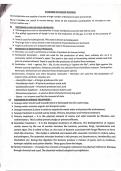
Class notes
Notes
The notes written by my professor
 adyasham2007

Summary
Biotechnology class 12th hand mand
Genome technology and engineering involve tools and techniques to study, modify, and manipulate genetic material. Key advancements include sequencing technologies like next-generation sequencing (NGS) for decoding DNA and RNA, and genome editing tools like CRISPR-Cas9, enabling precise genetic modifications. These technologies are revolutionizing medicine, agriculture, and biotechnology by facilitating gene therapy, disease modeling, and crop improvement. Synthetic biology integrates genome engi...
manishshaw929
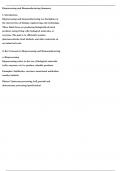
Summary
Biotechnology class 12th hand mand
Bioprocessing and biomanufacturing involve using biological systems, such as cells or enzymes, to produce valuable products. Bioprocessing encompasses the development and optimization of processes for the production of biopharmaceuticals, biofuels, food, and industrial enzymes. Biomanufacturing applies these processes on a larger scale to create commercial products. Key steps include upstream processes (e.g., cell cultivation, fermentation) and downstream processes (e.g., purification, formulati...
manishshaw929

Summary
Biotechnology Entrepreneurship class 12th
Entrepreneurship is the process of identifying, developing, and managing a business venture to generate profit while addressing market needs. Entrepreneurs create innovative products, services, or solutions, taking on financial and operational risks to bring their ideas to life. Key aspects include creativity, strategic planning, resource management, and adaptability. Entrepreneurship drives economic growth by fostering innovation, creating jobs, and introducing new industries. Successful entrep...
manishshaw929

Summary
Biotechnology class 12th hand mand
Stem cell culture biotechnology involves growing and maintaining stem cells in controlled laboratory environments for research and therapeutic purposes. Stem cells, including embryonic, adult, and induced pluripotent stem cells (iPSCs), can self-renew and differentiate into specialized cell types. Culturing requires precise conditions, including specific growth media, temperature, humidity, and CO₂ levels, to ensure cell viability and functionality. Advances in this field enable the developmen...
manishshaw929

Summary
Biotechnology class 12th hand mand
Recombinant DNA (rDNA) technology involves combining DNA from different sources to create novel genetic material. Its applications are vast, spanning medicine, agriculture, and industry. In medicine, rDNA technology produces biopharmaceuticals like insulin, monoclonal antibodies, and vaccines. It enables gene therapy, disease diagnosis, and the development of personalized treatments. In agriculture, it is used to create genetically modified crops with traits like pest resistance, improved yield,...
manishshaw929

Summary
Biotechnology class 12th hand mand
Plant tissue culture biotechnology is the in vitro cultivation of plant cells, tissues, or organs under sterile and controlled conditions on nutrient media. It enables rapid propagation of plants, genetic modification, and preservation of rare or endangered species. Techniques include micropropagation, callus culture, and somatic embryogenesis. This technology is widely used in agriculture, horticulture, and pharmaceutical industries for producing disease-free plants, improving crop traits, and ...
manishshaw929

Summary
Biotechnology class 12th Host- vector system
A host-vector system is a fundamental tool in biotechnology for gene cloning and genetic engineering. It involves introducing a foreign gene into a vector (such as a plasmid or virus), which then transfers the gene into a host cell (commonly bacteria, yeast, or mammalian cells). The host cell replicates, producing multiple copies of the inserted gene or its protein product. This system is widely used in medicine, agriculture, and industrial biotechnology for applications like recombinant protein...
manishshaw929
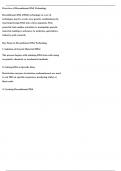
Summary
Recombinant DNA Technology Biotechnology class 12th
Recombinant DNA technology is a biotechnology method used to manipulate genetic material by combining DNA from different sources. It involves isolating a gene of interest, inserting it into a vector (such as a plasmid), and introducing it into a host organism, where it is expressed. This technology is widely used in medicine, agriculture, and research, enabling the production of genetically modified organisms (GMOs), pharmaceuticals like insulin, and gene therapy treatments. It has revolutionize...
manishshaw929
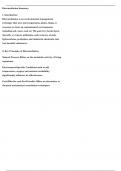
Summary
Bio remediation biotechnology
Bioremediation is a natural, eco-friendly process that uses microorganisms, plants, or enzymes to break down or neutralize pollutants in the environment. It is commonly applied to clean up contaminated soil, water, and air, addressing issues like oil spills, heavy metals, and industrial waste. Microbes degrade harmful substances into non-toxic compounds, while certain plants absorb and store contaminants. Bioremediation is cost-effective, sustainable, and minimally invasive compared to tradition...
manishshaw929
Summary
Biotechnology class 12th Gene cloning
Gene cloning is a biotechnology technique used to create identical copies of a specific gene. It involves isolating a target gene, inserting it into a vector (like a plasmid), and introducing it into a host cell (usually bacteria). The host cell replicates, producing multiple copies of the gene. This method is widely used in medicine, agriculture, and research, enabling the production of insulin, genetically modified crops, and gene therapy treatments. Gene cloning allows scientists to study gen...
manishshaw929
Summary
Class 12th Biotechnology
Animal cell culture biotechnology involves the in vitro cultivation of animal cells under controlled conditions for research, pharmaceutical, and industrial applications. Cells are grown in nutrient-rich media, maintaining specific temperature, pH, and gas conditions. This technology is used for vaccine production, monoclonal antibody generation, gene therapy, and recombinant protein synthesis. It also supports regenerative medicine, tissue engineering, and toxicity testing. Key types of culture...
manishshaw929

Summary
Recent innovation in biotechnology
Recent innovations in biotechnology are transforming various sectors, including healthcare, agriculture, and environmental conservation. In healthcare, advancements in personalized medicine and drug discovery are being propelled by artificial intelligence and big data analytics. In agriculture, Australia is emerging as a leader in ag-tech by integrating sensors, AI, and robotics to enhance farming efficiency and sustainability. Companies like Loam Bio are developing fungal spores to improve soil...
manishshaw929
Summary
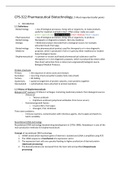
Summary for FA-CPS322 Biotechnology
Comprehensive yet detailed summary for FA-CPS322 Biotechnology
 jimzinkenjim