Lecture 12 16th March 2017
Neural Circuits
Memory Consolidation
The consolidation of long-term memories from hippocampus to neocortex
Consolidation:
Hypothetical process in which a memoryitem is transformed to a long-
term form.
(Memory is labile for a short time after acquisition and sensitive to e.g.
protein synthesis inhibition during this period but not later when the
memory considered to be consolidated.)
There are 2 forms of consolidation:
Synaptic Consolidation:
Post encoding transformation of information into a long-term form at
localnodes in the neural circuit that encodes the memory.
(Stimulus induced activation of intracellular signalling cascades, resulting
in posttranslational modifications, modification of gene expressions, and
synthesis of gene products that alter synaptic efficacy.)
Lasts for hours.
Systems consolidation
Post encoding reorganisation of long term memory over distributed brain
circuits
Lasts for days to years
Models:
TTM - Trace Transformation Model(Over time trace migrates to different brain
areas.)
MTM - Multiple Trace Model (Encoding in multiple locations.)
SAM – Schema Assimilation Model(Already existing information manipulated.)
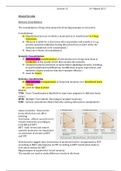
sham (controls) : lesion in the
brain which does not affect
learning
Part lesion - affects recent but not
remote memories according to
both SM and MTT
MTT- both recent and remote
episodic memories are dependent
on activation of circuits in HPC
and PFC
Both theories suggest that reactivation of memories lead to reorganization, BUT
according to SM it only happens in PFC according to MTT reactivation leads to
new traces within the HPC
Hippocampus is required for recent memory
The models are used to study different circuits in the brain
Neural Circuits
Memory Consolidation
The consolidation of long-term memories from hippocampus to neocortex
Consolidation:
Hypothetical process in which a memoryitem is transformed to a long-
term form.
(Memory is labile for a short time after acquisition and sensitive to e.g.
protein synthesis inhibition during this period but not later when the
memory considered to be consolidated.)
There are 2 forms of consolidation:
Synaptic Consolidation:
Post encoding transformation of information into a long-term form at
localnodes in the neural circuit that encodes the memory.
(Stimulus induced activation of intracellular signalling cascades, resulting
in posttranslational modifications, modification of gene expressions, and
synthesis of gene products that alter synaptic efficacy.)
Lasts for hours.
Systems consolidation
Post encoding reorganisation of long term memory over distributed brain
circuits
Lasts for days to years
Models:
TTM - Trace Transformation Model(Over time trace migrates to different brain
areas.)
MTM - Multiple Trace Model (Encoding in multiple locations.)
SAM – Schema Assimilation Model(Already existing information manipulated.)
sham (controls) : lesion in the
brain which does not affect
learning
Part lesion - affects recent but not
remote memories according to
both SM and MTT
MTT- both recent and remote
episodic memories are dependent
on activation of circuits in HPC
and PFC
Both theories suggest that reactivation of memories lead to reorganization, BUT
according to SM it only happens in PFC according to MTT reactivation leads to
new traces within the HPC
Hippocampus is required for recent memory
The models are used to study different circuits in the brain