

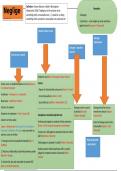
Definition = Baron Alderson in Blyth v Birmingham
Neglige Waterworks (1856) "Negligence is the omission to do
something which a reasonable man, [...] would do, or doing - Damages;
Remedies:
nce something which a prudent or reasonable man would not do."
- Injunctions – court weighs up social usefulness
against harm (Kennaway v Thompson)
Breach of duty of care
Damage :
Remoteness
Damage : Causation
(but for)
Duty of care is owed
Objective test (Blyth v Birmingham Water Works)
Similar cases or established duties of care (Robinson v Factors:
CC of West Yorkshire): - Degree of risk/potential seriousness (Bolton v Stone)
Healthcare - Montgomery v Lanarkshire - Cost of precautions (Latimer v AEC)
Road users - Nettleship v Weston - Social utility of act (Watt v Hertfordshire CC)
Teachers to students -------------------------------------------------------------------- Damage must be caused Damage should be not too
by breach (Barnett v remote from breach (Wagon
Employers to employees - Paris v Stepney BC Exceptions to standard objective test: Chelsea Hospital) Mound No1)
Caterers to those eating Professionals judged on standard of their profession Extent of damage need not be
Caparo v Dickman test (developed from Donoghue v (Bolam v Frien Hospital Management Committee) foreseeable (Hughes v Lord
Stevenson’s Neighbour Principle) only used when no Advocate)
Trainees of a skill judged on standard of person of that
previous cases are similar: skill (Nettleship v Western)
1. Damage must be reasonable foreseeable (Kent v Think skull (smith
Child judged on standard of a child (Mullin v Richards).
Griffiths) v leech brain)
Ordinary person without particular skill in a task is
2. Must be a relationship of proximity between parties judged to competent person of that task (Wells v
(Bourhill v Young) Cooper)
3. Must be fair, just and reasonable to impose DOC
(Hill v CC of West Yorkshire)
Neglige Waterworks (1856) "Negligence is the omission to do
something which a reasonable man, [...] would do, or doing - Damages;
Remedies:
nce something which a prudent or reasonable man would not do."
- Injunctions – court weighs up social usefulness
against harm (Kennaway v Thompson)
Breach of duty of care
Damage :
Remoteness
Damage : Causation
(but for)
Duty of care is owed
Objective test (Blyth v Birmingham Water Works)
Similar cases or established duties of care (Robinson v Factors:
CC of West Yorkshire): - Degree of risk/potential seriousness (Bolton v Stone)
Healthcare - Montgomery v Lanarkshire - Cost of precautions (Latimer v AEC)
Road users - Nettleship v Weston - Social utility of act (Watt v Hertfordshire CC)
Teachers to students -------------------------------------------------------------------- Damage must be caused Damage should be not too
by breach (Barnett v remote from breach (Wagon
Employers to employees - Paris v Stepney BC Exceptions to standard objective test: Chelsea Hospital) Mound No1)
Caterers to those eating Professionals judged on standard of their profession Extent of damage need not be
Caparo v Dickman test (developed from Donoghue v (Bolam v Frien Hospital Management Committee) foreseeable (Hughes v Lord
Stevenson’s Neighbour Principle) only used when no Advocate)
Trainees of a skill judged on standard of person of that
previous cases are similar: skill (Nettleship v Western)
1. Damage must be reasonable foreseeable (Kent v Think skull (smith
Child judged on standard of a child (Mullin v Richards).
Griffiths) v leech brain)
Ordinary person without particular skill in a task is
2. Must be a relationship of proximity between parties judged to competent person of that task (Wells v
(Bourhill v Young) Cooper)
3. Must be fair, just and reasonable to impose DOC
(Hill v CC of West Yorkshire)


