

Unit 3 LAW03 Criminal Law or Contract Law (LAW7162)
AQA
Here are the best resources to pass Unit 3 LAW03 Criminal Law or Contract Law (LAW7162). Find Unit 3 LAW03 Criminal Law or Contract Law (LAW7162) study guides, notes, assignments, and much more.
Popular textbooks · Show all (6)

Jacqueline Martin, Nicholas Price
1 documents

Jacqueline Martin, Nicholas Price
8 documents

Sara Davies, Karen Phillips
1 documents
Sara Davies, Karen Phillips
1 documents
Essay
A-Level Law AQA Assault, GBH, Intoxication and Judicial Precedent Essay - 27/30 (A*)
Item/scenario is included within the document
 SELALevels
Essay
Murder and her defences model 30 mark essay
PopularA model, A grade 30 mark essay assessing a problem question on murder and her defences
 bethemmahook
Lecture notes
Strict liability Offences
Strict liability cases with case facts and judgement
 vanessatuatil
Summary
Contract Law - Types of Terms
In Contract Law, not all terms are created equal. The classification of a term determines the remedy available to the innocent party if that term is broken. Under the traditional "two-part" classification, terms are either Conditions or Warranties, but modern law also recognizes Innominate Terms.
 alishasaunders
Summary
Contract Law
In A-Level Law, Contract Law moves away from the "guilty mind" of criminal law and focuses on the enforceability of agreements. For a contract to be legally binding—rather than just a social promise—it must satisfy three core pillars: Offer and Acceptance (the agreement), Consideration (the "price" paid), and Intention to Create Legal Relations. If any of these are missing, the "contract" is void, and the courts will not intervene if one party fails to deliver.
alishasaunders
Summary
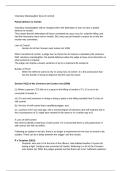
Loss of Control
Loss of Control is the second statutory partial defence to murder, introduced by Sections 54 and 55 of the Coroners and Justice Act 2009. It replaced the old common law defence of "provocation." Like Diminished Responsibility, if successful, it reduces a murder charge to voluntary manslaughter, allowing for sentencing flexibility.
alishasaunders
Summary
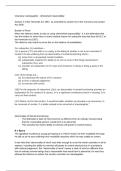
Diminished Responsibility
Diminished Responsibility is a statutory partial defence to murder, governed by Section 2 of the Homicide Act 1957 (as amended by the Coroners and Justice Act 2009). If successfully pleaded, it reduces a conviction from murder to voluntary manslaughter. This gives the judge sentencing discretion, allowing them to avoid the mandatory life sentence and instead impose a punishment that reflects the defendant's mental state, such as a hospital order.
alishasaunders
Summary
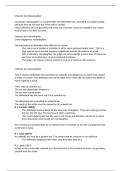
Unlawful Act Manslaughter
Unlawful Act Manslaughter (also known as "Constructive Manslaughter") is a form of involuntary manslaughter where a defendant causes death while committing a lesser criminal act. Because the liability for the death is "constructed" from a minor crime, the prosecution does not need to prove that the defendant intended to kill or even foresaw a risk of death. According to the criteria established in R v Church, the prosecution must prove four elements: the defendant committed an unlawf...
alishasaunders
Summary
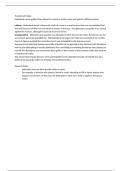
Transferred Malice
Transferred Malice is a legal principle where a defendant’s criminal intent (mens rea) is shifted from their intended target to the actual victim. This doctrine ensures that a defendant cannot escape liability simply because their aim was poor or they hit the "wrong" person. As established in R v Latimer (1886), if a defendant attempts to strike one person but accidentally hits a bystander, the intent to harm the first person "transfers" to the second, satisfying the requirements f...
alishasaunders
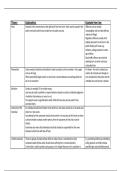
Summary
Theories of Criminal Law
Theories of Criminal Law (or Theories of Punishment) provide the philosophical justification for why the state has the right to punish an individual and what that punishment should achieve. These theories are generally divided into two main camps: utilitarian (forward-looking) and retributive (backward-looking). Retribution is based on the "just deserts" principle, arguing that punishment is a moral necessity regardless of its social benefits; the punishment must be proportionate to the cr...
alishasaunders
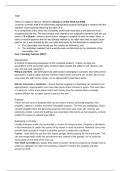
Summary
Theft
Theft is a statutory offence defined under Section 1(1) of the Theft Act 1968 as the "dishonest appropriation of property belonging to another with the intention of permanently depriving the other of it." For a conviction to be successful, the prosecution must prove all five elements of the offence. The Actus Reus consists of the appropriation (Section 3), which involves assuming any of the rights of an owner (R v Pitham and Hehl); the property (Section 4), which includes money and all oth...
alishasaunders
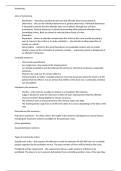
Summary
Sentencing
Sentencing in the English legal system is the final stage of the criminal process, where the court determines the appropriate punishment for a defendant who has pleaded guilty or been convicted. This process is governed by the Sentencing Act 2020 and guided by the Sentencing Council, which provides specific guidelines to ensure consistency across courts. Judges and magistrates must consider the five statutory purposes of sentencing: the punishment of offenders, the reduction of crime (deterrence...
alishasaunders
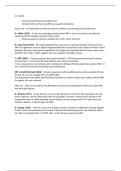
Summary
S.47 OAPA
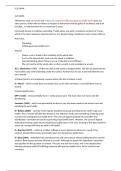
Section 47 of the Offences Against the Person Act 1861, commonly known as Actual Bodily Harm (ABH), is the most frequently prosecuted non-fatal offence. The actus reus requires a base offence of either an assault or a battery that results in "actual bodily harm." In the case of R v Miller, ABH was defined as any hurt or injury calculated to interfere with the health or comfort of the victim, provided it is "more than merely transient or trifling." This includes injuries such as exten...
alishasaunders
Summary
S.20 OAPA
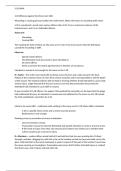
Section 20 of the Offences Against the Person Act 1861, known as Malicious Wounding or Inflicting Grievous Bodily Harm (GBH), is a mid-range non-fatal offence. The actus reus requires the defendant to either "wound" the victim (breaking both layers of the skin, often resulting in blood loss) or "inflict" GBH (defined in DPP v Smith as "really serious harm"). Examples include broken bones, permanent disfigurement, or serious psychiatric injury.
alishasaunders
Summary
S.18 OAPA
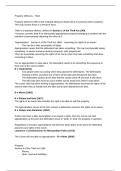
Section 18 of the Offences Against the Person Act 1861, often referred to as Wounding or GBH with Intent, is the most serious non-fatal offence in English law. The actus reus is identical to Section 20, requiring either a wound (a break in both layers of the skin, as in Moriarty v Brooks) or Grievous Bodily Harm (defined as "really serious harm" in DPP v Smith). What sets Section 18 apart is its significantly higher mens rea requirement: the prosecution must prove that the defendant had th...
alishasaunders
Summary
Property Offences - Theft
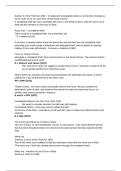
Theft is a statutory offence defined under Section 1(1) of the Theft Act 1968 as the "dishonest appropriation of property belonging to another with the intention of permanently depriving the other of it." For a conviction to be successful, the prosecution must prove all five elements of the offence. The Actus Reus consists of the appropriation (Section 3), which involves assuming any of the rights of an owner (R v Pitham and Hehl); the property (Section 4), which includes money and all oth...
alishasaunders
Summary
Property Offences - Robbery
Robbery is a statutory offence under Section 8(1) of the Theft Act 1968, famously described as "theft aggravated by force." To secure a conviction, the prosecution must first prove all five elements of a completed theft (appropriation, property, belonging to another, dishonesty, and intention to permanently deprive). The additional actus reus requirements for robbery are that the defendant must use force—or the threat of force—on any person immediately before or at the time of the thef...
alishasaunders

Summary
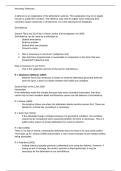
Non-fatal Offences
Non-Fatal Offences Against the Person refer to a hierarchy of criminal acts where physical or psychological harm is inflicted on a victim without resulting in death. In English Law, these are primarily governed by the Criminal Justice Act 1988 and the Offences Against the Person Act 1861 (OAPA). The offences are structured in a "ladder" of severity, where both the actus reus (the injury caused) and the mens rea (the level of intent or recklessness) increase at each rung.
alishasaunders
Summary
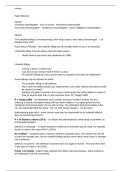
Necessity Defences
In English law, Necessity is a controversial and strictly limited common law defence where a defendant argues that they committed a crime to prevent a greater evil from occurring. Unlike self-defence, which is a response to an external threat from a person, necessity usually arises from a choice between two unavoidable harms. For many years, the courts were reluctant to recognize it at all, famously ruling in Re A (Conjoined Twins) that for the defence to succeed, the act must be necessary to av...
alishasaunders
Summary
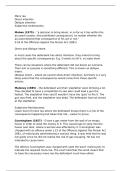
Murder
In English law, Murder is a common law offence defined by Lord Coke as the unlawful killing of a reasonable creature in being and under the King's (or Queen's) peace, with malice aforethought. The actus reus requires that the defendant’s conduct was the factual and legal cause of the victim's death. The mens rea, known as malice aforethought, is unique because it can be satisfied by either an express intent to kill or an implied intent to cause grievous bodily harm (GBH) (R v Vickers)...
alishasaunders
Summary
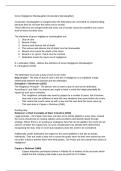
Mens Rea
In criminal law, Mens Rea (the "guilty mind") refers to the mental element required at the time of the actus reus to establish criminal liability. It ensures that individuals are punished for their intentions or recklessness rather than for mere accidents. The levels of mens rea exist on a hierarchy of culpability: Direct Intent is the highest form, where the prohibited consequence is the defendant's specific objective (R v Mohan), while Oblique Intent applies when a result is a virtual...
alishasaunders
Summary
Gross Negligence Manslaughter
ross Negligence Manslaughter (GNM) is an involuntary manslaughter offence where a defendant causes death through an extreme level of negligence, despite lacking the specific intent to kill or cause GBH. As established in R v Adomako (1994), the prosecution must prove four key elements: the existence of a duty of care (based on the "neighbor principle" from Donoghue v Stevenson), a breach of that duty which creates a serious and obvious risk of death, and that this breach actually caused th...
alishasaunders